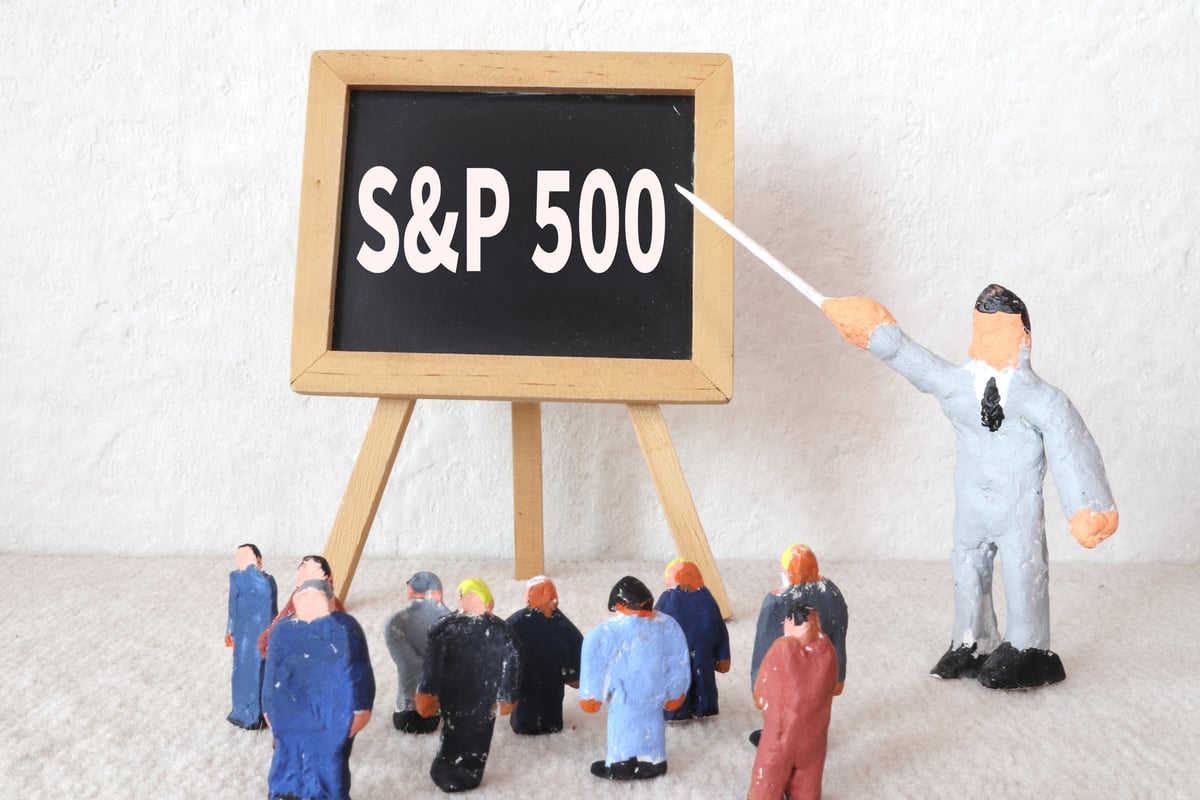
The stock market has delivered strong gains in recent months, pushing major indexes toward record highs. However, beneath the surface, several indicators suggest that investors should remain cautious.
While bull markets can continue longer than expected, certain warning signals are beginning to emerge that could point to rising risks in equities.
Below are three warning signs currently flashing in the US stock market.
1. Market Gains Are Highly Concentrated
One of the biggest concerns among market strategists is narrow market leadership.
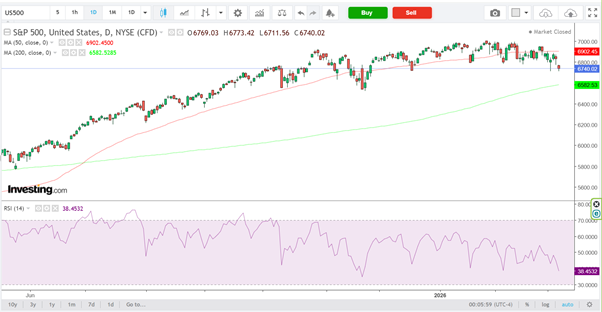
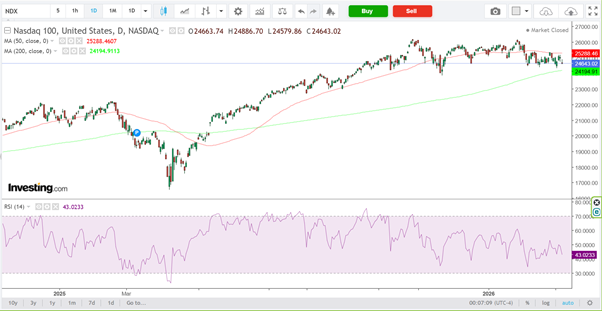
The rally in the and has been heavily driven by a small group of mega-cap technology companies.
These include:
- Nvidia (NASDAQ:)
- Microsoft (NASDAQ:)
- Apple (NASDAQ:)
- Amazon (NASDAQ:)
- Meta Platforms (NASDAQ:)
When a market rally depends on a limited number of stocks, it can become more fragile. If leadership stocks begin to weaken, the broader market may struggle to maintain upward momentum.
Historically, healthy bull markets tend to show broad participation across sectors and market caps.
2. Valuations Are Becoming Stretched
Another warning signal is the rapid expansion in valuations across certain segments of the market.
Technology and AI-related companies have experienced particularly strong multiple expansion, driven by optimism around artificial intelligence, cloud computing, and digital infrastructure.
While many companies have delivered strong earnings growth, valuations in some cases now reflect very optimistic long-term expectations.
High valuations can increase downside risk if:
- earnings growth slows
- interest rates remain elevated
- investor sentiment shifts
Markets trading at elevated multiples tend to be more sensitive to negative surprises.
3. Interest Rate Uncertainty Remains High
remain one of the most important drivers of equity valuations.
The Federal Reserve continues to balance inflation control with economic stability. While has cooled from recent peaks, policymakers have signalled that rates could remain elevated for longer than many investors expected.
Higher interest rates can affect the stock market in several ways:
- Increasing borrowing costs for companies
- Reducing the present value of future earnings
- Making bonds more attractive relative to stocks
If rates stay higher for longer, growth-oriented sectors may face pressure.
What This Means for Investors
These warning signs do not necessarily mean a major market downturn is imminent. However, they highlight areas of vulnerability that investors should monitor closely.
Periods of strong market rallies are often followed by consolidation or temporary pullbacks, which can help reset valuations and investor sentiment.
Key Indicators to Watch
Investors should keep an eye on several metrics in the coming weeks:
- Market breadth indicators
- Treasury yields
- Corporate earnings guidance
- Inflation data
- Federal Reserve policy signals
These factors will play an important role in determining whether the market rally continues or enters a period of correction.
The US stock market remains supported by resilient economic growth and strong corporate earnings. However, narrow market leadership, elevated valuations, and interest rate uncertainty suggest that risks are beginning to build.
For investors, the key is not to panic—but to stay disciplined, diversified, and focused on long-term fundamentals.
In markets that have rallied strongly, risk management becomes just as important as identifying the next opportunity.




![i’m-nervous,-too!-[part-2]](https://10xwealthreport.com/wp-content/uploads/2026/03/177042-im-nervous-too-part-2-1568x784.jpg)