 Oil Prices, Markets
These are the early headlines and other items poised to influence the market at the start of the trading day. As we share this collection of market drivers, U.S. equity futures point to a lower market open when stocks begin trading later on Thursday morning.
1. Israel bombed more targets in Lebanon on Thursday, putting the Middle East ceasefire in further jeopardy after its biggest attacks of the war on its neighbour killed more than 250 people and threatened to torpedo Donald Trump’s truce from the outset. Iranian negotiators were expected to set off later on Thursday for Pakistan for the first peace talks of the war, due to meet a U.S. delegation on Saturday. But there was no sign Iran had lifted its blockade of the Strait of Hormuz, which has caused the worst disruption to global energy supplies in history. Tehran said there would be no deal as long as Israel was striking Lebanon. (Reuters)
Israel pounded Lebanon with its heaviest strikes yet on Wednesday, killing hundreds of people and drawing a threat of retaliation from Iran, which suggested it would be “unreasonable” to proceed with talks to forge a permanent peace deal with the United States. (Reuters)
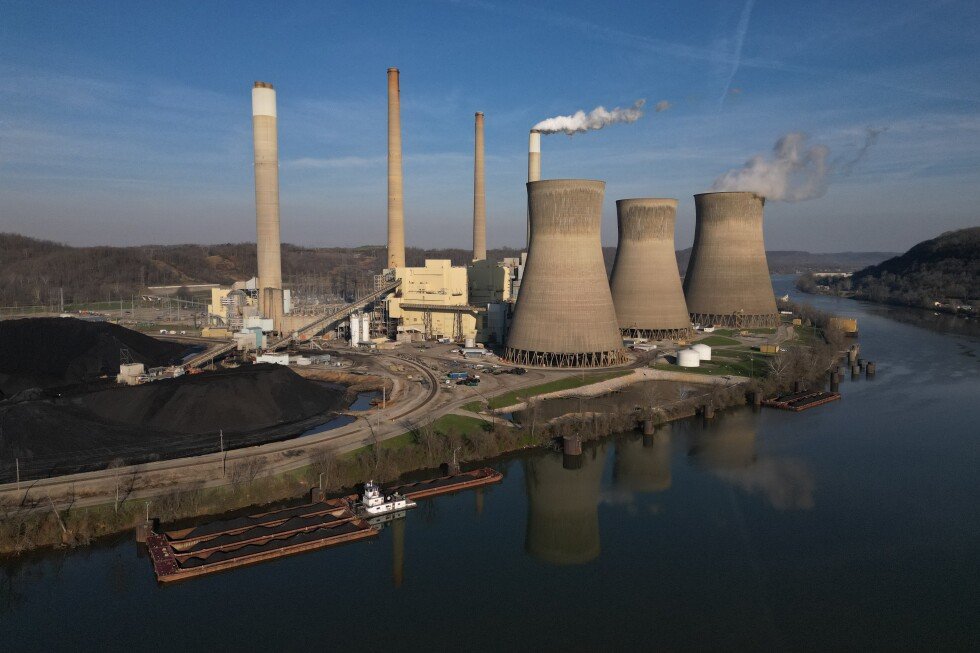
After tumbling on Wednesday, oil prices are back on the rise on Thursday morning amid questions over the proposed U.S.-Iran ceasefire and reports that the Strait of Hormuz remains closed. We also suspect that, given developments of the last few weeks, market watchers are hesitant to strip out what is being referred to as the “geopolitical risk premium” but recognize that is likely to change if peace talks continue and more concrete timelines develop.
2. Goldman Sachs trimmed its second‑quarter 2026 forecasts for Brent and U.S. crude to $90 and $87 a barrel, respectively, late on Wednesday, after the U.S. and Iran agreed on a two-week ceasefire. Previously, the bank forecast Brent and West Texas Intermediate (WTI) oil prices to average $99 and $91 a barrel, respectively. (Reuters)
Regular readers know we’ve been pretty vocal in our view that where oil, gas, diesel, jet fuel, and related energy prices, as well as those impacted by them, settle out in the coming weeks and months will determine inflation and related pressures.
Goldman’s revised figures compare to the near $62.25 spot average for WTI in January to February 2026 and $64.57 average in Q2 2025, per data from the U.S. Energy Information Administration.
The realization of higher energy prices is leading to expectations that consumers will pay higher prices for gas, airline tickets and related items through the summer travel season. On Wednesday, Delta Air Lines (DAL) pulled all planned capacity growth for the current quarter, warning that soaring jet fuel prices would add more than $2 billion to its costs in Q2 2026.
3. Earnings expectations will need to be tempered because of the inflationary fallout from the war in the Middle East, according to BlackRock Inc.’s Helen Jewell. “If you look at earnings forecasts at the moment for the year, they’re still well into double digits — 15, 16, 17, 18% — so there’s a lot of headroom for the earnings to come down a little bit,”… There have already been some early signs of a change in bullish profit expectations. After weeks of analyst upgrades, Citigroup Inc.’s index of earnings momentum for the U.S. turned negative last Friday, with downgrades outpacing upgrades by the most in nearly a year. (Bloomberg)
This is another item we’ve been vocal about with you, and all we’ll say is that it is nice to see others connecting the dots and coming to the same conclusion. It also reaffirms our thinking that the Q1 2026 earnings season could be volatile and that will keep the Portfolio’s market hedging positions in play.
4. A growing group of Federal Reserve policymakers felt last month that interest rate hikes might be needed to counter inflation that continued to exceed the central bank’s 2% target, particularly given the inflationary impact of the U.S.-Israeli war with Iran, according to the minutes of their March 17 to 18 meeting. (Reuters)
Those same Fed minutes also showed that most FOMC participants said the war could result in the need for easier monetary policy if rising gas prices hit the labor market and consumer wallets. That led the central bank to stick with its updated March set of economic projections that telegraphed one 25-basis point rate cut for 2026.
The market view on the timing for the next rate cut?
Per the CME FedWatch Tool: September 2027. But, as we’ve said, those expectations can whip around, sometimes very quickly, as new data is gathered. We’ll continue to follow the incoming data, and that means the March CPI data out on Friday is next in line.
5. Investors need exposure to semiconductor companies and other “picks and shovels” of artificial intelligence as spending accelerates, even with the Iran war stoking geopolitical tensions, according to Goldman Sachs Asset Management… Compute capacity continues to be the most constrained resource in the market, underpinning a multiyear investment cycle led by major technology companies that remain committed to AI buildouts… “Our baseline forecasts, when we do our bottoms-up work, continue to point to acceleration in capex spending and it being durable for much longer,” (Bloomberg)
That certainly speaks to multiple holdings across not only TheStreet Pro Portfolio’s chip holdings, but also multiple companies captured in the current EPS Diplomats basket and the investment portfolio at SuRo Capital (SSSS) .
6. Disney is preparing to make sizable layoffs in one of the first significant moves under the new chief executive officer, Josh D’Amaro. The entertainment company is planning to eliminate as many as 1,000 positions in the coming weeks, according to people familiar with the matter. Many of the cuts will be in the company’s recently consolidated marketing department. (WSJ)
On the one hand, the Disney (DIS) announcement isn’t all that surprising, as new CEOs tend to put their mark on a company. The question we’re pondering is what that means for the current market consensus forecast for Disney’s 2026 revenue and EPS, which clock in $101 billion and $6.64, respectively. One would think those figures could be vulnerable as consumers contend with higher prices, and Disney with incrementally higher operating costs.
7. Economic data today per TipRanks: GDP (Q4 2026, Final), PCE Price Index (February), Personal Income & Spending (February), Corporate Profits (Q4 2025), Initial & Continuing Jobless Claims (Weekly), EIA Natural Gas Stocks (Weekly).
8. Companies reporting today per TipRanks: AM – Simply Good Foods (SMPL) . PM – Blackberry (BB) , WD-40 (WDFC) .
Related: As Iran Conflict Weighs on Markets, the Korean Defense Sector Is Thriving
More Pro Portfolio
- Making 3 New Buys and Trimming 2 Holdings as We Layer in Protection
- We’re Tracking 21 Portfolio Signals Across 9 of Our Investing Themes
- March Monthly Roundup: Portfolio Makes Up Lost Ground in Tough Month
At the time of publication, TheStreet Pro Portfolio was long SSSS shares.