 U.S.-Iran Conflict
These are the early headlines and other items poised to influence the market at the start of trading Wednesday. As we share this collection of market drivers, U.S. equity futures point to a sharp move higher when equity markets begin trading.
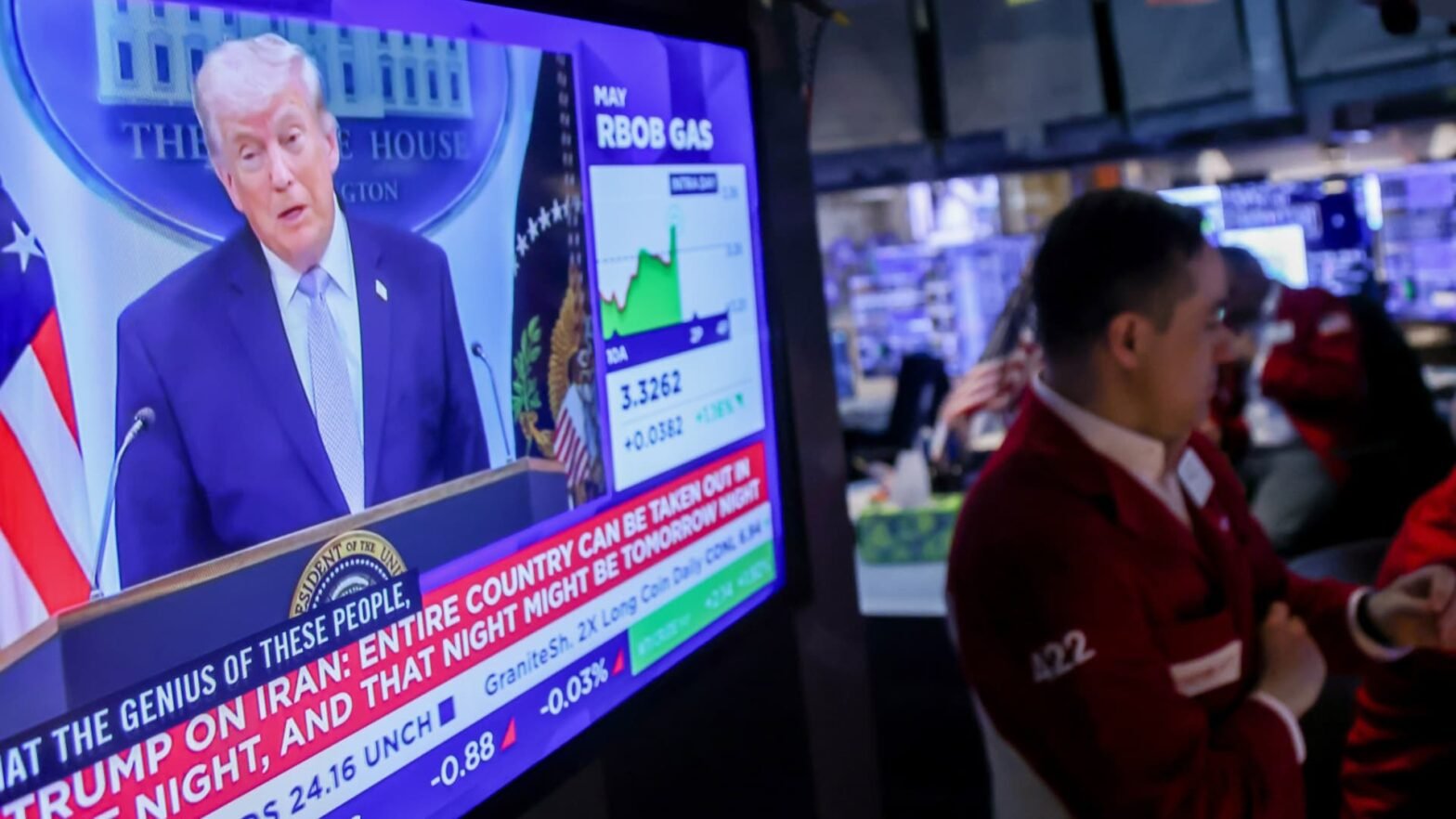
1. U.S. President Donald Trump agreed to a two-week ceasefire with Iran, less than two hours before his deadline for Tehran to reopen the Strait of Hormuz or face devastating attacks on its civilian infrastructure. The announcement late on Tuesday represented an abrupt turnaround from his extraordinary warning earlier in the day, when he said “a whole civilization will die tonight” if his demands were not met. (Reuters) Israeli Prime Minister Benjamin Netanyahu said he supported Trump’s “decision to suspend strikes against Iran for two weeks subject to Iran immediately opening the straits and stopping all attacks on the U.S., Israel and countries in the region.” (The Washington Post)
This is resulting in the sharp rise in U.S. equity futures this morning, and the first round of talks are scheduled for Friday. More than likely this market action will be fueled in part by short covering and dip buyers, but…
2. Global oil prices have fallen sharply, and stock markets have jumped after the US and Iran agreed to a conditional two-week ceasefire deal that includes the reopening of the key Strait of Hormuz waterway. The price of benchmark Brent crude fell by about 13% to $94.80 (£70.73) a barrel, while US-traded oil was more than 15% lower at $95.75. But oil prices remain higher than before the conflict started on 28 February. At the time, it was trading at around $70 a barrel. (BBC)
At least for now, inflation pressures resulting from the war are still a factor that companies will have to contend with. It will also take time for the number of ships stacked up at the Strait of Hormuz to pass through. Recognizing this as the Q1 2026 earnings season heats up and the risk the market has underestimated that impact, we will maintain the Portfolio’s inverse ETF positions.
3. Delta Air Lines Inc. expects to incur more than $2 billion in higher fuel costs through June because of the Iran war, prompting the carrier to tread carefully and stick to its previous full-year profit forecast… Fuel prices have climbed sharply as the conflict disrupts global energy markets, raising costs for airlines at a time when demand has otherwise held up. The increase is forcing carriers to weigh how much of the higher expense they can pass on through fares without dampening bookings. (Bloomberg)
In keeping with our comment above, Delta’s (DAL) bottom-line guidance for Q2 2026 calls for EPS of $1.00-$1.50 compared to the $1.59 market consensus. Entering the current quarter, the weekly average of jet fuel prices per IATA data reached $209 per barrel up from $156.41 in early March. Despite the pullback in oil prices this morning, they remain at elevated levels compared to earlier this year. Delta’s comments and guidance speak to our view that where oil and related prices settle out in the coming weeks will be something we watch closely.
4. The Trump administration has so far rebuffed requests from Ford Motor and other U.S. automakers for relief from aluminum tariffs after fires at a major American factory created supply bottlenecks for vehicles including the F-150 pickup, according to people familiar with the talks…. Automakers and other users of steel and aluminum products could be on the hook for even higher tariffs in the coming months, after the Trump administration overhauled the metals tariffs last week. Under the changes, many finished products containing aluminum and steel will be subject to a 25% duty on the full value of a product, instead of a 50% levy on just the value of metal. (WSJ)
We see this, along with recent quarterly results from RH (RH) , as a reminder that companies are contending with other headwinds besides higher energy prices. In other words, another reason to be cautious with the Q1 2026 earning season.
5. Gold and silver prices were gaining early Wednesday. One of 2025’s hottest trades could regain momentum if the U.S. and Iran reach a lasting peace… “The medium-term tailwinds—stagflation risks, U.S. election uncertainty, and the prospect of a weaker U.S. dollar alongside falling real rates—should support a move toward $5,900/oz by late 2026,” wrote UBS strategist Dominic Schnider in a research note. (Barron’s)
This should lift the Portfolio’s position in Eldorado Gold Corp. (EGO) , a newer position following our recent EPS Diplomats reconstitution.
6. The Federal Reserve will release minutes from its March meeting Wednesday, as investors assess a surge in oil prices and rising geopolitical tensions that are complicating the outlook for inflation. The March meeting took place as those geopolitical risks were building. The minutes will show how officials were weighing them before the latest escalation, and how much of that thinking may still apply. (Barron’s)
Given the subsequent March Employment Report and pricing data contained in ISM’s March PMI data, the comments in today’s Fed meeting minutes will be a bit stale. Still, understanding the central bank’s mindset will help us better understand the factors that could eventually lead to a more dovish stance from the Fed.
7. Economic data today per TipRanks: MBA Mortgage Application Index (Weekly), EIA Oil and Gasoline Stocks (Weekly), FOMC Meeting Minutes.
8. Companies reporting today per TipRanks: AM – Delta Air Lines (DAL) , RPM (RPM) . PM – Applied Digital (APLD), Constellation Brands (STZ) , PriceSmart (PSMT) .
Related: The Ceasefire Trade: How to Play the Gap-Up Open
At the time of publication, the Pro Portfolio was long EGO.