U.S. stock futures climbed early Monday as Wall Street reacted positively to the newly announced trade deal between President Donald Trump and European Commission President Ursula von der Leyen. The agreement, revealed late Sunday, helped ease fears of a full-blown tariff war and gave investors a reason to push indexes higher at the start of a packed trading week.
Futures for all three major indexes—the Dow Jones Industrial Average, S&P 500, and Nasdaq Composite—rose between 0.2% and 0.5%. This momentum comes on the heels of Friday’s market close, where both the S&P 500 and Nasdaq hit record highs, fueled by strong earnings and rate cut optimism.
The deal between the U.S. and EU represents a strategic pause in transatlantic trade tensions and offers a clearer, though still evolving, framework for future commerce. While details remain limited, the market welcomed the development as a sign of reduced geopolitical uncertainty heading into a crucial economic week.
Dow, S&P 500 and Nasdaq futures show early strength before market open
All three major U.S. stock indices are in the green ahead of the opening bell:
- Dow Jones Industrial Average futures are up around 0.1%, gaining roughly 40 to 50 points.
- S&P 500 futures are rising 0.3%, signaling broad-based optimism across sectors.
- Nasdaq-100 futures are leading with gains of 0.5% to 0.6%, driven by renewed strength in tech and AI stocks.
The upbeat tone comes after last week’s record closes on the S&P and Nasdaq, and follows a volatile spring that saw fears over global tariffs and tech layoffs.
Trump–EU trade deal brings tariff relief and investment pledges
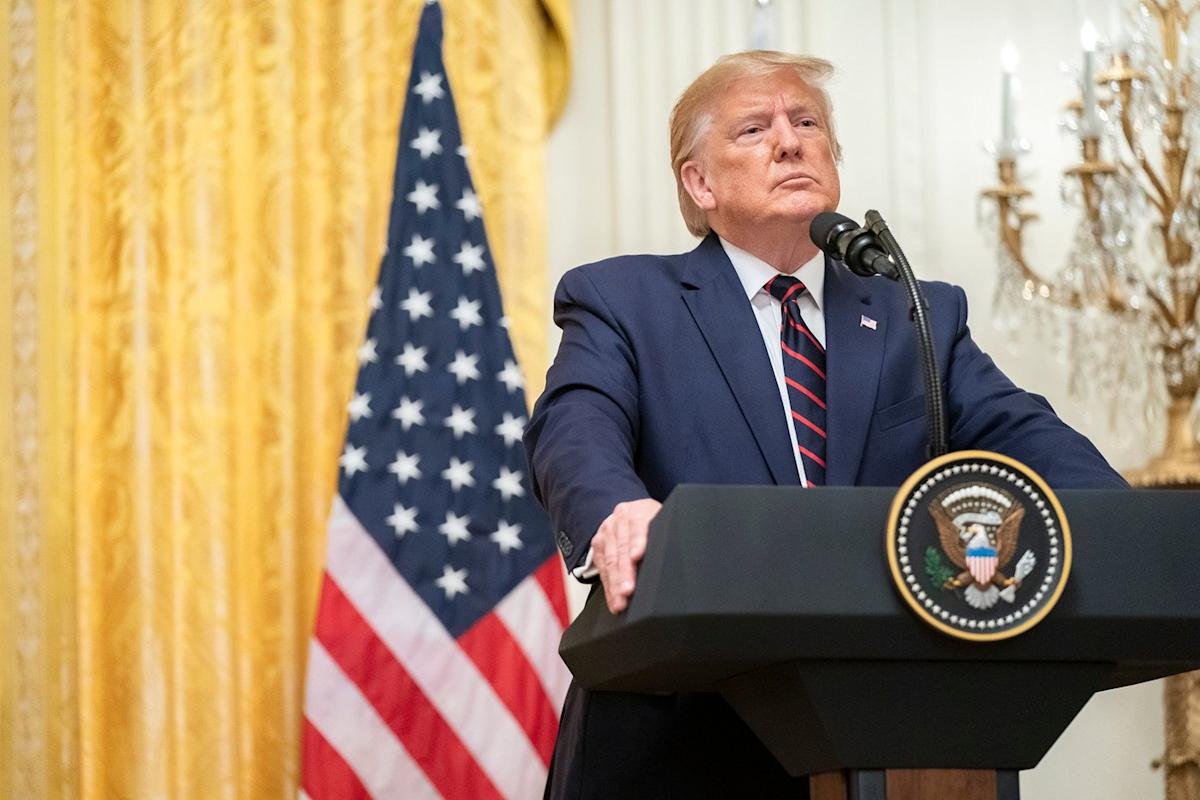
President Donald Trump announced a formal trade agreement with the European Union over the weekend, defusing tensions that had been building for months. The key elements of the deal include:
- 15% capped tariffs on most European imports into the U.S., down from threatened rates of 30%–50%.
- Up to $750 billion in EU investments committed toward U.S. infrastructure, defense, and technology.
- Large-scale energy and defense purchases, including LNG deals and weapons systems supplied by Lockheed Martin and RTX.
This deal follows similar recent agreements with Japan, Indonesia, and the Philippines, suggesting the administration is shifting from confrontation to diplomacy—something Wall Street has welcomed with open arms.
Major stock movers today: Tesla, Intel, Lockheed and Nike in focus
Individual stocks are reacting strongly to both earnings news and fallout from the trade pact:
- Tesla (TSLA) shares are rallying on reports of a $16.5 billion AI chip agreement with Samsung, plus fresh buzz around robotaxi development.
- Intel (INTC) is down significantly after delivering weaker-than-expected earnings and announcing major job cuts.
- Lockheed Martin (LMT) and RTX are moving higher on the back of expected windfalls from new EU military orders.
- Nike (NKE) gained nearly 4% in early trading after receiving a bullish upgrade from J.P. Morgan, signaling renewed confidence in U.S. consumer demand.
These moves reflect a market that is closely watching not just macroeconomic trends but also how global politics are shaping corporate performance.
Global markets respond positively but cautiously to the trade news:
The announcement led to a mild rally in global stock markets, as investors embraced the temporary calm. In Europe, key indexes like Germany’s DAX and France’s CAC 40 opened higher, reflecting relief that steeper U.S. tariffs were avoided. Meanwhile, the euro remained relatively stable against the U.S. dollar.
In Asia, gains were more muted as markets waited for further clarity on U.S.–China trade negotiations. Still, the tone was generally upbeat, reflecting optimism that the U.S. may now be open to resolving multiple trade fronts without severe escalation.
Federal reserve meeting to guide interest rate expectations:
Another major event shaping investor sentiment this week is the Federal Reserve’s two-day policy meeting, which concludes on Wednesday, July 30. While markets widely expect the Fed to hold interest rates steady, all eyes are on the language used in Chair Jerome Powell’s post-meeting statement.
With inflation still lingering above the Fed’s 2% target and geopolitical tensions threatening supply chains, any shift in tone could reshape expectations for future rate cuts. A dovish stance could fuel further market gains, while a more hawkish message might pull equities back.
The trade deal’s potential inflationary effects—especially if tariffs raise import prices—will also weigh into the Fed’s calculus.
Key inflation and Labor market data will test market rally:
Beyond tech earnings and the Fed, a series of crucial U.S. economic data releases will round out the week:
- PCE inflation (Thursday) – the Fed’s preferred inflation gauge
- ADP private payrolls (Wednesday) – a preview of labor strength
- Initial jobless claims (Thursday) – to assess employment softness
- Non-farm payrolls and unemployment rate (Friday) – the headline labor report
These indicators will provide insight into whether the U.S. economy can maintain its current pace amid rising costs, cooling demand, and ongoing tariff uncertainty. If data shows slowing momentum, investors may begin pricing in recession risks, especially in sectors like manufacturing and retail.
U.S.–China trade negotiations also in spotlight this week:
While the U.S.–EU deal has stolen headlines, another crucial front remains active: U.S.–China trade talks, currently underway in Sweden. Officials from both sides are reportedly making progress on resolving long-standing issues around intellectual property, subsidies, and high-tech exports.
Importantly, there’s a looming August 1 deadline, after which previously delayed tariffs could snap back into effect if no formal agreement is reached. A positive breakthrough could help sustain this week’s bullish tone, while a breakdown may reignite global uncertainty.
Market outlook remains cautiously optimistic despite risks:
For now, the tone on Wall Street remains optimistic but cautious. With Trump’s EU trade deal helping defuse immediate tensions, investors have welcomed the short-term clarity. However, the longer-term impact of even modest tariffs, especially when layered across multiple trade partners, could still weigh on global supply chains and corporate margins.
The combination of:
- Big tech earnings
- Federal Reserve guidance
- Inflation and Labor data
- Ongoing global trade talks
Will make this one of the most critical weeks for markets in recent memory. Investors will need to balance short-term momentum with long-term structural risks.
Trade truce lifts sentiment, but key tests await:
The new U.S.–EU trade framework has provided a relief rally for stock markets, lowering the risk of immediate escalation. But with so many open questions and potential flashpoints ahead, investors should remain nimble.
While optimism reigns today, the coming days will reveal whether this trade truce becomes a stepping stone to stability—or simply a pause before the next storm.
Broader market sentiment improves after volatile spring
Just months ago, the market was in turmoil. Tariff announcements, tech layoffs, and geopolitical tensions created widespread fear across equities. But since early June, sentiment has improved dramatically:
- The S&P 500 and Nasdaq Composite both reached record highs last week, powered by AI enthusiasm and softer inflation data.
- The Dow Jones is within striking distance of its own all-time high, thanks to strength in industrials and financials.
- VIX volatility has returned to pre-2022 levels, reflecting calmer investor psychology.
The Trump administration’s pivot to diplomacy in trade matters, combined with resilient U.S. economic data, is giving bulls a reason to stay optimistic.
What investors should watch for next
To stay ahead in this market, here’s what traders and investors should keep a close eye on:
- Mega-cap tech earnings: Microsoft, Apple, Amazon, and Meta all report this week, and their guidance will be critical for Nasdaq momentum.
- Any new trade headlines: Rumors of a pending U.S.–China deal are circulating, and confirmation could fuel another leg higher.
- Fed commentary: Will Powell strike a dovish or hawkish tone? Every word will matter to rate-sensitive sectors.
- Sector rotation: Watch for signs of money rotating out of tech and into value or cyclical names, depending on macro data surprises.
Snapshot of today’s U.S. market momentum
| Index or sector | Futures move | Driving force |
| Dow Jones Futures | +0.1% | Trade optimism, defense and infrastructure buzz |
| S&P 500 Futures | +0.3% | Broad strength across tech, industrials, consumer |
| Nasdaq-100 Futures | +0.5% to +0.6% | Tesla-led rally, AI buzz, earnings anticipation |
| Tesla (TSLA) | +4% to +6% | Robotaxi and Samsung chip partnership |
| Intel (INTC) | -7% to -10% | Disappointing earnings and restructuring |
| Lockheed / RTX | +2% to +3% | New defense contracts with EU nations |
| Nike (NKE) | +4% | JPMorgan upgrade and strong U.S. consumer outlook |
Optimism returns, but volatility remains possible
Today’s gains in stock futures suggest a confident start to the week. The Trump–EU deal is helping ease global trade tensions, earnings optimism is building, and inflation is cooling—all of which support a bullish narrative.
However, with the Federal Reserve and key economic data looming, traders should remain nimble. Surprises—good or bad—could jolt markets quickly.
For now, though, the bulls are in control.
FAQs:
What is the Trump-EU trade deal about?
It’s a new agreement that adds 15% U.S. tariffs on EU goods but includes major energy and investment deals.
How did the stock market react to the Trump-EU deal?
Dow, S&P 500, and Nasdaq futures jumped as investors welcomed reduced trade tensions.