4 min read
In this article:
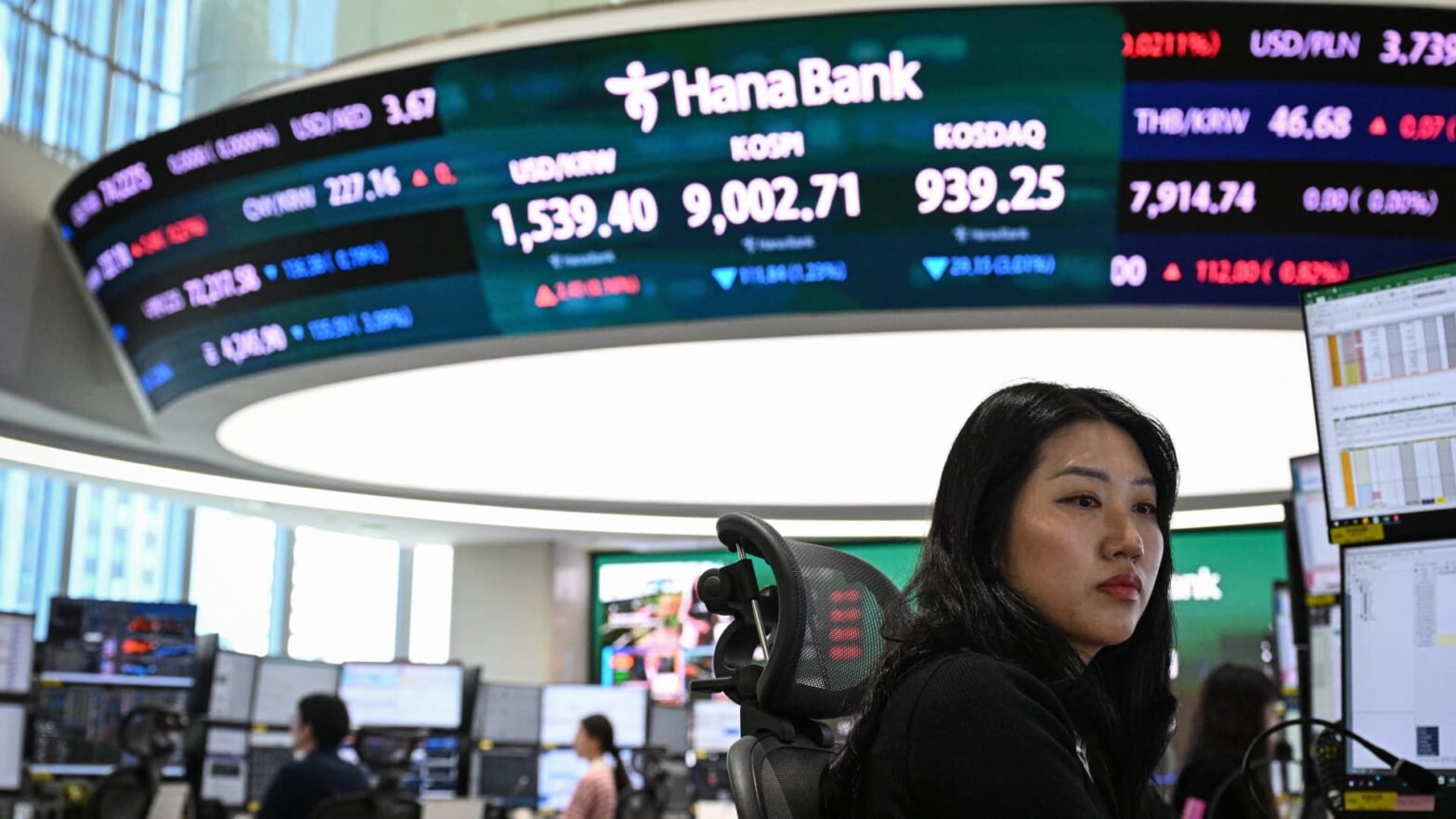
As global markets navigate a landscape marked by shifting trade policies and monetary adjustments, the Asian market continues to capture attention with its diverse economic activities and robust stock performances. Amidst this backdrop, penny stocks—though an older term—remain a focal point for investors seeking potential growth in smaller or newer companies. By identifying those with strong financial health, investors can uncover opportunities that balance risk with promising returns.
|
Name |
Share Price |
Market Cap |
Financial Health Rating |
|
Food Moments (SET:FM) |
THB4.30 |
THB4.25B |
★★★★★☆ |
|
JBM (Healthcare) (SEHK:2161) |
HK$2.86 |
HK$2.33B |
★★★★★★ |
|
Lever Style (SEHK:1346) |
HK$1.48 |
HK$915.41M |
★★★★★★ |
|
TK Group (Holdings) (SEHK:2283) |
HK$2.52 |
HK$2.1B |
★★★★★★ |
|
China Sunsine Chemical Holdings (SGX:QES) |
SGD0.68 |
SGD648.3M |
★★★★★★ |
|
Yangzijiang Shipbuilding (Holdings) (SGX:BS6) |
SGD2.88 |
SGD11.33B |
★★★★★☆ |
|
Ekarat Engineering (SET:AKR) |
THB0.95 |
THB1.4B |
★★★★★★ |
|
Livestock Improvement (NZSE:LIC) |
NZ$0.95 |
NZ$135.23M |
★★★★★★ |
|
Rojana Industrial Park (SET:ROJNA) |
THB4.82 |
THB9.74B |
★★★★★★ |
|
BRC Asia (SGX:BEC) |
SGD3.55 |
SGD973.94M |
★★★★★★ |
Click here to see the full list of 977 stocks from our Asian Penny Stocks screener.
Let’s review some notable picks from our screened stocks.
Simply Wall St Financial Health Rating: ★★★★★★
Overview: K. Wah International Holdings Limited is an investment holding company involved in property development and investment in Hong Kong and Mainland China, with a market capitalization of approximately HK$7.79 billion.
Operations: The company’s revenue is primarily derived from property development in Mainland China (HK$5.91 billion) and Hong Kong (HK$540.49 million), along with property investment generating HK$642.97 million.
Market Cap: HK$7.79B
K. Wah International Holdings, with a market capitalization of HK$7.79 billion, derives substantial revenue from property development in Mainland China and Hong Kong. It has managed to reduce its debt-to-equity ratio over the past five years, maintaining a satisfactory net debt level relative to equity. The company’s short-term assets significantly exceed both its short- and long-term liabilities, reflecting strong liquidity. However, recent earnings have declined sharply by 58.2%, with forecasts indicating further declines over the next three years. Despite trading below estimated fair value, its return on equity remains low at 0.9%, and dividend stability is uncertain due to an unstable track record.