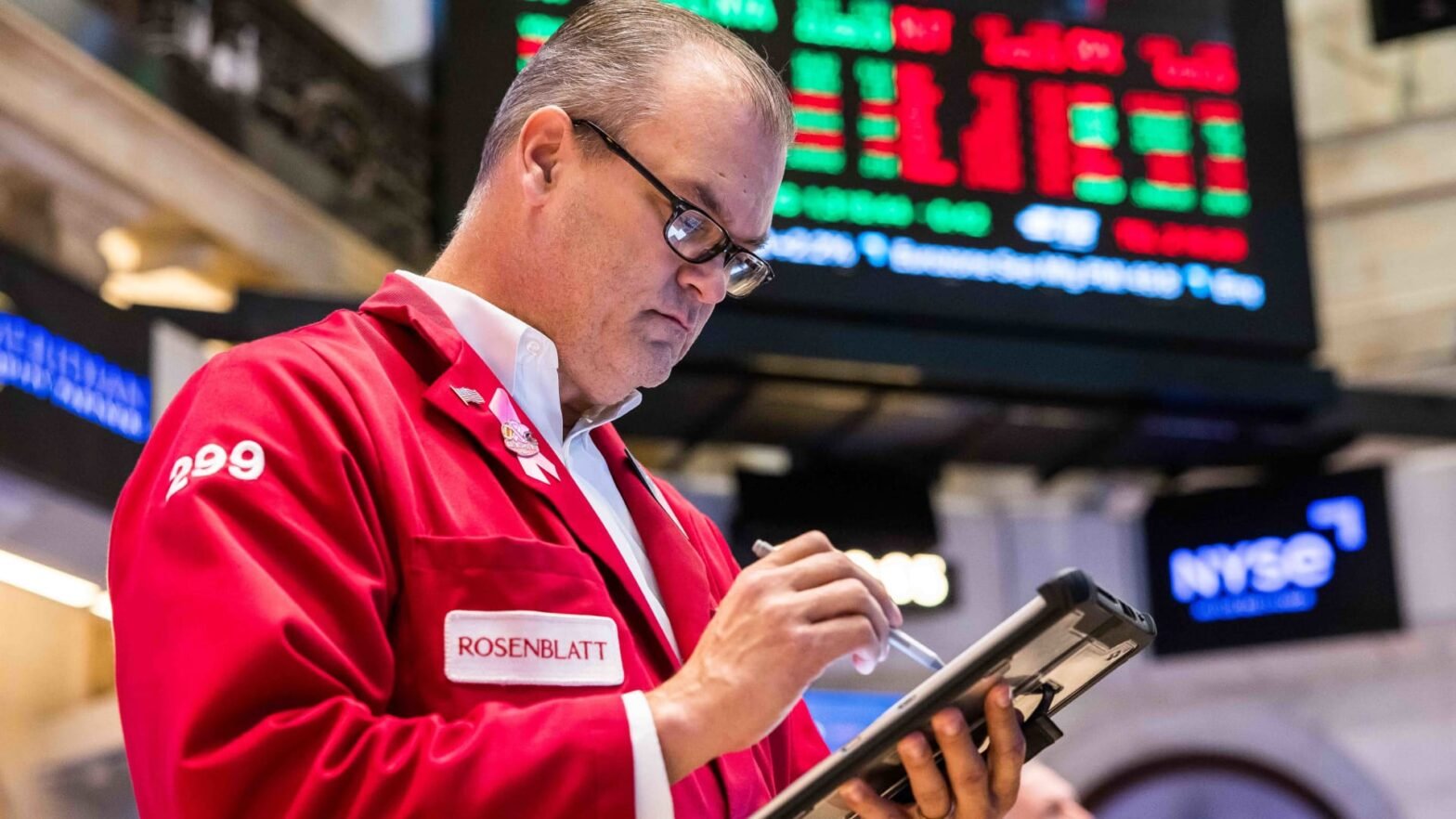
A trader works at the New York Stock Exchange on Oct. 1, 2025.
NYSE
Stock futures are little changed Wednesday night after the S&P 500 logged a fresh high and investors appeared to shrug off concerns tied to the latest U.S. government shutdown.
Futures tied to the Dow Jones Industrial Average fell 20 points, or 0.04%. S&P futures slipped 0.05%, while Nasdaq 100 futures were also 0.05% lower.
The major U.S. stock indexes closed in the green on Wednesday on hopes that the funding stoppage would be brief and therefore limit any serious effects on the economy. The S&P 500 gained roughly 0.3% to end the session at a record high, while the Nasdaq Composite closed 0.4% higher. The Dow Jones Industrial Average jumped 43 points, or 0.1%.
The government shutdown began after top Democrats and Republicans failed Tuesday to meet the deadline to agree on a deal that would keep the government funded. Lawmakers blamed each other for the stoppage as Democrats stayed firm on their demands to use the measure to extend health care tax credits for millions of Americans.
The biggest question for investors is how long the current stalemate will last. It is likely to drag on for at least three days with the Senate set to be out of session Thursday in observance of Yom Kippur, making Friday the next day Senators would be expected to vote again, NBC News reported. On prediction markets, traders are betting that the shutdown could drag on for nearly two weeks.
“My belief is this shutdown could last even longer than in 2018 but that other factors will ultimately matter more such as 1) upcoming Q3 earnings being solid, 2) AI euphoria continuing with the Mag7 reporting solid qtrs and 3) the next Fed mtg on 10/29 where I expect the Fed to stay on its course to cut rates three times this year,” Dan Niles, Niles Investment Management founder and portfolio manager, wrote in a Tuesday post on X.
“In summary, I believe that despite the potential for some near-term choppiness, the mkt will ultimately see new highs as it slowly grinds higher,” Niles added.
The stock market has historically not been much affected by government shutdowns, but investors are paying closer attention to this one given the more volatile policy and macroeconomic backdrop, elevated market valuations and concentration levels amid the AI-led rally and ongoing inflation concerns. Moreover, President Donald Trump has threatened permanent mass firings of federal workers under a shutdown, exacerbating existing worries about a slowing labor market.
An economic data blackout during the shutdown this week is also top of mind, as the September nonfarm payrolls report will not be released on Friday given the Labor Department’s pause on virtually all activity. The Federal Reserve is expected announce an interest rate cut at its upcoming October meeting after Wednesday morning’s ADP data reflected a drop in private payrolls last month, and as further ramifications of the ongoing shutdown remain to be seen.
U.S. stocks are coming off of a strong third quarter and September, which saw the S&P 500 boast a gain more than 3% in a trading month that has averaged a 4.2% loss over the last five years.
Pharma companies rise in after-hours trading, extending gains
Big-name pharmaceutical companies were among the stocks making the biggest moves in after-hours trading Wednesday.
Shares of Biogen, which gained about 10% during Wednesday’s trading session, added another 2% after market close. Merck and Bristol Myers Squibb each gained more than 1% in after-hours trading after closing higher by about 7.4% and 5.2% on Wednesday, respectively.
The companies were among the drugmakers that rose in the recent session after the Trump administration announced a deal with Pfizer as part of its “most-favored-nation” drug pricing policy. Trump said that under the deal, Pfizer will sell some of its drugs at lower prices on a new “direct to consumer” website called “TrumpRx.” Pfizer stock is up more than 14% so far this week.
— Pia Singh