Leaders from the IMF, Nvidia, and JPMorgan offer split views on the staying power of AI-driven market gains.
As artificial intelligence continues to drive record gains in US tech stocks, questions are mounting over whether the sector is heading for a bubble – and what that could mean for investors.
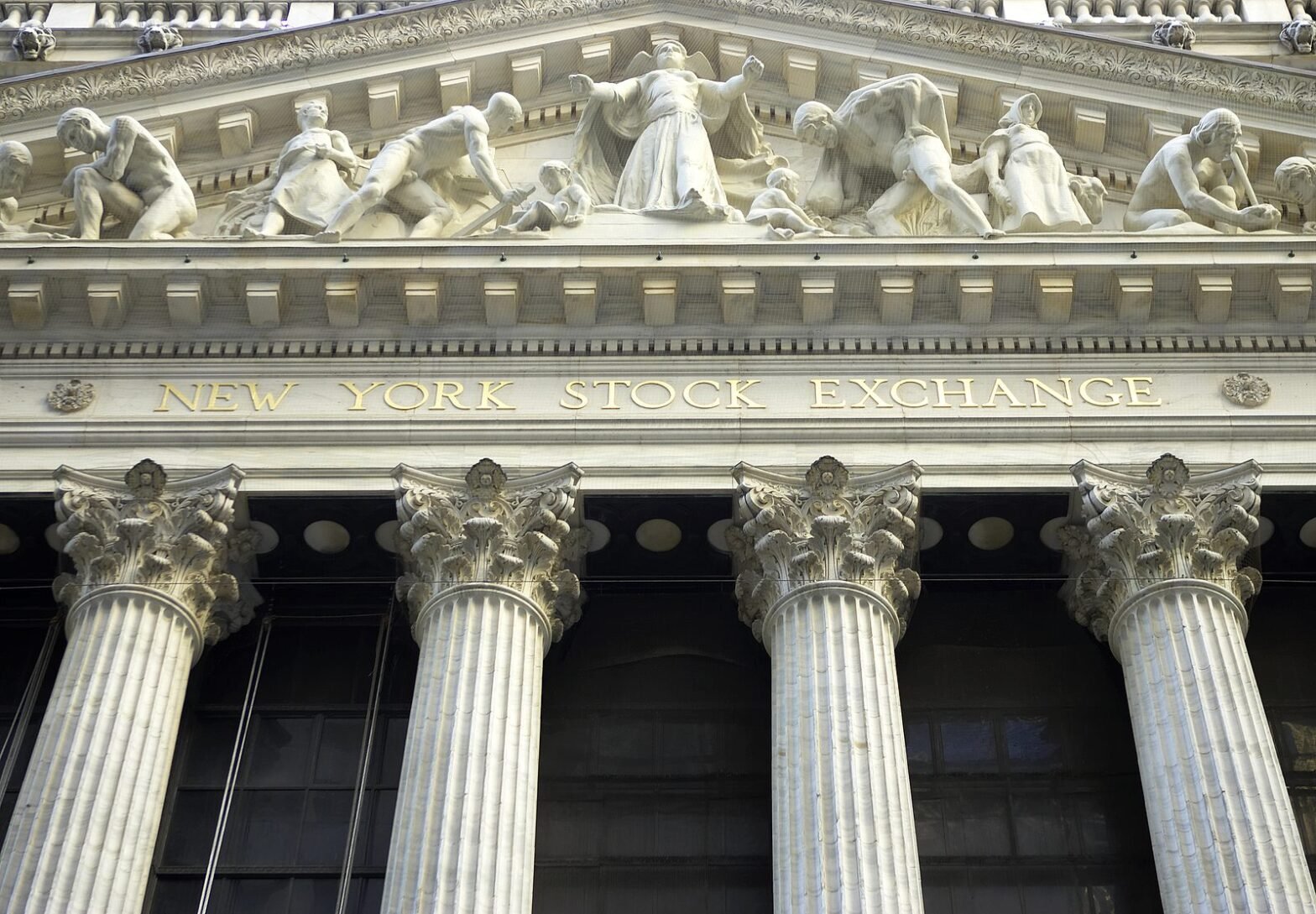
The Nasdaq Composite reached a new high this week, led by a surge in shares of chipmaker AMD, which jumped more than 40% after announcing a multibillion-dollar agreement with OpenAI.
The deal is the latest in a series of high-profile partnerships and investments that have fueled optimism – and concern – about the sustainability of the AI rally.
Financial institutions are increasingly sounding the alarm. The Bank of England warned Wednesday that the risk of a sharp market correction has risen, pointing to valuations that appear stretched, particularly for tech companies focused on AI.
The International Monetary Fund echoed these concerns, with managing director Kristalina Georgieva noting that global stock prices are being driven by “optimism about the productivity-enhancing potential of AI,” according to the Associated Press. She cautioned that financial conditions could “turn abruptly,” potentially dragging down world growth if a correction occurs.
Adam Slater, lead economist at Oxford Economics, said that while bubbles are difficult to identify in real time, “there are a few potential symptoms of a bubble in the current situation.” He cited rapid growth in tech stock prices, the fact that technology now makes up about 40% of the S&P 500, and a “general sense of extreme optimism” about AI’s future, despite significant uncertainty about its ultimate impact.
The recent wave of AI investments has also drawn scrutiny for the structure of some deals. The tech news outlet Futurism noted how many transactions are “circular,” with AI companies investing in each other and creating an ecosystem that some fear could be more fragile than it appears.
For example, Nvidia’s agreement to invest up to $100 billion in OpenAI is paired with OpenAI’s commitment to use Nvidia’s chips for its expanding data centers. Similarly, OpenAI’s $300 billion cloud computing deal with Oracle is intertwined with Oracle’s own purchases of Nvidia hardware. AMD’s recent arrangement with OpenAI, which includes a ten percent stake in AMD for a nominal sum, has also raised eyebrows.
Paulo Carvao, a senior fellow at the Harvard Kennedy School, drew a parallel to the dot-com era, remarking that “today’s AI firms have tangible products and customers, but their spending is still outpacing monetization.”
Despite the warnings, some industry leaders remain confident that AI’s long-term promise will outweigh short-term volatility. Barron’s reported comments from Nvidia CEO Jensen Huang this week that AI demand has grown “substantially” in the past six months. He acknowledged that OpenAI does not yet have the funds to purchase all the chips it needs, but said revenue is “growing exponentially,” and that AI systems are becoming more capable and useful.
JPMorgan CEO Jamie Dimon, while expressing concern about a potential market correction, offered a nuanced view on AI’s future. “The way I look at it is [that] AI is real, AI in total will pay off,” he said. “Just like cars in total paid off, and TVs in total paid off, but most people involved in them didn’t do well.”
For investors, the challenge may be distinguishing between companies that will emerge as long-term winners and those swept up in the current excitement. The Bank of England noted that stock market valuations are “comparable to the peak” of the 2000 dot-com bubble, and that markets are “particularly exposed should expectations around the impact of AI become less optimistic.”
Meanwhile, family offices and high-net-worth investors remain active in the sector, even as overall deal-making slows. Billionaire family offices participated in a $300 million seed round for Periodic Labs, a startup aiming to automate scientific research with AI-powered robots. Others are integrating AI into consumer products, such as smart mirrors that analyze skin complexion and recommend beauty products.
As the debate continues, the consensus among experts is that the AI sector’s future remains uncertain. “You’ve got this incredibly wide range of possibilities,” Slater said. “Nobody really knows where it’s going to land.”