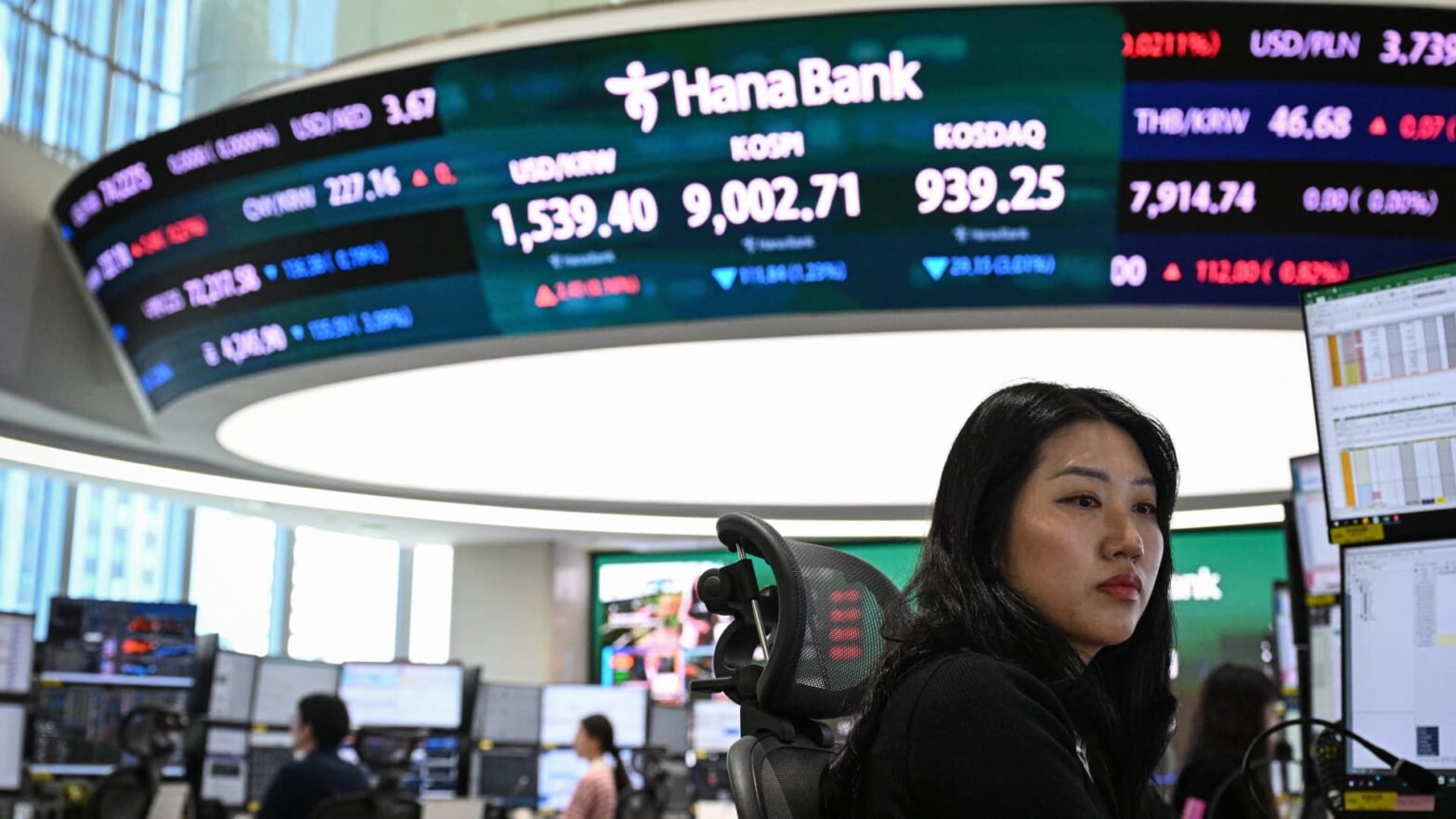
Can you believe it’s December already? As we head into the last few weeks of 2025 there’s a compelling setup for risk assets taking shape: a potential United States Federal Reserve rate cut paired with Japan’s newly approved fiscal stimulus. Together, they could supercharge the yen carry trade and inject enough global liquidity to fuel a Santa Claus rally capping what would be the third consecutive year of stock market gains since the 2022 post-COVID correction.
Fed‑funds futures and prediction markets have now swung decisively in favour of a Fed 25‑basis‑point cut, with odds recently moving above 80 per cent as the core U.S. producer price index cooled (2.6 per cent year-over-year, below the 2.7 per cent forecast and down from 2.9 per cent in the prior reading) and officials signalled room for “near‑term adjustment.” This was a meaningful change from the coin‑flip probabilities seen earlier last month. Probabilities for a December Fed cut have surged from roughly 25 per cent earlier this month to more than 80 per cent now, driving abrupt repricing in duration-sensitive equities and long-multiple names.
Meanwhile in Tokyo, the cabinet’s 21.3 trillion yen (the equivalent of about $191 billion) stimulus package, paired with repeated signals to lean against disorderly foreign exchange market moves, has kept the U.S. dollar (USD) to Japanese yen (JPY) hovering in the familiar intervention zone. Historically, that’s fertile ground for carry trades and year-end risk-taking, even if occasional verbal warnings jolt markets. Japan’s recent actions create a powerful liquidity dynamic. When USD/JPY trades in the intervention zone, it signals stability and encourages the yen carry trade, which is where investors borrow at ultra-low Japanese rates and deploy capital into higher-yielding assets abroad, often U.S. equities.
This flow amplifies risk appetite globally, especially when paired with a dovish Fed pivot. Historically, such conditions have coincided with strong year-end rallies as institutional investors rebalance and chase performance. Add fiscal expansion from Tokyo towards easier U.S. policy, and you have a synchronized tailwind that reduces funding stress, supports growth sectors, and could extend equity momentum well into 2026.
Near‑term tailwinds, however, meet next‑year crosscurrents. As the U.S. primary season begins, determining which candidates will run in an upcoming general election, markets will have to price a wide range of outcomes for the Fed’s leadership and reaction function, the fiscal trajectory and Treasury supply, and the regulatory stance toward technology and finance. December’s momentum is real, but it is operating against a backdrop where policy direction, distributional pressures, and market plumbing could change materially. Beyond year‑end, humility is therefore the right posture.