This report is from this week’s CNBC’s UK Exchange newsletter. Like what you see? You can subscribe here.
The dispatch
It is tempting, in assessing what 2025 brought for the U.K. economy and for Britain’s corporates and financial markets, to focus more on what didn’t happen than on what did.
Most obviously, widely expected interest rate cuts from the Bank of England did not materialize to the extent that had been expected, while inflation failed to decline as the Bank — and others — had expected it to.
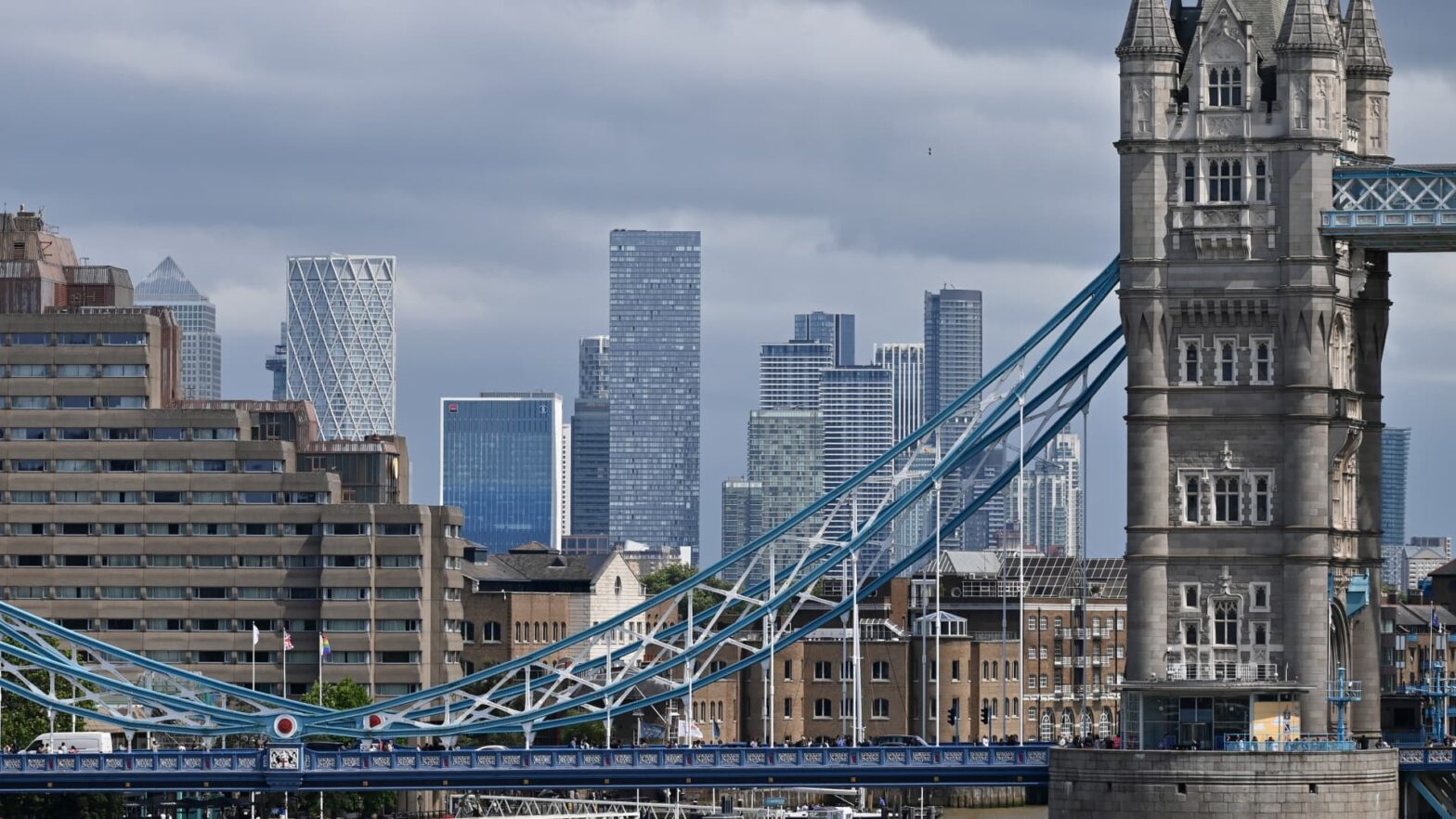
A general view looking past Tower Bridge toward Residential and commercial skyscrapers in Canary Wharf on June 26, 2025 in London, United Kingdom.
John Keeble | Getty Images News | Getty Images
For the economy as a whole, though, forecasters were largely correct.
At the beginning of the year, most expected the U.K. to grow by between 1.3%-1.5%, according to the regular comparison of independent forecasts compiled by the Treasury.
The outcome has been more or less in line with those expectations but, looking at the latest comparison published last month, it is remarkable how little the consensus has shifted despite most commentary around the U.K. economy being unrelentingly negative.
That big picture also disguises some fascinating trends. U.K. GDP grew by 0.7% during the first three months of the year which, as the Chancellor of the Exchequer (U.K. Finance Minister) Rachel Reeves became fond of reminding people, was the best of any G7 economy.
That growth, however, was flattered by exporters building inventories ahead of U.S. President Donald Trump’s imposition of tariffs and, by the middle of the year, it was clear the U.K. had settled into the pattern seen in 2024 — with strong first-quarter growth petering out.
Growth was just 0.3% in the second quarter and a mere 0.1% in the third. September and October, the latest months for which figures are available, both saw the economy contract, month on month, by 0.1% reflecting, firstly, a plunge in car production caused by a cyber-attack at Jaguar Land Rover, the country’s biggest carmaker, and secondly, a becalmed housing market and weak consumer spending ahead of the November Budget.
It means the economy, at the end of October, was no bigger than at the end of May.
As the end of 2025 approaches, the jobs market is flashing a red light for danger. The unemployment rate has ticked up to 5.1%, a level not seen since January 2021, while a closely watched survey published on Monday this week by the Recruitment and Employment Confederation (REC) reported that new job postings between October and November fell by 14.4%.
That may well reflect concerns among employers about what Reeves would announce in her Budget, delivered on Nov. 26, but is nonetheless surprising given the extent to which sectors like retail hire extra workers in the run-up to Christmas.
It suggests the big increase in employer’s National Insurance Contributions (NICs, a payroll tax), announced by Reeves in Oct. 2024 and which came into effect in April, is having a lasting and detrimental impact on the jobs market.
Inflation surprise
It has also contributed to higher inflation — one of the main surprises of 2025. In the final quarterly inflation report of last year, the Bank said it expected consumer price inflation (CPI) “to increase over the next year, to around 2.75% by the second half of 2025.”
In the event, the Bank was partly right, in that inflation rose. But it did so by much more than expected, hitting 3.8% in July, where it remained for the next two months before easing slightly to 3.6% in October (and we’ll find out what it did in November later today). Much of that is due to government policies.
As the Bank noted in its latest monetary policy report, published last month: “Unusually large increases in administered prices, such as vehicle excise duty and sewerage charges, are currently estimated to account for 0.4 percentage points of the overshoot in CPI inflation from target. Food, beverage and tobacco prices are estimated to be contributing a further 0.4 percentage points.”
“Much of the remaining 1 percentage point of the overshoot is judged to reflect elevated labour cost growth, due to past strength in wage growth as well as higher employer National Insurance Contributions, which in turn has pushed up services, and to a lesser extent, goods inflation,” the Bank added.
While energy costs are now starting to bear down on inflation, rather than pushing it higher, other policy decisions will continue to exert upward pressure in the new year, including the recently announced above-inflation increase in the living wage across all age groups, which is expected to push up food and drink prices, and an expansion in the scope of the sugar tax.
The lackluster performance of the U.K. economy does not, however, appear to have adversely affected the stock market. With just six full trading sessions and two shortened sessions left this year after today, the FTSE 100 is up by more than 18% in 2025 and currently on target to outperform the S&P 500 for the first time since 2022 and for only the third time in a decade.
Bear in mind, though, that the FTSE 100 is not a good barometer of U.K. corporate health as it is full of multinational companies generating only a small proportion of their earnings in Britain.
The more accurate indicator of how quoted U.K. businesses are doing is the more domestically focused FTSE 250 and here, the picture is not as encouraging, with the index up around 7% over the year to date.
Within that, some very well-known U.K. corporates have endured a torrid time, including WH Smith, a travel retail specialist, which is down around 44% due to an accounting mishap.
Greggs, the bakery chain, has slipped almost 40% this year due to concerns over flagging sales growth. In the same sector, Domino’s Pizza has fallen around 43%, while another former stock market darling, the discount retailer B&M, is down over 53%. The decline in shares of these last three all point to how hard-pressed U.K. consumers have been in 2025 — and sadly, with expectations now more realistic about how many interest rate cuts the Bank of England will deliver in 2026, this looks likely to remain the case.
Top TV picks on CNBC
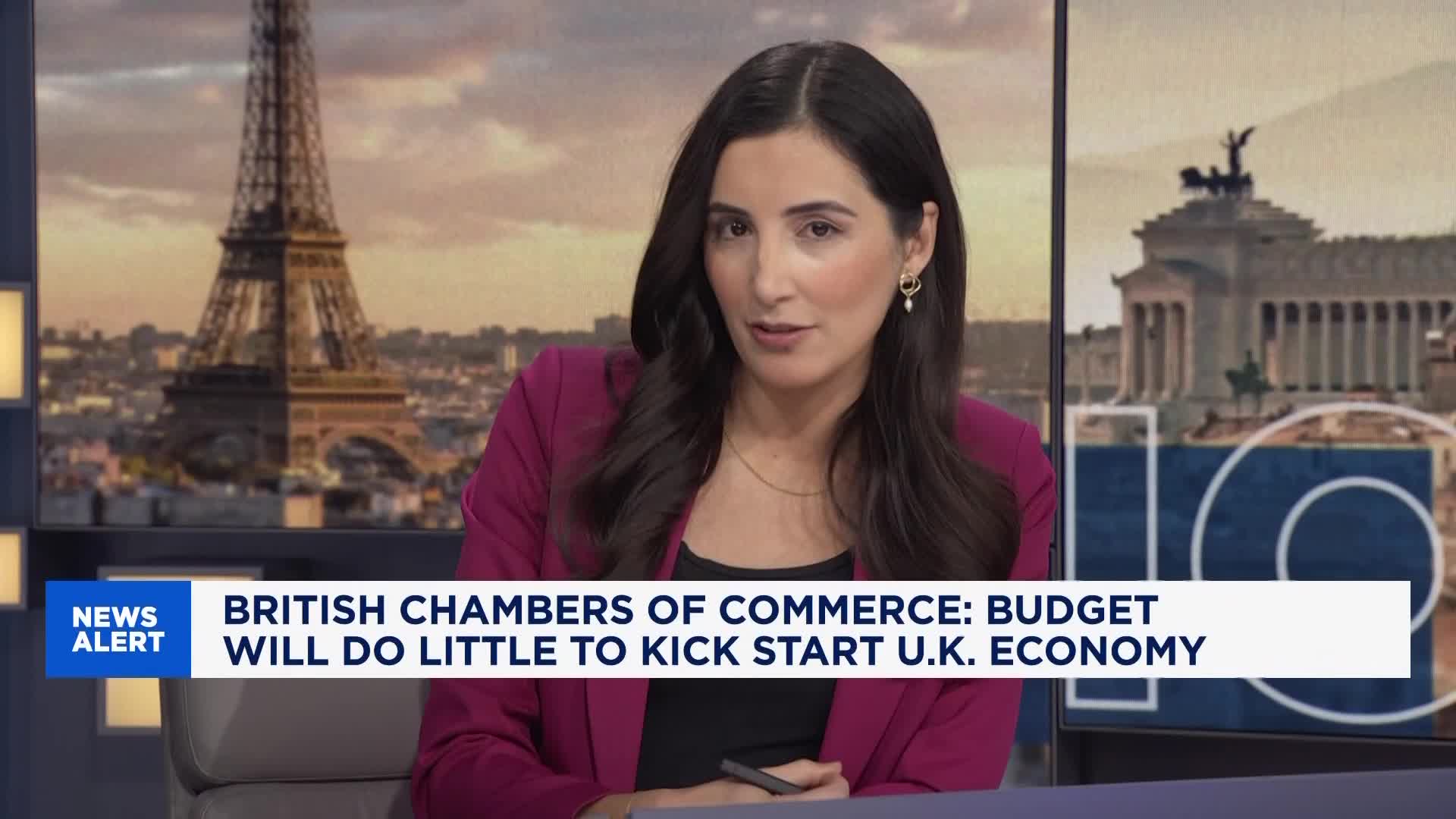
Vicky Pryce from the British Chambers of Commerce suggests AI could help boost the U.K.’s flagging productivity — as the group says Reeves’ budget will do little to kick-start the economy.
Dave Grimm, partner at AlbionVC, discusses the U.K. government’s investment in AI development.

Former Deputy Prime Minister of the U.K., Nick Clegg, has joined Hiro Capital as a general partner in a pivot to venture capital investing. Luke Alvarez, founder and general partner at Hiro Capital speaks to CNBC’s Silvia Amaro.
— Holly Ellyatt
Need to know
Google announces first ‘automated research lab’ in the UK. DeepMind, the tech giant’s AI unit, unveiled on Thursday a partnership with the country’s government to open the facility next year. It will focus on developing new superconductor materials, and will give British scientists “priority access” to AI tools.
Trump sues the BBC in a $10 billion lawsuit. The British broadcast had aired a documentary in which Trump’s Jan. 6 speech in 2021 was edited to make it look like he was explicitly encouraging his supporters to attack the U.S. Capitol. U.S. President Donald Trump filed the lawsuit on Monday night, accusing the BBC of defamation.
The UK economy contracted 0.1% in the three months to October. Economists were expecting gross domestic product to remain stagnant over that period. It follows a 0.1% expansion over the three months to September.
— Yeo Boon Ping, Holly Ellyatt
Quote of the week
There hasn’t been sufficient investment in the U.K., both from the public and the private sector. If you put it all together, as a percentage of GDP fixed investment is considerably lower than all the G7 countries, which is an issue that has kept productivity low for quite some time.
— Vicky Pryce, chair, British Chambers of Commerce’s Economic Advisory Council
In the markets
The FTSE 100 traded lower on Tuesday as jobs data from the Office of National Statistics revealed a rise in unemployment to 5.1% during the three-month period from August to October, its highest level since January 2021.
Britain’s blue-chip index advanced 0.44% since last Wednesday, however, closing 9684.79 on Tuesday, as fresh U.K. PMI data indicated a post-Autumn Budget pick-up in private sector activity.
Among individual names, Endeavour Mining reached a 52-week high earlier in the week, at 3,746.00, and was among the FTSE 100’s top gainers at the closing bell on Tuesday. The gold miner finished the session 2.9% higher.
Elsewhere, EasyJet and JD Sports were two other notable movers during the last full week of trading before Christmas, adding 3.2% and 2.6%, respectively, on Tuesday.
Meanwhile, the British pound has steadily gained ground against the dollar over the past week, with sterling edging higher against the greenback to reach $1.3423 on Tuesday afternoon, up from $1.3382 last Wednesday.
Yields on the U.K. government’s benchmark 10-year bonds — also known as gilts — were marginally higher, ending Tuesday at 4.519% compared to 4.511% a week ago.

The performance of the Financial Times Stock Exchange 100 Index over the past year.
— Hugh Leask
Coming up
Dec. 17: U.K. inflation rate for November
Dec. 18: BOE rate decision
Dec. 19: GfK consumer confidence data for December
— Holly Ellyatt