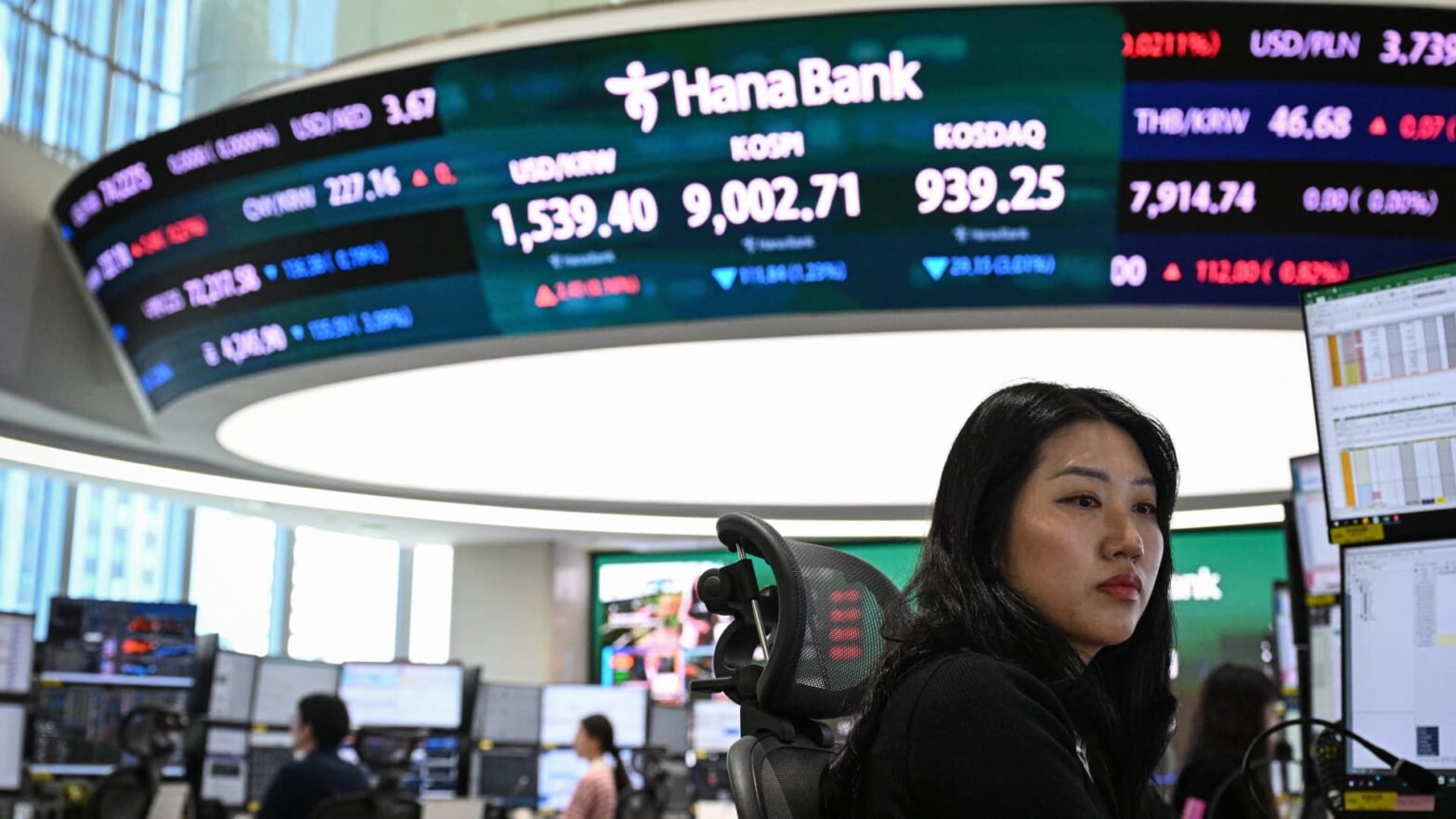
On February 2, the collapse of precious metals triggered a global financial market plunge, with Hong Kong’s three major indices experiencing significant declines once again.
The Hang Seng Index (HSI) fell by 3.2% at one point and closed down 2.23%, plunging over 600 points to 26,775. The Hang Seng China Enterprises Index (HSCEI) dropped 2.54%, while the Hang Seng Tech Index (HSTECH) fell as much as 4.3% during trading and closed down 3.36%, marking its third consecutive day of losses.

Specifically, gold plummeted by $1,000 per ounce at one point, with gold stocks leading a collective decline in non-ferrous metal stocks. Auto stocks remained sluggish throughout the day, while semiconductor chip stocks, coal stocks, biopharmaceutical stocks, oil stocks, insurance stocks, and mainland property stocks all fell. Macao’s January gaming revenue exceeded expectations, supporting a rebound in casino stocks. Meanwhile, most three-child policy concept stocks showed active trading.

 Specifically:
Major technology stocks declined across the board, with Bilibili falling more than 4%, Baidu, Kuaishou, Alibaba, and NetEase dropping over 4%, and Meituan, JD.com, Xiaomi, and Tencent closing lower.

Gold and precious metals stocks plummeted, with Shandong Gold and Chifeng Gold falling more than 12%, and Tongguan Gold, Dragon Resources, Jihai Resources, and Lingbao Gold declining over 8%. Hawkish expectations from the Federal Reserve triggered a complete collapse in commodities, leading to an epic shakeout in gold and silver. On Monday, spot gold fell below $4,450 per ounce at one point, hitting its lowest level since January 8. Spot silver plunged more than 15%, breaking below $72 per ounce, erasing a month’s gains in just three trading days. Citi noted that gold valuations have reached extreme levels, and a retreat in risk aversion in the second half could be the biggest downside risk.

Steel stocks led the declines, with Angang Steel, Maanshan Iron & Steel, and Chongqing Iron & Steel falling more than 7%, and Tiangong International dropping over 4%.

Semiconductor stocks retreated, with Huahong Semiconductor falling more than 11%, Zhaoyi Innovation dropping over 9%, NasChip falling more than 8%, Innoscience and Shanghai Fudan declining over 6%, and SMIC falling over 4%. According to media reports, the three major foundries—Samsung, SK Hynix, and Micron—have tightened order reviews, conducting stricter due diligence on clients, including verifying end-user identities, confirming actual demand quantities, and even questioning the authenticity of orders to address potential market fluctuations caused by some customers overbooking or stockpiling.

Mainland property stocks fell broadly, with Cifi Holdings Group dropping more than 13%, Ronshine China falling over 10%, Shimao Group declining more than 9%, and Country Garden and Sunac China both falling over 6%. BOCI believes that the ‘three red lines’ policy was not the trigger for this round of market adjustments, nor is it currently the main constraint on real estate developers’ development and finances. Therefore, the bank expects that relaxing the ‘three red lines’ will not have a significant effect, and the adjustment in mainland property stocks is an overreaction. Companies with substantial increases, particularly those facing risks, carry significant current share price risks.

Oil stocks continued to decline, with Sinopec Shanghai Petrochemical falling more than 5%, CNOOC dropping over 4%, and PetroChina declining more than 3%. News-wise, signs of possible U.S.-Iran negotiations reduced the risk of supply disruptions, causing international oil prices to fall sharply. TD Securities analysts pointed out that if geopolitical risk premiums recede alongside weak fundamentals, oil prices may face further downward pressure.

Casino stocks led the gains, with Sands China rising more than 4%, while Galaxy Entertainment, MGM China, and Wynn Macau closed lower. According to data released by Macao’s Gaming Inspection and Coordination Bureau, Macao’s gaming revenue in January reached MOP 22.63 billion, up 24% year-on-year, surpassing expectations of 18.5%, and rising 8.35% month-on-month. According to a Citi survey, high-end gamblers’ spending in January grew by 25% year-on-year, likely driven by aggressive marketing strategies, including free tickets to BLACKPINK’s Hong Kong concert and collaborations with Pop Mart’s Twinkle Twinkle character.

Today, southbound capital recorded a net inflow of HKD 1.907 billion, including a net inflow of HKD 2.738 billion via Shanghai-Hong Kong Stock Connect and a net outflow of HKD 0.83 billion via Shenzhen-Hong Kong Stock Connect.

Looking ahead, Morgan Stanley believes that rising geopolitical uncertainty in other regions globally will enhance the attractiveness of Chinese assets. The Hong Kong stock market is expected to become the preferred destination for investors due to its reasonable valuations, low global investor positioning, abundant equity investment opportunities, and highly active IPO markets. It is believed that in the short term, Hong Kong stocks may outperform the A-share market, but this ultimately depends on whether global volatility can subside quickly.