Here’s exactly how to protect your portfolio against market volatility.
Stock prices have been stumbling in recent weeks, and investors have mixed feelings about the future of the market. While 38.5% of investors feel optimistic about the next six months, according to the most recent weekly survey from the American Association of Individual Investors, 38.1% worry that the market will take a turn for the worse this year.
Will the stock market crash in 2026? The short answer is that nobody knows. But downturns are a natural part of the market’s cycle, so it’s wise to prepare for them anyway. No matter when the next slump hits, there’s one move investors should consider making right now.

Image source: Getty Images.
Staying clear-headed is key
When the stock market is shaky, it’s tempting to press pause on investing — or pull your money out of the market altogether — until prices stabilize. While that’s a smart move on paper, it can be costly in practice.
The market will always experience short-term fluctuations, and timing the market accurately is next to impossible. Not even the experts can say where the market will be a month or a year from now, and if you sell at the wrong time, you could lock in steep losses.
Say, for example, you pulled out of the market in April 2025, immediately after stock prices plunged amid fear surrounding sweeping new tariffs. Many investors worried we were headed toward a deep recession, and it would have seemed wise at the time to sell off stocks before prices sank further.
However, the market rebounded almost immediately, and the S&P 500 (^GSPC +0.05%) soared by nearly 20% between April and October.
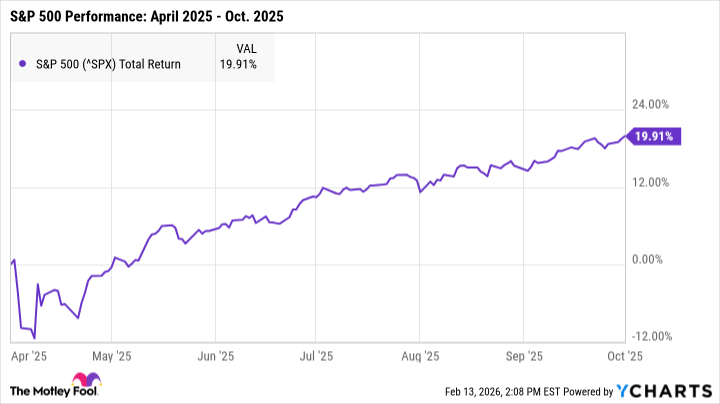
Of course, not all downturns will experience such quick recoveries. But the market can be incredibly unpredictable, and panic-selling could be a recipe for disaster.
If you had sold your stocks in early April 2025, you’d likely have sold them for less than you paid for them. Not only that, if you reinvested a few months later to get back in the market, you’d have been forced to pay higher prices for the same investments you just sold.
How to protect your portfolio against volatility
While it’s often easier said than done, the best way to protect your investments during a downturn is to stay invested no matter what happens. This means keeping your money in the market even if we face a sudden crash, prolonged bear market, or deep recession.
You lose money in the market only if you sell your investments after prices drop. Your portfolio might lose value if the market sinks, but as long as you stay invested until prices bounce back, you’ll be right back where you started without losing anything.
The key is to invest in quality stocks with a greater chance of surviving recessions. Even the strongest companies can take a hit during periods of volatility. But if your portfolio is full of strong stocks with healthy fundamentals, you’re more likely to pull through even the worst downturns unscathed.