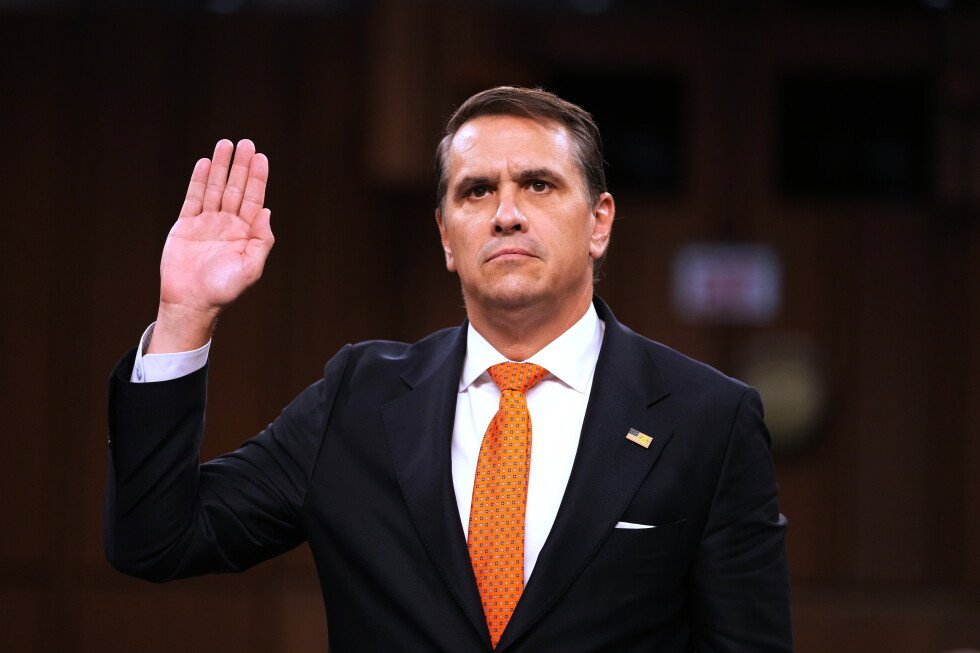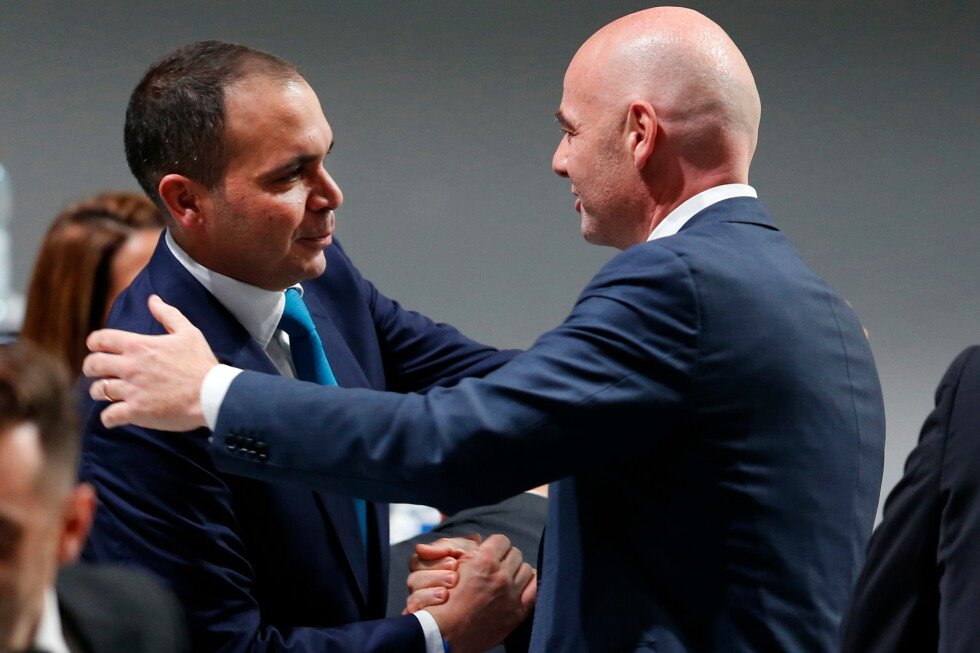
Roy Cooper and Michael Whatley are both millionaires, financial disclosures show. Where do they stand on congressional stock trading?
Posted

By Will Doran, WRAL state government reporter
The debate over whether members of Congress should be banned from trading stocks were reignited this week after Republican President Donald Trump endorsed the idea during his annual State of the Union speech.
It’ll be up to Congress itself to decide whether its members should be banned from trading individual stocks.
Some of North Carolina’s candidates for this year’s open U.S. Senate seat, including Democrat Roy Cooper, have already made their stances on congressional stock trading clear, WRAL reported last month. And just before Trump made his stance known this week, his endorsed candidate in the GOP primary, Michael Whatley, also started backing the idea.
Members of Congress are allowed to make individual trades. But the practice often raises allegations that some members make trades based on information that may not be immediately available to the public — ahead of major votes or announcements. Other critics of congressional stock trading have raised ethical concerns about members of Congress writing laws for industries and specific companies whose success or failure could impact their personal investments.
It’s unclear how serious Trump is about the idea. He’s pardoned multiple members of Congress convicted of white-collar crimes, including one caught in an insider trading conspiracy who’s running for Congress again this year.
But the idea of barring members of Congress from making stock trades polls well with the general public. And Republicans are facing tough political prospects in this midterm election year, as Trump’s approval ratings have been underwater for months. A 2023 poll by the University of Maryland found 86% of Americans would support a ban on congressional stock trading.
Both of North Carolina’s U.S. senators, Republicans Ted Budd and Thom Tillis, have potentially millions of dollars invested in the stock market. But their latest ethics disclosures show they don’t engage in stock-trading of any individual companies. Instead, they’ve reported buying or selling stakes in exchange-traded funds and mutual funds.
WRAL reported last month that Cooper came out in support of banning stock trading by members of Congress. Several other candidates, Democrats and Republicans, also told WRAL they agreed that members of Congress should be either fully banned or at least severely restricted.
At the time, GOP frontrunner Whatley didn’t comment on where he stood on the issue. Whatley and his wife have a net worth of at least several million dollars, according to his financial disclosure form that candidates for office must file. And much of that wealth is tied up in stocks of individual companies — particularly in the energy industry. Whatley spent most of his career as a lobbyist for oil and gas companies, before moving into politics.
The day before Trump announced his stance against congressional stock trading Tuesday, Whatley also said he would support a ban on congressional stock trading if elected.
How Cooper, Whatley made their money
The candidates’ required financial disclosures show Cooper and Whatley are each millionaires. Candidates only have to report their investments, property and bank accounts in broad ranges, not exact amounts.
Cooper’s net worth is between $4.35 million and $9.8 million, mostly due to land he owns in Nash and Wake counties and money invested in various mutual funds and brokerage accounts.
Whatley’s net worth is between $3.35 million and $10.44 million, much of it held in stocks of individual companies.
Those net worth figures are roughly in line with what Tillis and Budd have also reported.
None of the other 2026 candidates for Senate have filed financial disclosures showing how much they’re worth or where their money comes from, except for Democrat Marcus Williams, a Wilmington attorney. Like Cooper, he reported owning no stocks. Williams’ net worth is in the $119,000 to $361,000 range, his filing shows.
Williams said he’d be the best-positioned to represent middle-class people in Congress.
“Creating and fortifying a financial fortune has never been a personal goal,” he said. “My philosophy has been that if you are serving people professionally as a lawyer at the time they really need it most, that is my reward, and the personal individual finances will take care of itself.”
Williams has worked as a public defender, as a director of the nonprofit law firm North Carolina Legal Services, and in roles leading efforts to build low-income housing in southeastern North Carolina.
A war of words
When Whatley announced he now supports banning members of Congress from trading stocks in office, Cooper quickly challenged Whatley to prove his point and immediately sell off his millions in stocks.
“If Michael Whatley truly believes public service is about serving North Carolinians and not boosting his own portfolio, he should commit to selling his individual stocks today,” Cooper said.
Cooper never owned individual stocks while serving as governor, according to his state ethics filings. His federal financial disclosures for the 2026 Senate race show he has continued to refrain from such investments even while out of office. Cooper also said he would continue to refrain from such investments if elected to the Senate, even if there’s no ban forcing him to. He challenged Whatley to make the same pledge.
Whatley didn’t agree to that pledge, nor did he agree to sell his stocks now ahead of the election. Instead, he accused Cooper of having his own conflicts of interest.
Whatley shot back with a message on social media suggesting Cooper acted unethically himself while governor, in his actions surrounding a 2018 natural gas pipeline approval.
“Was it ‘true public service’ to trade your support for a pipeline in exchange for measures that would increase solar profits for your family members?” Whatley wrote to Cooper.
At the time, Republicans in the state legislature accused Cooper of improperly leaning on the state’s Department of Environmental Quality — which he oversaw as governor — to hold up a permit for the Atlantic Coast Pipeline project in eastern North Carolina, which was to be built by Dominion Energy and Duke Energy.
Cooper’s critics claimed that the permitting delay was part of an attempt to pressure the companies to pay $58 million into a fund, which Cooper would’ve controlled, to help mitigate pollution or other negative side-effects of the pipeline — and to pressure Duke into agreeing to considerations for Durham-based Strata Solar. Cooper and his brother have previously owned land near Rocky Mount that was leased to Strata Solar.
Whatley’s financial disclosures show he and his wife own as much as $595,000 in Duke and Dominion stock. Cooper’s financial disclosures show he owns over $1 million worth of land in Raleigh and around Rocky Mount and Nashville, where he grew up, but that he no longer has a stake in the company Strata Solar was leasing land from.
Cooper’s spokespeople at the time criticized the accusations against the then-governor as outlandish and politically motivated. Duke Energy’s chief executive at the time, Lynn Good, also said there was no truth to the allegation it would pay the state millions in exchange for permit approval.
Republican lawmakers released a report laying out their allegations, but nothing ever came of it. And the pipeline was never built, due to unrelated legal challenges in Virginia.
© 2026 Copyright Capitol Broadcasting Company