Updated 2 min read
US stocks opened green on Wednesday following stronger-than-expected private payrolls data and a report that Iran has indirectly approached the US to discuss terms for ending the escalating conflict.
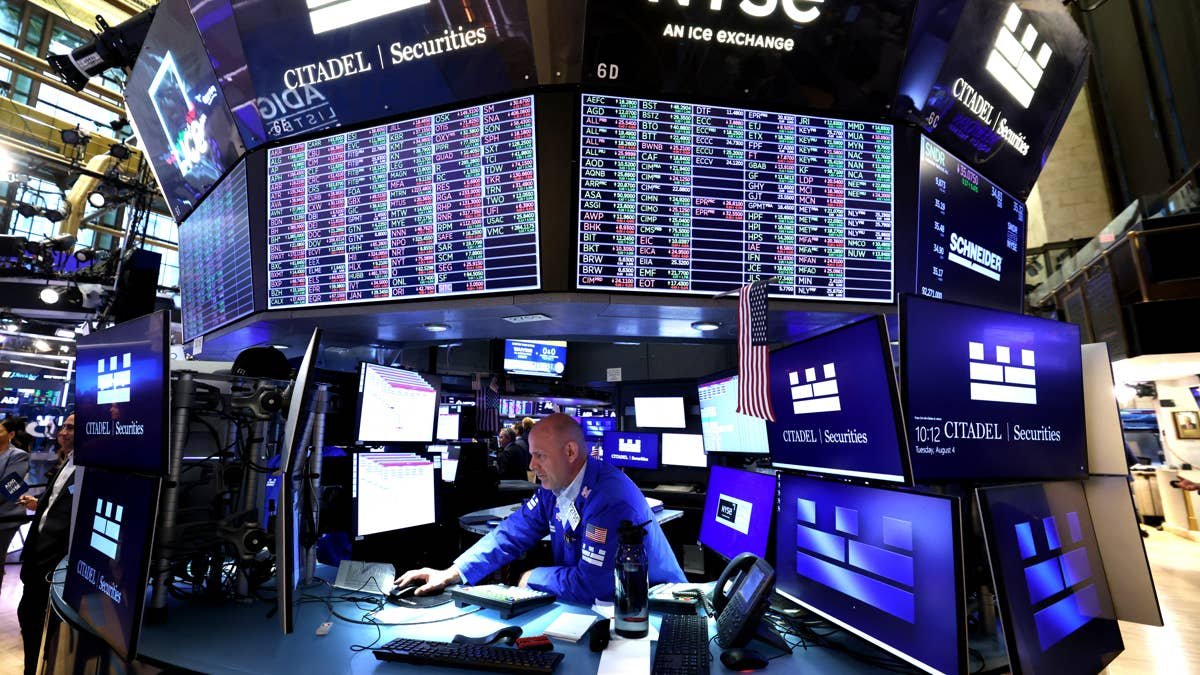
The tech-exposed Nasdaq Composite (^IXIC) led the way up at the open, gaining roughly 1%. Meanwhile, the benchmark S&P 500 (^GSPC) advanced 0.6% and the Dow Jones Industrial Average (^DJI) picked up around 0.4% after the major US benchmarks closed sharply lower on Tuesday.
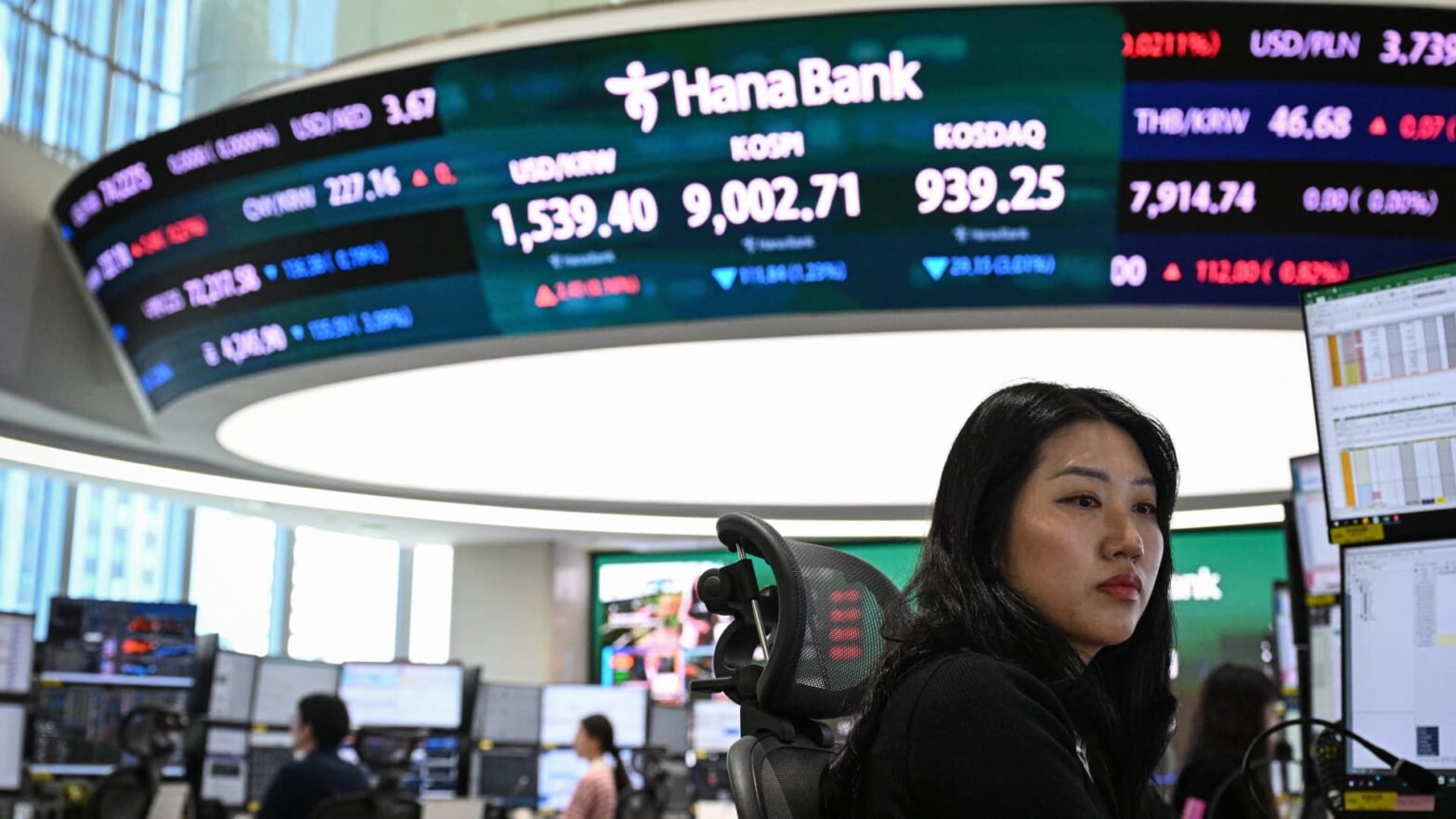
The conflict that has whipsawed stocks entered its fifth day on Wednesday with fresh strikes by Israel on Tehran as Iran awaits the funeral of Supreme Leader Ali Khamenei, killed in weekend attacks. Worries over the fallout from hostilities helped drive Korea’s main benchmark to its biggest one-day crash on record.
But stocks gained on Wall Street following a New York Times report about Iran’s Ministry of Intelligence approaching the CIA through another nation’s spy agency about a possible end to the conflict. However, US officials are said to be unconvinced by the move, and analysts downplayed the bid to negotiate as it was made soon after the fighting began.
Geopolitical tensions have been spurring volatility in US stocks, with dip-buyers playing a part as prices tumbled. Some on Wall Street have warned against counting on President Trump to “chicken out” and rescue stocks.
Trump said on Tuesday that the US would provide insurance and escorts for oil tankers to try to restore traffic through the crucial Strait of Hormuz, stalled amid threats from Iran, though insurance analysts say the measure may not be as effective as hoped. The promise of safe passage came as soaring oil prices threatened to bump up inflation, curbing the scope for US interest rate cuts.
Oil prices pared gains on news of the Iran outreach, with Brent crude futures (BZ=F) trading near $80 a barrel and West Texas Intermediate futures (CL=F) trading at about $73.
Meanwhile, data from ADP showed that the private sector added 63,000 jobs in February, exceeding economist estimates of 50,000. The figures will set expectations for Federal Reserve action on interest rates as a health check on the labor market ahead of Friday’s crucial monthly jobs report.
LIVE 16 updates
-

Cryptos ripping higher: Short squeeze or new bull?
Bitcoin (BTC-USD) is finally lifting off, extending a rally that really kicked off Monday — with high-beta coins like solana (SOL-USD) and ether (ETH-USD) riding shotgun.
It’d be tempting to call it a safe-haven bid (especially with gold (GC=F) sitting out that role), but context matters. Crypto was oversold, while gold was crowded and overbought — so a short-covering pop was due.
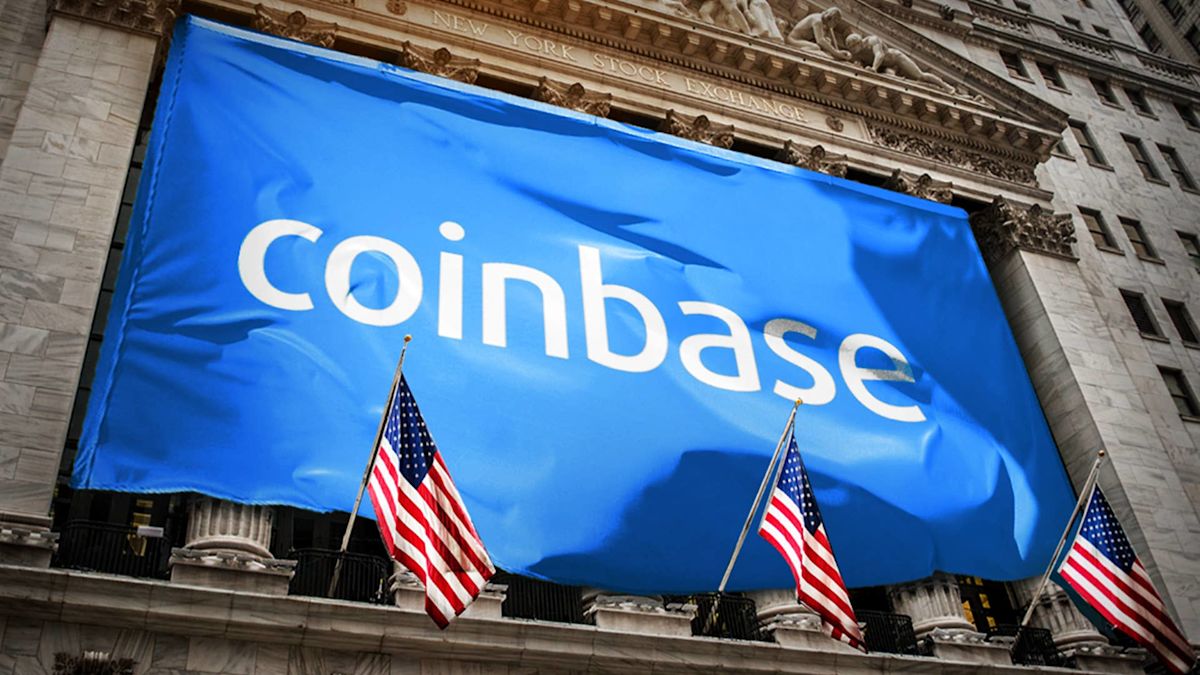
What stands out is the character of the move: The US sessions for stocks on Monday and Tuesday started shaky, then bulls took control into the close. That’s also showing up in the crypto stocks tape, with Strategy (MSTR), Coinbase (COIN), and Galaxy Digital (GLXY) all jumping more than 10% today and posting bigger gains on the week.
The rubber meets the road at bitcoin’s 200-day moving average near $80,000. Bulls will need to power through fresh crypto shorts reloading at that level.
-
Why surging oil prices ‘may bite the hands’ of the Fed
Energy crises tend to have a stagflationary effect on the market: Energy prices, which serve as an input cost for a major swath of products throughout the global economy, rise, pushing inflation higher, while at the same time wages and growth remain flat.
If the conflict in Iran lasts longer than expected and the risk premiums on oil and gas remain significantly heightened, the resulting boost in headline inflation could complicate the Fed’s interest rate path.
Yahoo Finance’s Jake Conley reports:
-
Gold and silver flows disrupted as Iran war grounds flights
Global flows of gold (GC=F) and silver (SI=F) have been disrupted by the war in the Middle East, which has halted flights into and out of Dubai. Experts believe it could cause further volatility in prices, which have already experienced sharp swings this year.
Dubai is the second-largest gold exporter, and with flights being canceled across the region, the risk to gold and silver exports remains high.
The FT reports:
-
S&P Global: Services sector growth fell in February to the lowest level seen since April 2025
Growth in the services sector fell in February to the lowest level since April 2025, according to data released Wednesday morning by S&P Global. The index reading was 51.7, compared to economists’ estimates of 52.3.
The slowdown in growth was driven by an uptick in poor weather, strong gains in operating expense, and confidence levels in the market that remain well below trend, adding to bearish feelings around US growth. New order growth “extended into a twenty-second successive month” but cooled from January, according to S&P.
“February’s PMI surveys reflect increasingly tough trading conditions for businesses so far this year,” Chris Williamson, chief business economist at S&P Global Market Intelligence, said.
“Slowing demand growth from customers both at home and across export markets has been compounded by adverse weather in many states, resulting in the smallest rise in service sector activity for ten months.”
Five out of seven market sectors notched an uptick in output, led by healthcare and industrials, according to S&P Global’s sector readings, with the basic materials and consumer goods sectors seeing the two losses in growth for the month.
Yet, even given widespread growth, “optimism about the year ahead remains subdued by concerns over government policies, and is especially low in the service sector, where the tariff impact is seen as broadly negative and where labor-intensive industries such as leisure and recreation continue to suffer from a combination of worker shortages, high costs and low consumer confidence,” Williamson said.
February marks the first time since September 2024 that healthcare has been the fastest-growing sector in the economy, according to S&P Global.
-
Geopolitics has no playbook, so watch these 3 panic levels
Markets tend to freak out first and ask questions later when international tensions flare — but history also says that panic often fades in days or weeks (sometimes months). The exception is the ugly one: a prolonged, boots-on-the-ground conflict.
With recent market history already skittish, the cleanest risk-off tells right now are three levels in three different markets.
If WTI crude (CL=F) punches and holds above $80, inflation and growth fears can compound. Tuesday’s high near $78 was quickly and forcefully rejected to the downside, which keeps this signal safe for now.
Next, if the US dollar index (DX-Y.NYB) pushes above 100, financial conditions tighten, weighing on risk markets. Tuesday’s swift rejection of the dollar’s advance to just under this level is also a positive.
Finally, if the S&P 500 (^GSPC) closes below 6,800, the stock market is signaling the shock is sticking. On Monday, this level was tested and held within a few points. Tuesday, it washed out to near 6,700 but then caught a huge bid — even turning green briefly — before closing at 6817. This is clearly the line in the sand for the bulls.
Worth monitoring, but not standalone signals: rice action in the 10-year yield (^TNX), gold (GC=F), and bitcoin (BTC-USD), which has perked up again, likely for technical reasons.
But if those three must-hold levels fail, lean defensive.
-
Aluminum futures hit highest level since 2022
Aluminum futures (ALI=F) have reached their highest prices since the outbreak of the war between Russia and Ukraine in February and March 2022, as shipping through the Strait of Hormuz has come to a standstill.
Prices crossed $3,300 per ton Wednesday morning, marking a 14% gain since the start of 2026 and a gain of 29% over the past year.
Countries throughout the Gulf have invested in massive smelting capacity buildouts over the past decade, now accounting for roughly 10% of the global aluminum smelting market — nearly all of which must transit the Gulf to reach international buyers.
With transit through the waterway choked off as conflict rages on throughout the Middle East, the aluminum market is facing a sudden and steep drop in global volumes, sending prices surging. While President Trump on Tuesday said the US would provide insurance and security guarantees to vessels transiting the Strait, insurance insiders are skeptical that traffic will meaningfully pick up, at least in the short term.
Aluminum smelting is also extraordinarily electricity-intensive, making the industrial metal highly sensitive to moves in oil and gas prices. The result: a market that’s essentially double-tapped by both physical constraint and input price.
-
US stocks turn positive at the opening bell
The US stock market turned up on Wednesday after stronger-than-expected private payrolls data and a report that Iran has indirectly approached the US to discuss terms for an end to the conflict ravaging the Middle East.
The tech-heavy Nasdaq Composite (^IXIC) led gains at the opening bell, rising roughly 0.8%. Meanwhile, the S&P 500 (^GSPC) and Dow Jones Industrial Average (^DJI) picked up 0.4% and 0.3%, respectively, after the major US benchmarks closed sharply lower on Tuesday in a seesaw day on Wall Street.
Brent crude futures (BZ=F) are trading near $81 a barrel, and West Texas Intermediate futures (CL=F) were trading at about $74.
The private sector added 63,000 jobs in February, according to numbers published Wednesday by ADP, exceeding economist estimates of 50,000 and setting expectations for Federal Reserve action ahead of Friday’s monthly jobs report. Earnings from Broadcom (AVGO), Costco (COST), and Alibaba (BABA) fill out the corporate calendar for the week.
-
Private sector added 63,000 jobs in February, per ADP; chief economist says hiring ‘concentrated in only a few sectors’
Private-sector employment increased by 63,000 jobs in February, according to data released Wednesday morning by data provider ADP — healthily exceeding economist estimates of 50,000 jobs added and marking the best monthly showing for gains since July 2025.
“Service-providing” sectors accounted for 47,000 new jobs, while “goods-producing sectors” added 16,000, ADP said.
While the numbers are stronger than expected, comments from ADP tempered the gains.
“We’ve seen an increase in hiring and pay gains remain solid, especially for job-stayers,” said Nela Richardson, chief economist at ADP. “But with hiring concentrated in only a few sectors, our data shows no widespread pay benefit from changing jobs. In fact, the pay premium for switching employers hit a record low in February.”
ADP’s private payrolls figures give investors a preview of what’s to come on Friday, when the Bureau of Labor Statistics releases its critical monthly payrolls data. Economists are expecting 000 jobs added, according to consensus estimates compiled by Bloomberg — roughly in line with the estimates that preceded January’s blowout report of 130,000 additions.
-
Oil prices steady after President Trump offers tankers protection through Strait of Hormuz
Oil prices pared gains on Wednesday morning after fears of a full-blown shipping crisis were temporarily averted following President Trump’s offer to insure and even escort tankers through the Strait of Hormuz.
Futures on Brent crude (BZ=F), the international pricing benchmark, eased to below $82 per barrel after reaching $84 on Tuesday. Futures for West Texas Intermediate crude (CL=F), the US benchmark, fell to $74 from $77.
Yahoo Finance’s Brooke DiPalma and Jake Conley report:
-
Why markets might be having a change of heart about the Iran war
Yahoo Finance’s Hamza Shaban writes:
Read more here in today’s takeaway from the Morning Brief.
-
Wall Street strategists warn not to bet on Trump rescuing stocks rattled by Iran war
Bloomberg reports:
-
Gold gains as dip-buyers enter market despite dollar strength
From Bloomberg:
-
Premarket trending tickers: Strategy, Ross Stores, Moderna and Gitlab
Strategy (MSTR) stock rose 8% before the bell on Wednesday, following a 6% rise in bitcoin. Strategy is one of the largest corporate holders of the cryptocurrency.
Ross Stores’ (ROST) stock jumped 5% during premarket trading on Wednesday following the release of its fourth-quarter results, which beat analyst estimates.
Moderna (MRNA) stock rose 3% before the bell today. The pharmaceutical company said it had reached a deal to resolve a dispute relating to its COVID vaccine.
GitLab (GTLB) shares fell 9% in premarket trading on Wednesday after the company announced it expects sales to slow this year. The software company outlined initiatives to help boost its guidance.
-
Global funds unwind hottest AI trades as inflation fears mount
Bloomberg reports:
-
Asian markets fall, Korean exchange closes as Iran fallout drives benchmarks down
Reuters reports: