New York —
Oil prices Wednesday paused their recent surge, supporting a rebound in European and US stocks, as investors hold hope for limited long-term disruptions to energy markets and monitor developments in the Middle East.
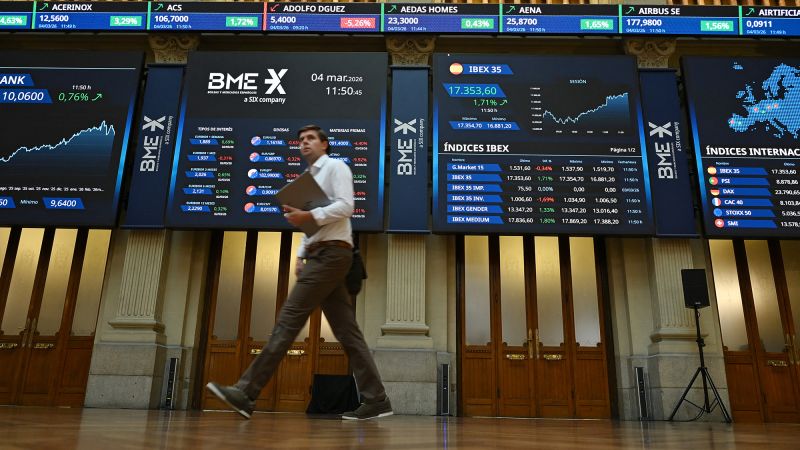
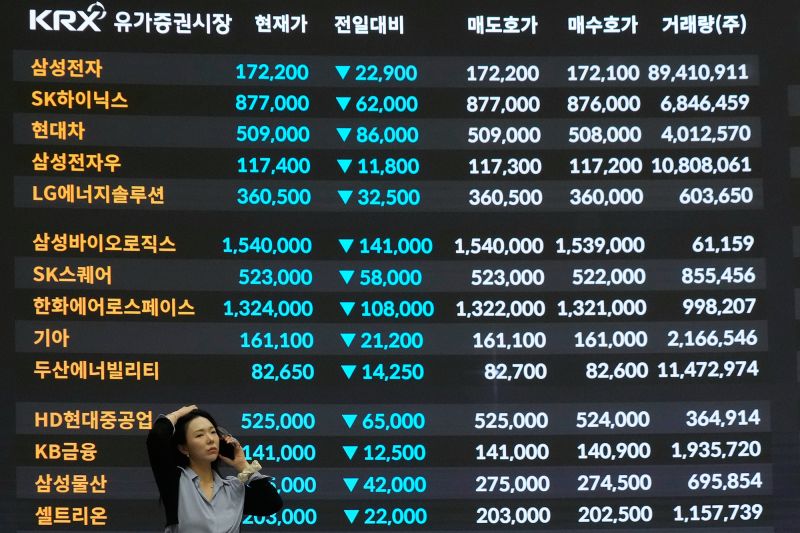
Global investors are digesting the market turmoil spurred by the US war with Iran and subsequent conflict across the region. Asian stocks sank Wednesday, while European and US stocks steadied after two days of intense volatility.
South Korea and Japan rely on imports of liquified natural gas from the Middle East, leaving their economies and market particularly exposed to the ongoing turmoil.
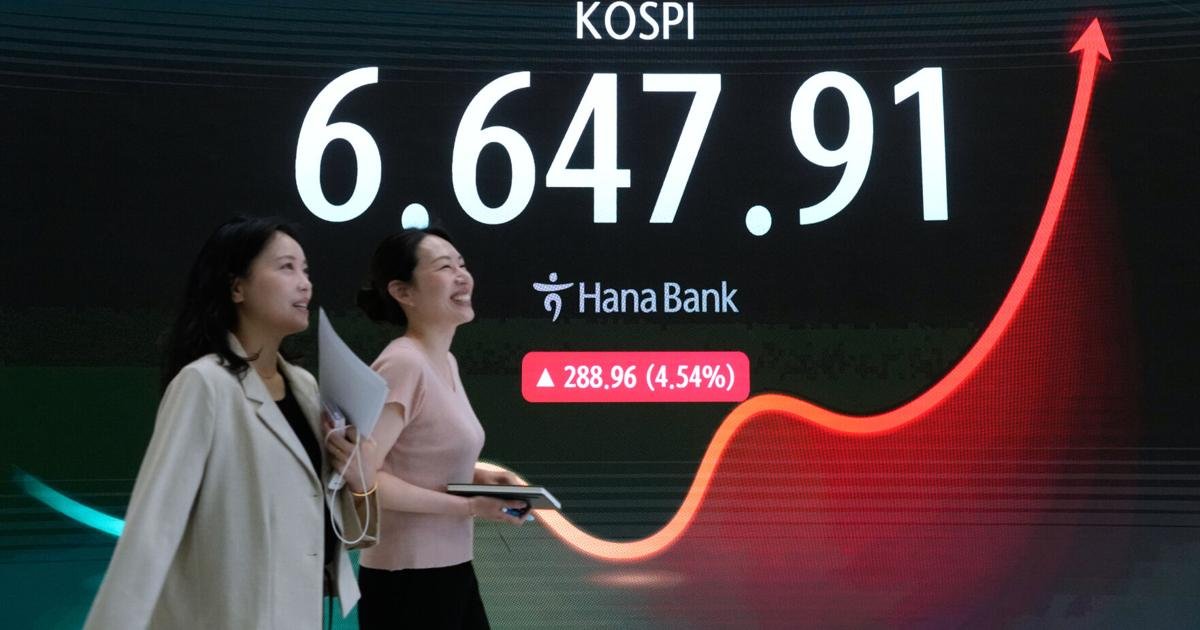
South Korea’s benchmark Kospi index plunged 12%. The index had dropped 7.24% Tuesday, putting it on the precipice of a technical bear market.
Despite the plunge, the Kospi is still up nearly 21% this year. South Korea’s stock market was a top performer in 2025, surging 76% on enthusiasm about artificial intelligence and chipmakers.
“The fact that these countries are all almost entirely dependent on LNG for their supply of natural gas makes them especially vulnerable to the current halt in supply from the Middle East,” analysts at Capital Economics said in a note.
US and European stocks rebounded and oil prices moderated after the New York Times reported that Iran made indirect contact with the United States to discuss negotiations to end the conflict.
Separately, Treasury Secretary Scott Bessent on Wednesday confirmed to CNBC that the United States Navy is set to provide “safe passage” through the Strait of Hormuz for oil tankers “when it is appropriate and should it be needed,” reinforcing comments made by President Donald Trump on Tuesday that helped oil prices moderate.
“There are still some real risks out there for investors…given that the stock market is pricing in the best-case scenario outcome right now,” Matt Maley, chief market strategist at Miller Tabak + Co, said in a note.
Diversifying and investing in Europe and Asia markets proved a popular theme across the past year, with international stocks outperforming the S&P 500. That theme has been tested this week as Asia in particular has borne the brunt of stock market pain. Japan’s Nikkei 225 is down roughly 8% this week and on pace for its worst week since March 2020.
Oil prices steadied Wednesday, pausing a recent jump. US crude oil moved 0.3% lower, to $74.32 per barrel. Brent crude, the international oil benchmark, fell 0.2%, to $81.25 per barrel, hovering at its highest level since January 2025.
The relative calm in oil prices after two days of soaring higher helped ease some pain in the US stock market. The Dow gained 330 points, or 0.68%. The S&P 500 rose 0.86%, and the tech-heavy Nasdaq gained 1.4%.
The Dow and S&P are each down less than 0.5% this week and the Nasdaq is in the green despite the geopolitical uncertainty. A strong report Wednesday on the US service economy also helped boost stocks.
Gasoline prices jumped roughly 9 cents, to nearly $3.20 a gallon, according to AAA. Meanwhile, US gasoline futures edged higher, extending this week’s gains to nearly 9%.
US natural gas futures moved 4.2% lower, reversing course after rising 3.2% Tuesday. US diesel futures were flat but are up nearly 23% this week.

Europe natural gas and diesel prices fell 9% and 3%, respectively, calming after two days of sharp rises. Natural gas and diesel futures for the region are still up 55% and 30%, respectively, this week.
“The war in the Middle East continues, but markets have settled down for the time being,” John Canavan, lead analyst at Oxford Economics, said in a note.
“President Trump’s promises to use the US navy to escort vessels through the Strait of Hormuz helped to steady energy prices, which has allowed other markets to stabilize while awaiting further developments,” Canavan said.
Havens and bonds fluctuate as resurgent inflation worries linger
US Treasury yields ticked higher, extending gains, as investors sold bonds and digested the potential inflationary impacts of higher energy prices.
The 10-year yield, which dipped to 3.96% late Sunday, is trading at 4.08%. Yields, which influence borrowing costs across the economy, remain relatively low, with the 10-year yield just at its highest level in two weeks. But the knee-jerk move higher highlights that traders are suddenly skittish about inflation.
The US dollar weakened against other major currencies, pausing a strong two-day jump. The dollar index is up 1.35% this week as the greenback has benefited from investors seeking safe havens as well as nerves about inflation that could keep the Federal Reserve on hold, supporting the dollar.
Gold climbed 0.9%. The yellow metal is down 1.5% this week despite traditionally being considered a safe haven. Bitcoin surged more than 7% across the past day to rise above $71,000.
“Any signs of the war ending soon, of course, also helps dampen worries of a prolonged shortage of energy for the world’s market,” Thierry Wizman, global FX and rates strategist at Macquarie Group, said in a note.
“Hopes aside, the prospect of a long (i.e., multi-month) conflict that draws in other countries remains a potential scenario, as do more attacks on the civilian and energy infrastructure of the Gulf nations,” Wizman said.