Stock markets have rebounded in Asia after days of heavy losses driven by the war in the Middle East, but oil and gas prices have continued to climb amid disruption to supplies.
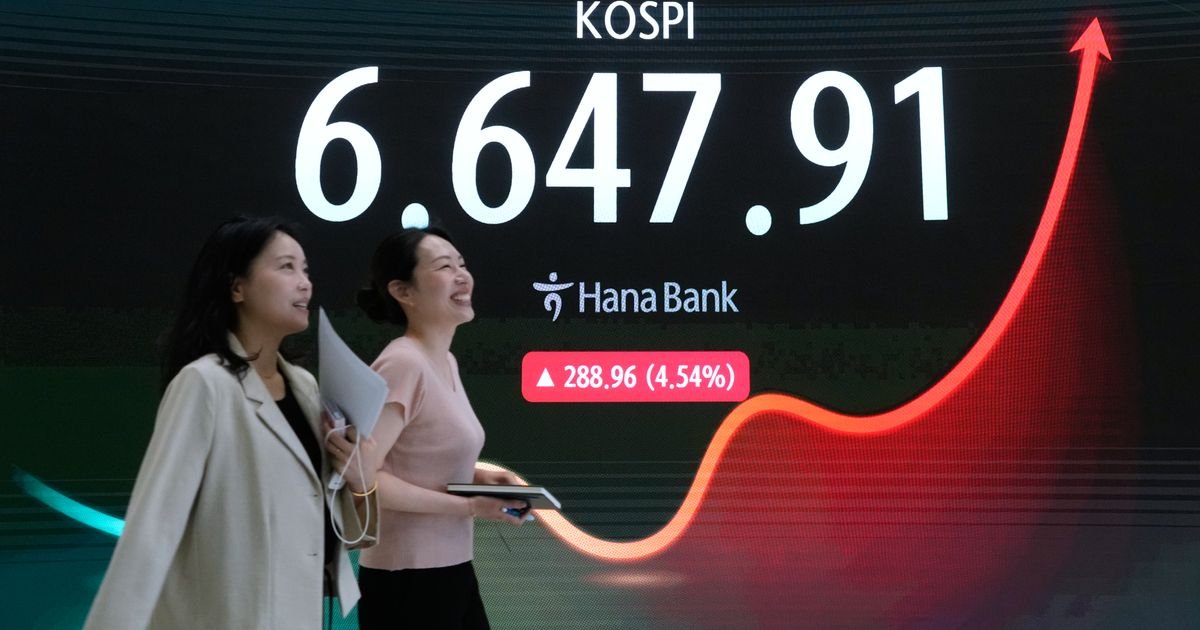
South Korea’s KOSPI, which posted its biggest ever fall on Tuesday of 12%, soared almost 10% on Thursday, while Japan’s Nikkei climbed by 1.9%. MSCI’s Asia-Pacific index excluding Japan jumped by 2.7%.
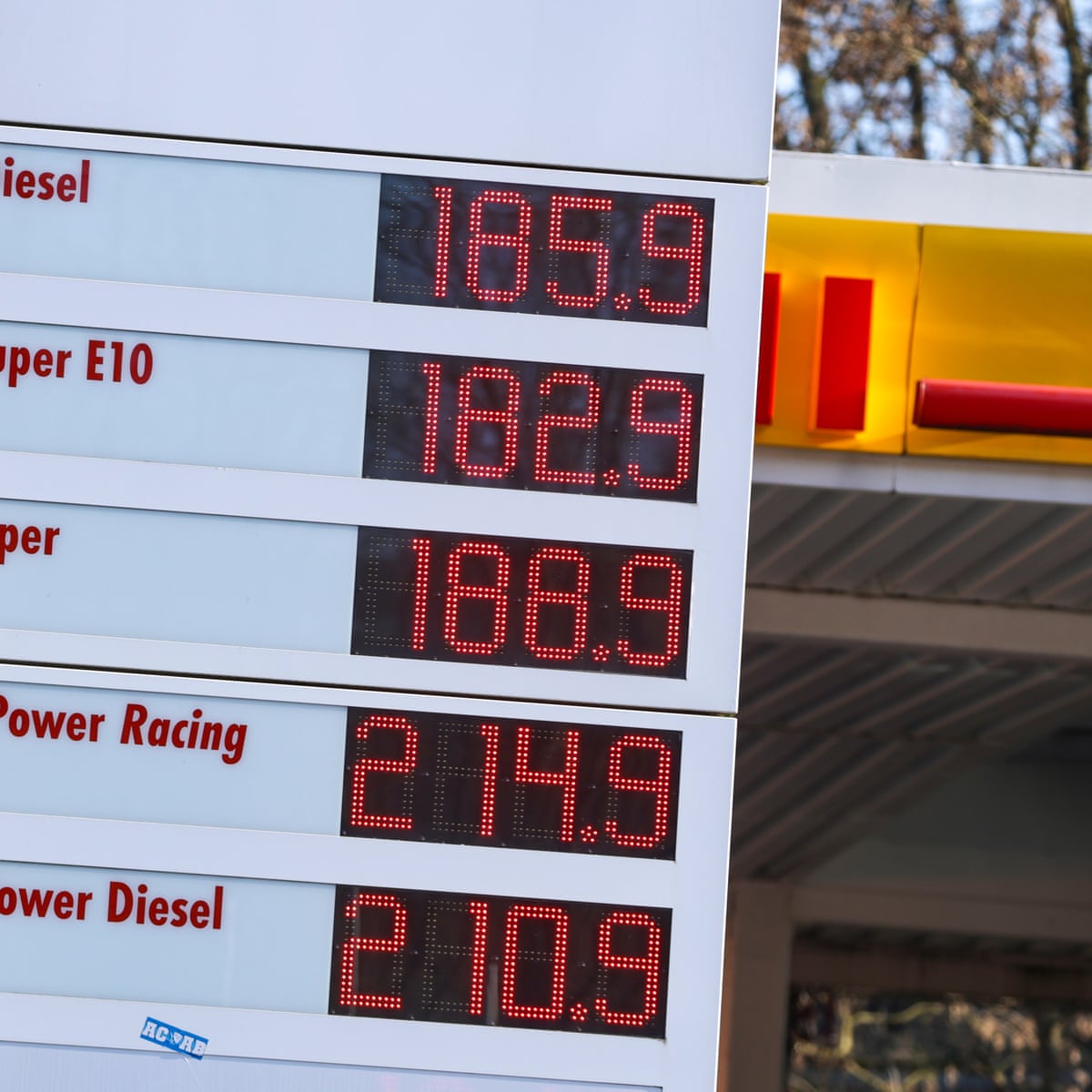
Oil rose further after Iran’s Tasnim news agency reported that US oil tanker in the northern Persian Gulf had been hit by a missile launched by Iranian forces. Brent crude lifted by 3.3% to $84 a barrel.
Gas prices also pushed higher, with UK gas up almost 1%, while European natural gas futures climbed 2%.
Qatar, the Gulf’s biggest liquefied natural gas producer, suspended activity at its facilities on Monday and declared force majeure on gas exports on Wednesday, freeing it from contractual obligations to its customers. Reuters quoted sources as saying that a return to normal production volumes could take at least a month.
In the Middle East, the Abu Dhabi stock market fell by 2.6% while the Dubai exchange was down 2.2%. Both exchanges said they would temporarily set a 5% lower price limit on securities.
In London, the FTSE 100 index slipped by 0.3% in early trading, but later rose 60 points, or about 0.5%.
Wizz Air, which has cancelled flights to and from Israel, Dubai, Abu Dhabi and Amman until 15 March, warned of a €50m (£43m) hit to annual profits, also reflecting the impact of higher jet fuel costs.
This means net profits this year are likely to be below its previous range of a €25m loss to a €25m profit, the Hungarian airline said. Its London-listed shares fell as much as 6%, and other airline stocks also declined.
China’s government has told the country’s biggest oil refiners to halt exports of diesel and gasoline as it faces disruption to crude supplies, according to Bloomberg. Its reported that officials from the National Development and Reform Commission, the country’s top economic planning body, had met refinery executives and called for a temporary suspension of refined product shipments that would begin immediately.
In South Korea, a ruling party lawmaker warned that the US-Israeli war with Iran, now in its sixth day, could disrupt supplies of important semiconductor manufacturing materials.
South Korea’s chip industry, which supplies two-thirds of global memory chips, is also concerned that a prolonged conflict in Iran will lead to higher energy costs and prices, Kim Young-bae said after meeting with executives from firms such as Samsung Electronics and trade groups.
Stephen Innes, managing partner at SPI Asset Management, said: “The geopolitical backdrop remains as combustible as ever. President Donald Trump continues to project confidence in the military campaign against Iran even as the timeline for operations remains murky. Missiles are still flying across the region, and bombs are still falling.
“Yet the strategic calculus on trading desks has begun to shift subtly but importantly. Intelligence circulating through US Command channels suggests Iran’s conventional military capacity is deteriorating quickly after huge naval losses and sustained airstrikes on missile-launching capabilities.”
He also pointed to “solid” economic data for the US, a strong ADP jobs report and a jump in service sector activity, according to a survey.
Another boost to Asian stock markets came from China setting out a five-year roadmap to speed up scientific breakthroughs and embed AI across its industrial economic machine.