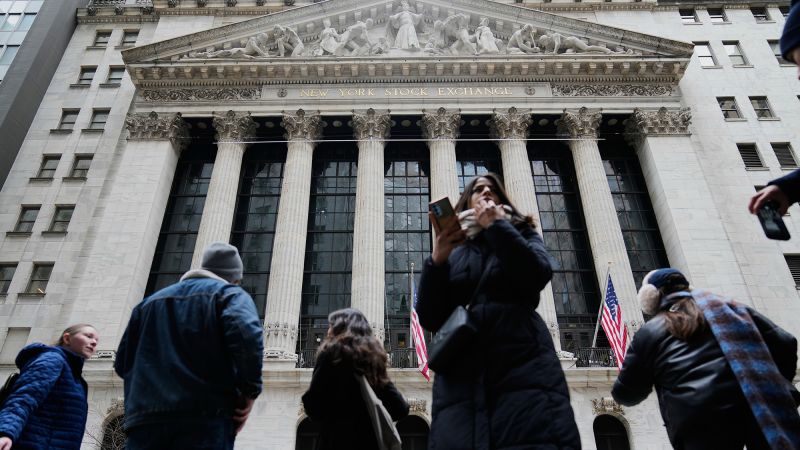
New York —
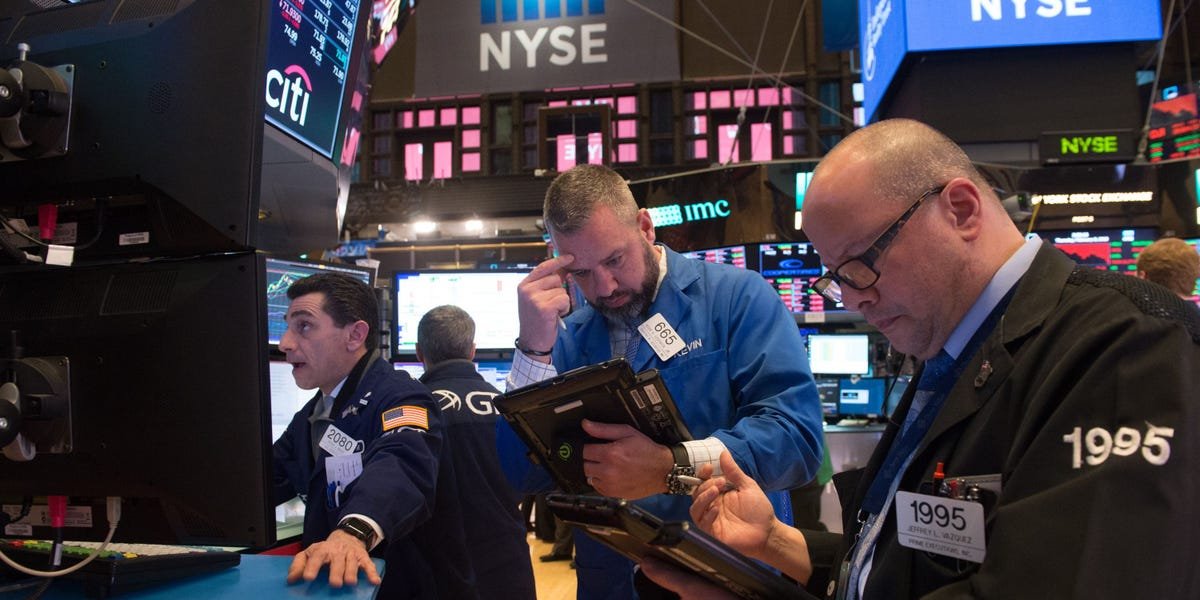
Stocks fell and oil prices hit their highest level since 2022 as investors Monday grappled with a potential energy crisis caused by the war with Iran.
The Dow fell 447 points, or 0.94%. The S&P 500 fell 0.6%, and the Nasdaq Composite moved 0.3% lower, recouping steeper losses earlier in the day.
The Dow and S&P are coming off their worst weeks since April and October, respectively. Stocks have been jolted by nerves about the Middle East conflict disrupting the global flow of oil and reigniting inflation at a time when the US labor market appears to be on shaky ground.
Oil prices Monday surged above $100 per barrel to their highest level since mid-2022, when markets were rocked by Russia’s invasion of Ukraine.
US crude and Brent gained 36% and 27% last week, respectively, before jumping higher Sunday evening when trading opened. Oil prices rose to nearly $120 per barrel before paring some gains after a report from the Financial Times that finance ministers from G7 countries are meeting to discuss the potential joint release of strategic oil reserves.
US crude oil was up 6.5%, to $96.80 per barrel, as of late morning. Brent crude, the international benchmark, was up 7%, to $99.21 per barrel.
Stocks pared losses and oil further pared gains after the FT reported Monday that G7 finance ministers were expected to meet Tuesday and said they would take “necessary measures” to address soaring oil prices. Oil prices had fluctuated Monday after the FT reported that Roland Lescure, the French finance minister, said G7 countries are “not there yet” on releasing oil reserves.
Despite paring gains, oil prices are holding on to daily gains of 6% — a large move after briefly surpassing the key $100 per barrel threshold. The surge in energy prices is weighing on the outlook for stocks across the globe.
Nerves of an energy crisis intensified over the weekend as oil producers in the Gulf announced further halts to production, with Bahrain’s national oil company declaring force majeure. Meanwhile, Mojtaba Khamenei, the late Ayatollah’s son, has been named the next supreme leader in Iran.
“Investors were hoping cooler heads would prevail in the Iran war this weekend, and instead, tensions escalated, which is exacerbating last week’s stock market declines and oil price spikes,” Carol Shleif, chief market strategist at BMO Private Wealth, said in a note.
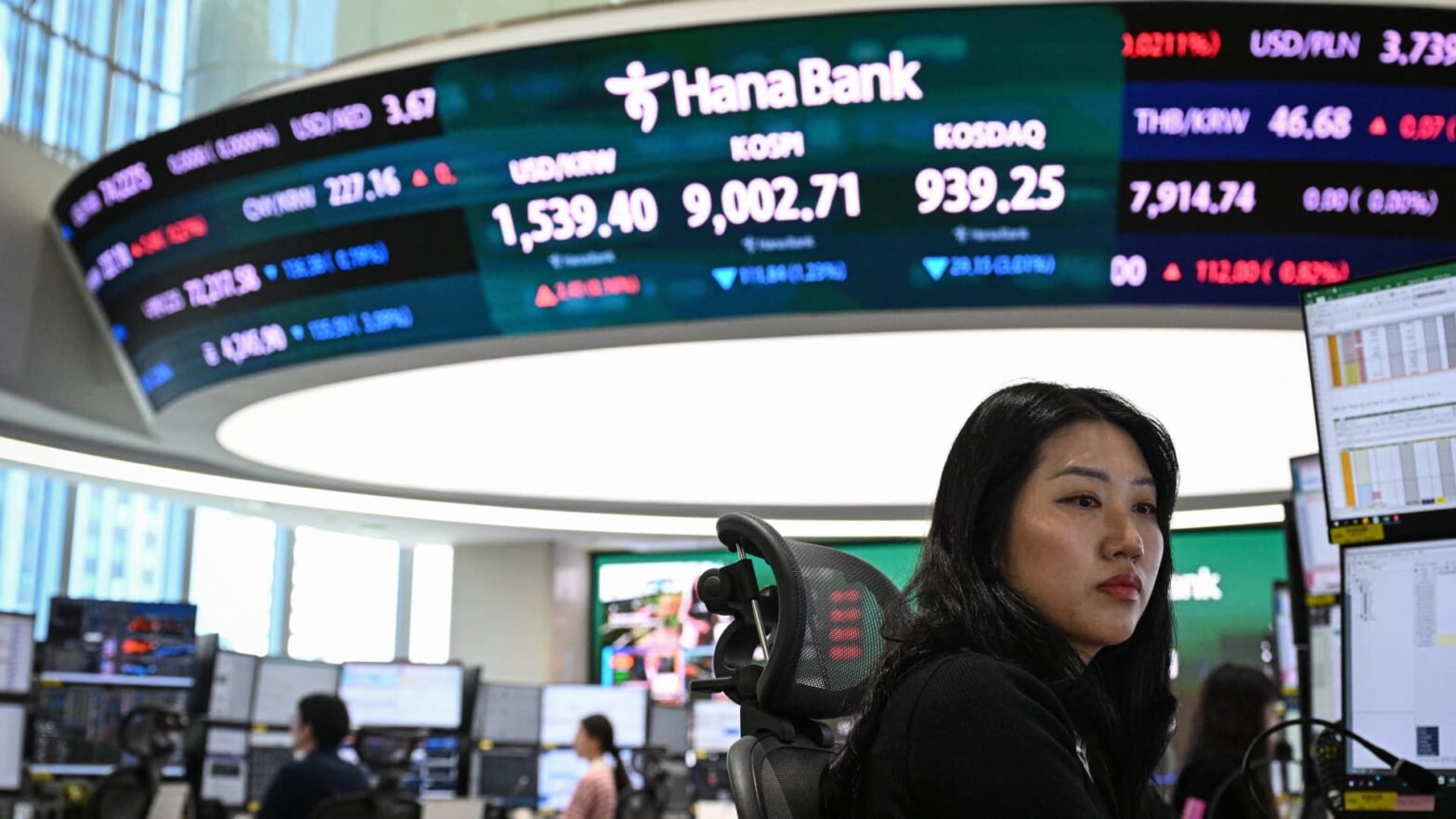
Japan’s Nikkei 225 slumped 5.2% Monday. The slide put the index down more than 10% so far this month, although it is still up 5% this year.
Europe’s benchmark Stoxx 600 index was down 0.7%, nearly putting it into the red for this year, after sliding more than 5% last week. The three major US stock indexes are in the red this year. The Dow and Nasdaq are more than 6% off their most recent peaks, while the S&P is down more than 4% since hitting a record high in late January.
“Investors are clearly in a risk-off mindset as each day delivers headlines announcing a further widening of the conflict,” Sam Stovall, chief investment strategist at CFRA Research, said in a note.
“No one knows if the current crisis will result in a pullback, correction, or bear market,” Stovall said.
The war with Iran has effectively halted the flow of oil through the Strait of Hormuz, the narrow waterway off Iran’s coast through which 20% of global oil consumption flows.
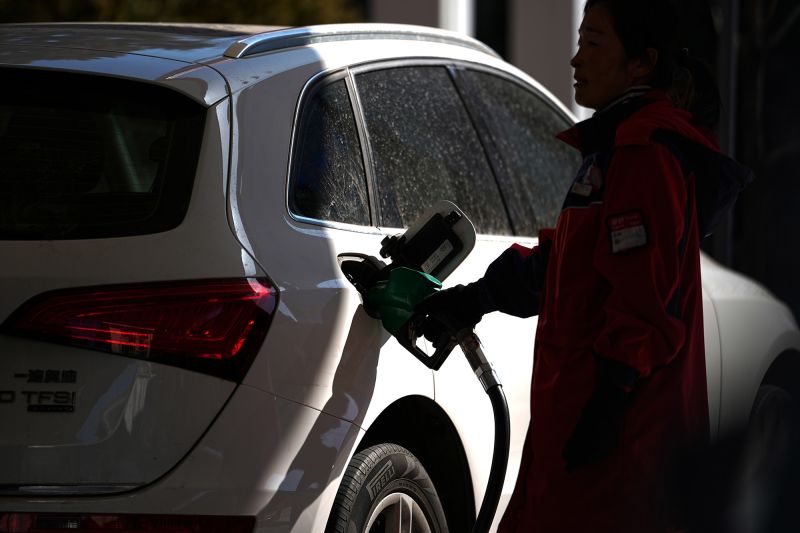
“This chaos in the financial markets is all about the Strait of Hormuz,” Ed Yardeni, president of Yardeni Research, said in a note.
“This oil shock won’t end until ships can sail freely through the Strait,” Yardeni said. “Until then, the financial markets are likely to become increasingly concerned about a 1970s-style stagflation scenario.”
Treasury yields ticked fluctuated and ticked lower after a weak jobs report released Friday showed 92,000 jobs were shed in February. The 10-year Treasury yield ticked down to 4.13% and hovered at its highest level in nearly one month.
The US dollar index rose 0.1%, hitting its highest level since January and building on strong gains last week. The dollar has benefited from safe haven demand.
Wall Street’s fear gauge, the VIX, fell 5% and hovered at its highest level since April, when markets were rocked by uncertainty about tariffs. “Extreme fear” was the sentiment driving markets, according to CNN’s Fear and Greed Index, which hit its lowest reading in three months.
This is a developing story and will be updated.