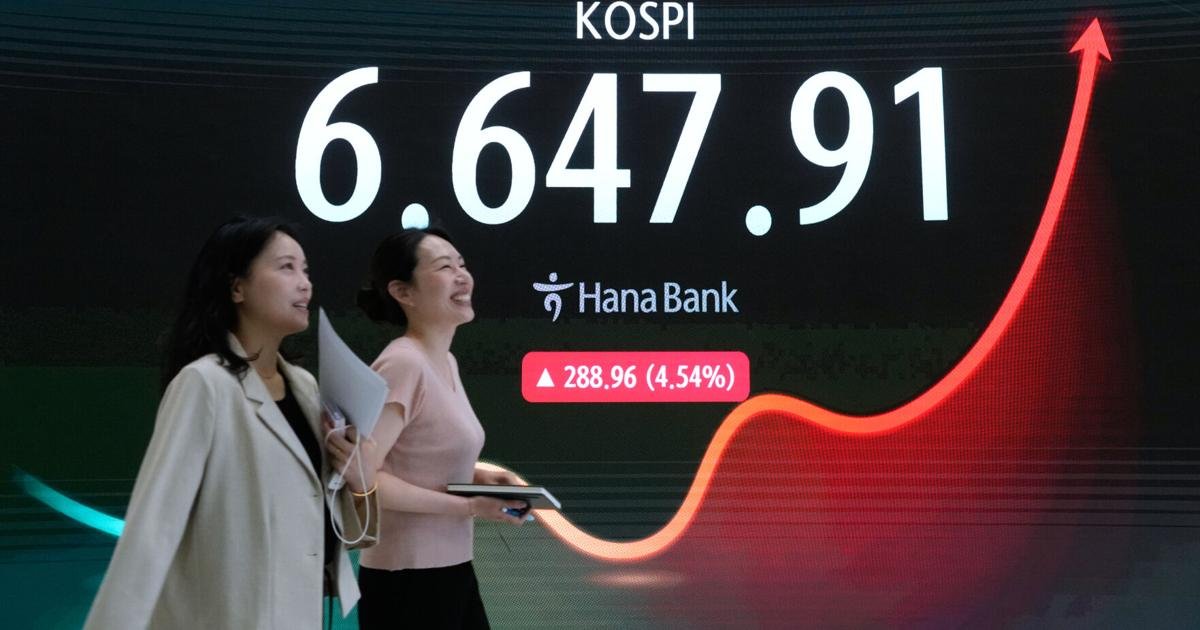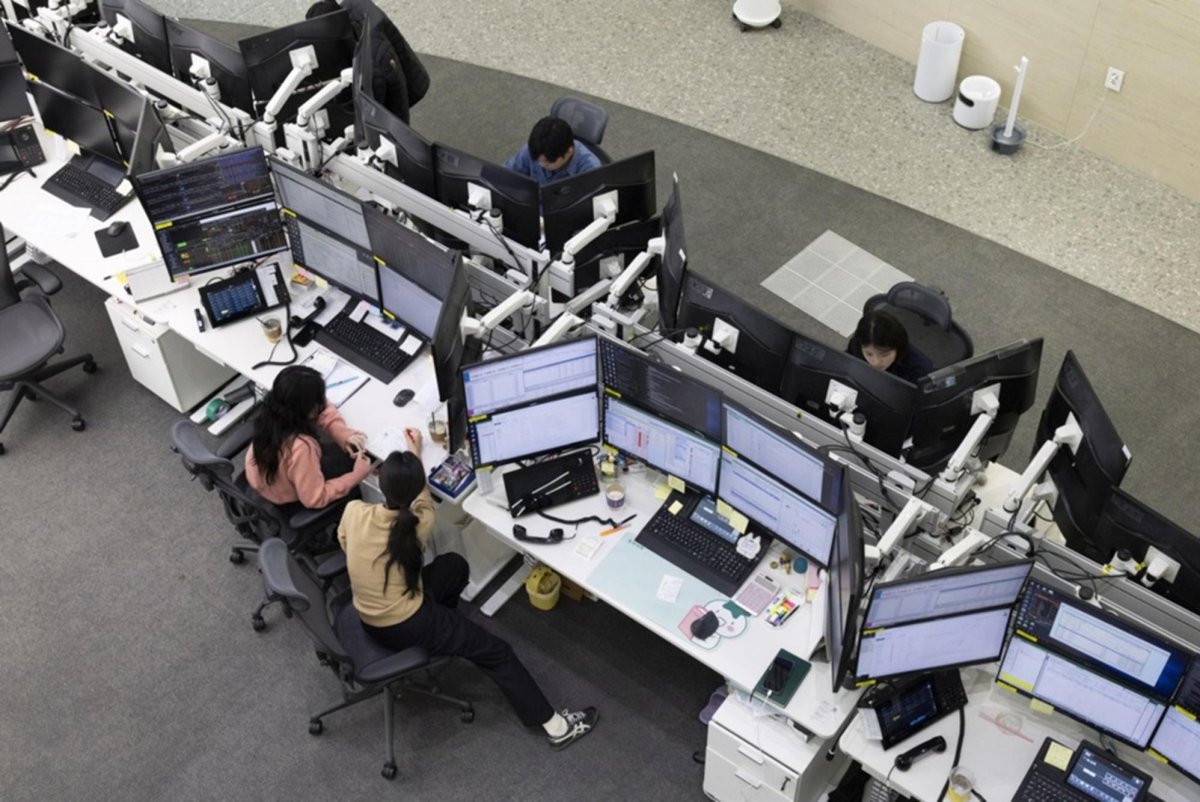
South Korean dealers work in front of monitors at the Hana Bank in Seoul, South Korea, 09 March 2026. The benchmark Korea Composite Stock Price Index (KOSPI) plunged 333 points, or 5.96 percent, to close at 5,251.87 as investor sentiment was dampened by escalating geopolitical concerns triggered by the ongoing Middle East conflict. Photo by JEON HEON-KYUN / EPA
March 10 (Asia Today) — Brokerage stocks have become the best-performing sector in South Korea’s stock market as daily trading volume surpassed 100 trillion won ($77billion), fueled by heightened volatility linked to geopolitical tensions in the Middle East.
Average daily trading across the country’s main equity markets reached about 102 trillion won, or roughly $77 billion, between March 3 and March 9, according to financial industry data.
That marks a sharp increase from about 62trillion won ($48 billion) in January and 69 trillion won ($53 billion) in February.
Trading surged to record levels earlier in the month, reaching about 125 trillion won ($96 billion) on March 3 and peaking near 140 trillion won ($108 billion) the following day before moderating.
Analysts said the jump in trading volume reflects both profit-taking and bargain hunting as investors adjusted portfolios during a period of sharp market swings.
The benchmark KOSPI index dropped 7.24 percent on March 3, followed by a decline of more than 12 percent the next day, marking nearly a 20 percent fall over two sessions as Middle East tensions escalated.
Large daily swings between 5 percent and 9percent have continued since then.
The rise in trading activity is expected to boost brokerage firms’ earnings through increased commissions from client trading.
An analyst at LS Securities said average daily trading in the first quarter is estimated at about 78 trillion won ($60billion), up 110 percent from the fourth quarter of last year.
“As a result, brokerage commission revenue in the first quarter could double compared with the previous quarter and triple compared with last year’s average,” the analyst said.
Investor funds flowing into the stock market have also grown rapidly.
Customer deposits used for stock trading rose from about 89 trillion won at the start of the year to more than 130 trillion won ($100 billion) this month. Margin lending balances increased from about 27 trillion won ($21 billion) to roughly 33 trillion won ($25 billion) during the same period.
Brokerage shares have outperformed other sectors amid the surge in trading.
The Korea Exchange securities index has risen about 67.75 percent this year, surpassing gains in the semiconductor sector, which had previously led the market.
Industry analysts say the sector’s rally may continue as brokerage firms benefit from structural growth drivers including retirement pension investment products and expanded asset management services.
An analyst at SK Securities said the retirement pension market is shifting from savings-focused accounts toward investment products such as exchange-traded funds, increasing inflows to brokerage firms.
Retirement pension assets managed by securities firms grew 26.5 percent last year, outpacing banks and insurers, according to industry data.
The launch of integrated investment accounts is also expected to provide a new growth engine for the sector.
However, some analysts caution that trading activity may be approaching overheated levels.
Market turnover across the KOSPI and KOSDAQ markets has reached about 500 percent of market capitalization, an industry official said, describing it as historically high.
— Reported by Asia Today; translated by UPI
© Asia Today. Unauthorized reproduction or redistribution prohibited.
Original Korean report: https://www.asiatoday.co.kr/kn/view.php?key=20260311010002950