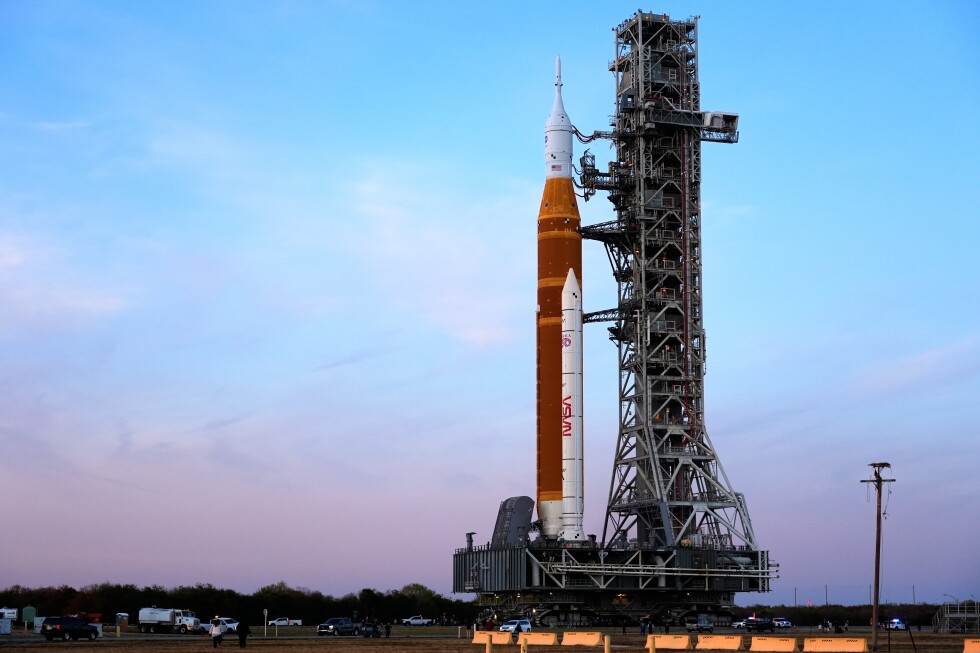
CAPE CANAVERAL, Fla. (AP) — NASA cleared its moon rocket on Thursday for an April launch with four astronauts after completing the latest round of repairs.
The 322-foot (98-meter) rocket will roll out of the hangar and back to the pad next week at Florida’s Kennedy Space Center, leading to a launch attempt as early as April 1. It will mark humanity’s first trip to the moon in more than 50 years.
The Artemis II crew should have blasted off on a lunar flyaround earlier this year, but fuel leaks and other problems with the Space Launch System rocket interfered.
Although NASA managed to plug the hydrogen fuel leaks at the pad in February, a helium-flow issue forced the space agency to return the rocket to the Vehicle Assembly Building for repairs, bumping the mission to April.
The space agency has only a handful of days in early April to launch before standing down until April 30 into early May.
Late last month NASA’s new administrator, Jared Isaacman, announced a major overhaul of the Artemis program. Dissatisfied with the slow pace and lengthy gaps between lunar missions, he added an extra practice flight in orbit around Earth for next year. That is now the new Artemis III, with the moon landing by two astronauts shifted to Artemis IV. Isaacman is targeting one and maybe even two lunar landings in 2028.
NASA’s Office of Inspector General this week warned in an audit that the space agency needs to come up with a rescue plan for its lunar crews. Landing near the moon’s south pole will be riskier than it was for the Apollo astronauts closer to the equator given the rough polar terrain, according to the report.
Contracted by NASA to provide the moon landers for astronauts, Elon Musk’s SpaceX and Jeff Bezos’ Blue Origin have accelerated work in order to meet the new 2028 target date. The inspector general’s office said many technical challenges remain including refueling their landers in orbit around Earth before flying to the moon.
___
The Associated Press Health and Science Department receives support from the Howard Hughes Medical Institute’s Department of Science Education and the Robert Wood Johnson Foundation. The AP is solely responsible for all content.