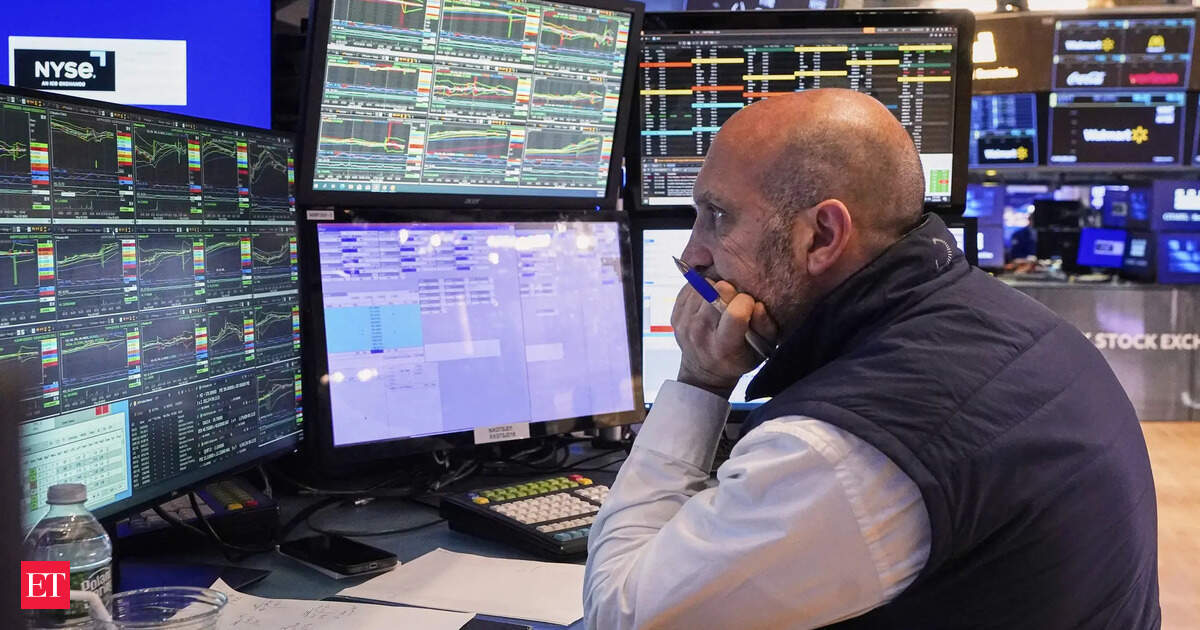
Why are US stock market index futures down today, and Dow Jones, S&P 500 and Nasdaq in red now is linked to multiple global and domestic triggers. Markets are reacting to rising oil prices, inflation concerns, and signals from the Federal Reserve. Investors are also watching the Middle East conflict and its impact on supply chains and energy markets. The previous session saw gains led by technology stocks, but sentiment shifted again as macro risks returned to focus. The current movement reflects caution ahead of policy decisions and global developments.
Why are US stock market index futures down today, and Dow Jones, S&P 500 and Nasdaq in red now?
The US stock market index futures performance is linked to rising oil prices, inflation concerns, and caution before the Federal Reserve decision. Oil near $100 per barrel has raised fears of higher costs and slower growth. The Middle East conflict has increased uncertainty about supply routes. Investors are also reacting to reduced expectations of rate cuts, which is pushing yields higher and pressuring equity markets.
Market movement and futures decline
Dow futures fell 0.22%, S&P 500 futures dropped 0.30%, and Nasdaq futures declined 0.39%. At 05:11 a.m. ET, Dow E-minis were down by 104 points. S&P 500 E-minis lost 20 points. Nasdaq 100 E-minis dropped 95.25 points. Futures linked to the Russell 2000 index also declined by 0.7%. The CBOE volatility index moved higher to 24.06, showing increased caution among investors. Markets are reacting to global uncertainty and upcoming policy signals.
Oil prices and inflation concerns impact
The US stock market index futures is strongly tied to oil prices. The Middle East conflict has kept oil prices near $100 per barrel. There are concerns that supply routes like the Strait of Hormuz may remain blocked. This has increased fears of higher inflation. Brokerages have raised energy price outlooks, which may affect economic growth. Central banks are expected to highlight inflation risks. The Australian central bank also raised interest rates, adding to global signals of tightening conditions.
Federal Reserve outlook and rate expectations
The US stock market index futures is also linked to the Federal Reserve meeting. The Fed is expected to keep interest rates unchanged at the end of the two-day meeting. However, markets are pricing a cautious stance. Treasury yields are rising, and rate futures now indicate only one rate cut later in the year. Earlier expectations suggested two cuts. Analysts expect central banks to stress inflation risks. Any stronger stance could increase volatility in markets.
Technology, energy and sector moves
The US stock market index futures performance also reflects sector-specific trends. Technology stocks cooled after a previous rally led by Nvidia.
Nvidia outlined that AI chip revenue could reach $1 trillion by 2027. Its stock was flat in premarket trading after a 1.6% gain earlier. Other chipmakers like AMD and Broadcom declined slightly.
Energy stocks such as Occidental and EQT rose about 1% due to higher oil prices. Travel stocks like Delta and Carnival dropped around 1%.
Uber shares rose 2.3% after announcing plans to launch robotaxis in 28 cities using Nvidia software. Beyond Meat shares fell 6% after delaying its annual report.
Global risks and investor sentiment
The US stock market index futures is also linked to global risks. The ongoing conflict has delayed a planned meeting between US and China leaders. Analysts and Goldman Sachs CEO David Solomon noted that markets may not have fully priced in the economic impact of the conflict. Despite global pressure, US stocks have performed better than markets in Europe and Asia. Investors expect the domestic economy to face lower impact compared to other regions.
Analysts insights and market outlook
The US stock market index futures current position also reflects analyst views on policy and global risks. Analysts expect central banks to stay focused on inflation due to energy prices. Market participants see a more cautious stance from the Federal Reserve, with fewer rate cuts expected this year. Experts have also warned that the economic impact of the ongoing conflict may not yet be fully priced into markets, which could lead to further volatility in the near term.
What should investors do now?
The investors may need to stay cautious. Market direction will depend on Federal Reserve signals, oil price movement, and global developments. Investors are tracking inflation data, interest rate expectations, and sector performance. Diversification across sectors such as energy and technology is being observed, while short-term volatility may continue as markets react to new updates.
FAQs
Why are US stock market index futures down today, and Dow Jones, S&P 500 and Nasdaq in red now?
US stock market index futures are down due to oil prices near $100, inflation concerns, Federal Reserve outlook, and Middle East conflict. Investors are reacting to interest rate expectations and global uncertainty affecting growth outlook.
Will Dow Jones, S&P 500 and Nasdaq recover after being in red now?
Dow Jones, S&P 500 and Nasdaq recovery depends on Federal Reserve signals, oil price movement, and geopolitical developments. Market direction will also depend on inflation data, corporate earnings, and investor sentiment in coming sessions.