Updated 2 min read
US stock futures faltered on Tuesday as fresh attacks in the Iran war drove oil prices higher amid questions over the US push for allies to help protect shipping in the Strait of Hormuz.
Dow Jones Industrial Average futures (YM=F) hovered below the flat line, following Monday’s tentative rebound in Wall Street stocks. Meanwhile, contracts on the S&P 500 (ES=F) and Nasdaq 100 (NQ=F) shed 0.1% and roughly 0.2%, respectively.
Markets continue to navigate the risks of a Middle East conflict that shows no sign of moderating. Iran kept up its strikes on energy infrastructure, setting a huge UAE gas field ablaze. Meanwhile, Israel said it had killed Iran’s security chief to further escalate tensions.
Brent crude futures (BZ=F) jumped to just below $104 a barrel, resuming the conflict-driven rally after Monday’s pullback. West Texas Intermediate (CL=F) crude also rose, trading above $96. At the same time, US diesel topped $5 a gallon for the first time since December 2022, thanks to disruptions to supplies from the Gulf.
Doubts surround the prospects of reopening the Strait of Hormuz, which Iran has effectively blocked. Several US allies have rebuffed President Trump’s request for a multinational effort to escort vessels through the waterway, vital to tanker shipping.
Just as inflation pressures were easing, the surge in energy prices is complicating the global outlook for the Federal Reserve and other major central banks that were preparing to move toward interest rate cuts. The Fed begins its two-day meeting on Tuesday, with its second policy decision of the year and comments from Chair Jerome Powell to follow on Wednesday. Expectations for near-term rate cuts have eased, and markets are pricing in 99% odds of rates remaining at current levels, according to CME FedWatch.
On the corporate front, investors are parsing the information out of Nvidia’s (NVDA) highly anticipated GTC event. Jensen Huang, the CEO of the global chip behemoth, announced a slew of deals and said the company sees $1 trillion in chip sales through the end of 2027.
Earnings continue to trickle through, with reports from Tencent (TME), DocuSign (DOCU), and Oklo (OKLO) due on Tuesday.
LIVE 11 updates
-
Ahead of rate-setting meets, central bankers face dilemma of sticky inflation and slow growth
As several of the world’s major central banks prepare to make a decision over where to guide rates this week, policymakers find themselves facing the dual pressure of an energy crisis spurred by the war in Iran: upward pressure on headline inflation and a growth shock potentially coming down the road.
That has thrust the world’s major central banks into a familiar — and deeply uncomfortable — position.
Just as inflation pressures were easing and policymakers were preparing to move toward rate cuts, a surge in energy prices (BZ=F, CL=F) driven by disruptions in the Middle East is complicating the global outlook. The result is a worsening policy dilemma: rising inflation risks on one side, and slowing economic growth on the other.
That trade-off will be in focus this week as the Federal Reserve, the European Central Bank, and the Bank of England all hold closely watched policy meetings. Switzerland’s central bank is also set to decide on rates.
Economists broadly expect all four institutions to keep borrowing costs unchanged, adopting the wait-and-see stance Fed Chair Jerome Powell has emphasized over the past year. But the renewed energy shock — tied to attacks on infrastructure and shipping disruptions that have roiled global oil markets — is already shifting expectations about how quickly policymakers can move to support growth.
-
Mastercard will buy stablecoin company BVNK in $1.8 billion acquisition
Mastercard (MA) is buying the stablecoin infrastructure provider BVNK in an acquisition valued at roughly $1.8 billion. Shares remained roughly flat on the news.
The deal “further expands Mastercard’s end-to-end support of digital assets and value movement across currencies, rails and regions,” Mastercard said in a press release announcing the deal, adding to the payments giant’s push into digital assets.
Earlier in March, Mastercard announced a partnership network with a host of digital assets and cryptocurrency firms, including Circle and Binance, designed to connect the digital assets world to Mastercard’s traditional payments infrastructure.
Today’s deal to acquire BVNK furthers Mastercard’s ambitions to build “highly secure and compliant payment orchestration between fiat and digital currencies across multiple chains,” Mastercard said in its press release.
-
Bitcoin surprises as oasis of calm while Iran war jolts markets
Bloomberg reports:
-
Delta rises after lifting revenue guidance for Q1
Delta (DAL) stock rose 4% after the airline raised its revenue target for the first quarter due to growing consumer and corporate demand. Delta also said it is well-positioned to weather the current environment of higher fuel costs.
The Wall Street Journal reports:
-
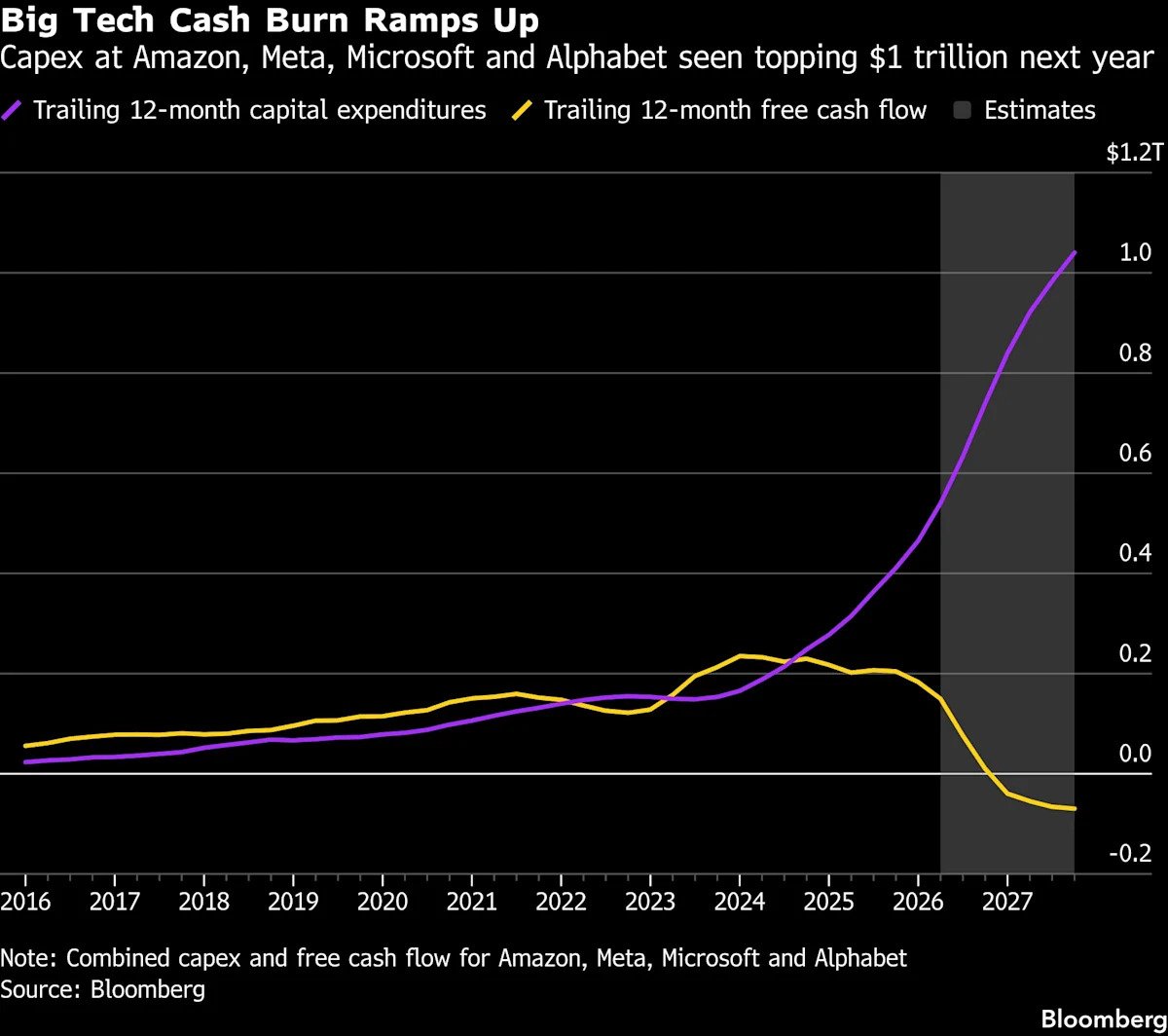
Zuckerberg and Meta dust off a classic playbook
-
Diesel prices top $5 a gallon as Iran war pressures refined products
The US national average for diesel prices crossed $5 per gallon on Tuesday to reach $5.044, marking a new level of stress for the US fuel market spurred by the war in Iran.
The price is up from $3.651 per gallon a month ago, according to AAA data.
Diesel is one of the mainstays of the US economy, fueling the trucks, trains, ships, and other transport that move goods across the country. Spikes in diesel prices or supply tend to ripple quickly through freight costs, agriculture, and ultimately consumer inflation.
While the war has put immense stress on crude oil prices (BZ=F), its impact may run even deeper in these areas, Goldman Sachs commodities strategists wrote in a note to clients published late Monday.
A mix of shutdowns at refineries in the Middle East, driven by both direct damage and precautionary measures, has taken roughly 2.2 million barrels per day of global refining capacity offline, strategists Yulia Zhestkova Grigsby and Daan Struyven said.
At the same time, the effective closure of the Strait of Hormuz has steeply cut into the roughly 3.3 million barrels per day of refined products that are typically exported through the key waterway. That’s along with the 12.8 million bpd of crude oil that exits the Strait to arrive at Asian refineries.
Higher tanker freight rates and natural gas prices (NG=F), along with a bevy of recently implemented global trade policies and tariffs, could also put upward pressure on refined products pricing.
“Prices have rallied much more for many refined products than for crude,” the strategists wrote. “While we see the largest direct effects from the hit to Persian Gulf refined products exports for European jet fuel and Asian naphtha, severe disruptions in medium-heavy crude supplies pose large downside risks to global production of diesel, jet fuel, and fuel oil.”
-
Premarket trending tickers: Nebius, Uber, Tandem Diabetes, and Micron
Nebius (NBIS) stock fell 5% during premarket hours on Tuesday after the AI infrastructure firm announced it will raise $3.75 billion via a convertible loan offering. This latest news follows announcements that Meta (META) has signed a deal with Nebius worth $27 billion, and Nvidia (NVDA) will invest $2 billion in the company.
Uber (UBER) stock rose 2% before the bell on Tuesday after Nvidia (NVDA) released news that the ride-hailing company will begin rolling out a fleet of Level 4 autonomous vehicles in Los Angeles and San Francisco in 2027.
Tandem Diabetes (TNDM) stock rose almost 5% during premarket hours on Tuesday after an analyst at Piper Sandler upgraded the company to Overweight from Neutral with a price target of $33, up from $21. The upgrade was based on Tandem’s pharmacy pricing benefit and its opportunities within international markets.
Micron Technology (MU) stock rose 1% before the bell today after surging 5% on Monday after the digital memory company announced plans to build a second chip manufacturing facility in Taiwan.
-
Goldman Sachs warns oil’s biggest shock will hurt fuels most
Bloomberg reports:
The largest oil market shock on record triggered by the war in the Middle East is set to have a greater impact on products such as jet fuel and diesel than on crude, according to Goldman Sachs Group Inc.
“Prices have rallied much more for many refined products than for crude,” analysts Yulia Zhestkova Grigsby and Daan Struyven said in a note. The severe disruptions seen in supplies of so-called medium-heavy crude pose the risk of lower production of diesel, jet fuel and fuel oil, they said.
… “No products or regions are fully immune,” the Goldman analysts said. The war was hurting the ability of Persian Gulf producers to export refined products, spurring refinery outages, and slashing flows of the types of crude that are best suited to making fuels such diesel, they said.
“Nearly 60% of typical crude exports from the Persian Gulf are medium and heavy crude (typically used to produce jet fuel, diesel, and fuel oil), with much more limited alternative producers outside the Middle East,” they said.
-
Citigroup cuts 12-month bitcoin, ether targets as US crypto legislation stalls
Reuters reports:
Citigroup cut its 12-month forecast for bitcoin (BTC-USD) and ethereum (ETH-USD), citing slow U.S. legislative progress that narrows the window for regulatory catalysts expected to boost ETF-driven demand and broader institutional adoption.
Progress on US crypto market-structure legislation has stalled in the Senate, with the Clarity Act’s chances of passage declining over disagreements on stablecoin rules and a shrinking window for approval in 2026.
The Wall Street brokerage lowered its 12-month bitcoin price forecast to $112,000 from $143,000 and its ethereum estimate to $3,175 from $4,304.
… Citi said that under a recessionary macro backdrop, bitcoin could drop to $58,000 and ether to $1,198, while its bull case, driven by stronger end-investor demand, puts bitcoin as high as $165,000 and ether at $4,488.
-
Huang leads Nvidia’s GTC with 2 1/2-hour keynote speech, pushes computing demand
Bloomberg reports:
-
Oil bounces back as reserve releases lessen supply fears
Bloomberg reports: