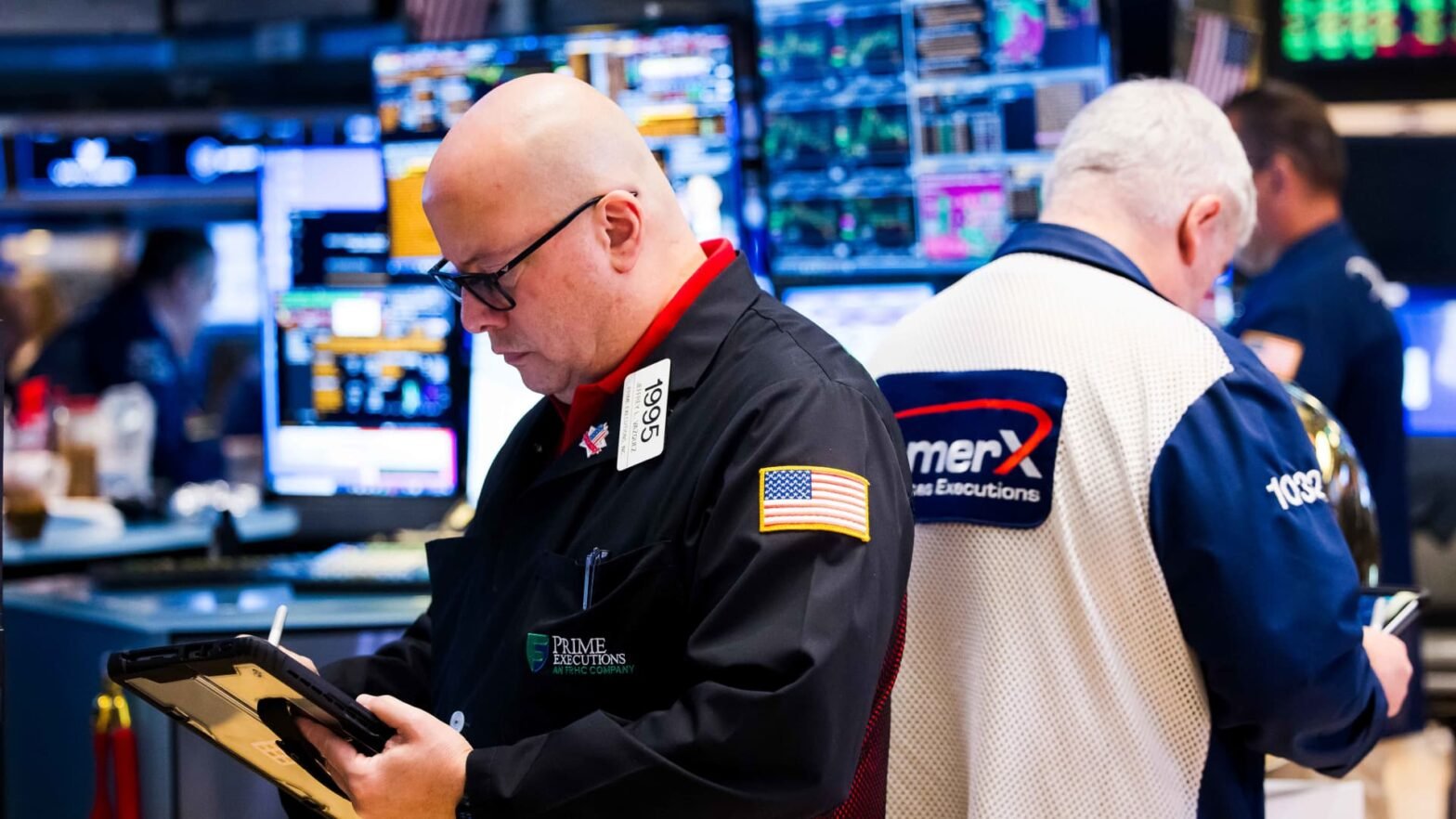
After the S&P 500 (^GSPC 1.67%) gained more than 16% in 2025, investors entered 2026 hoping for more of the same — but that hasn’t happened. The large-cap stock index is down roughly 7% year to date, while the Dow Jones Industrial Average (^DJI 1.73%) has slipped about 8%, and the tech-heavy Nasdaq Composite (^IXIC 2.15%) has fallen more than 10%.
That picture could soon get worse: Moody’s just revealed that the firm’s artificial intelligence (AI)-driven recession model now puts the probability of a U.S. recession at 49%.
While that sounds like a coin toss, when backtested over 80 years of data, every time the model’s odds crossed the 50% line, a recession followed within a year.
And here’s the kicker: That 49% reading was for February — before the U.S.-Iran War cut off 20% of the world’s crude oil supply and sent prices surging to nearly $120 a barrel.
Recession odds are already at 49%
In an interview with Euronews, the model’s architect, Mark Zandi, explained that “behind the recent jump are primarily the weak labor market numbers, but almost all the economic data has turned soft since the end of last year.”
The latest jobs report showed the U.S. lost 92,000 jobs, contrary to economists’ expectations of a gain of 59,000. Unemployment ticked up to 4.4% — still relatively low, but headed in the wrong direction. And the latest GDP numbers were revised down heavily — from 1.4% to 0.7%.
Meanwhile, inflation remains stubbornly above the Federal Reserve’s 2% target and shows signs of creeping higher.
Still, those numbers aren’t exactly terrible, and Zandi’s model sits right below the 50% threshold. For investors, that means hope. Avoiding a recession is paramount — when one hits, the S&P 500 falls hard. Since 1980, declines have ranged from about 20% to more than 55%, according to research by The Motley Fool.
The Iran War could tip the scales
But the rather large elephant in the room is that Moody’s latest odds are based on data collected before the war in Iran began, effectively choking off 20% of the world’s oil supply and destroying critical gas infrastructure in the region. Unless the war is resolved swiftly, there’s a very good chance the odds will reach above 50%.
The model is sensitive to energy costs, and that’s no accident. Every U.S. recession since World War II, except for the COVID-19 pandemic downturn, was preceded by a spike in fuel prices.

Image source: Getty Images.
Wall Street is mixed
Not everyone agrees with Moody’s assessment. Some analysts are more optimistic:
- Goldman Sachs puts recession odds at 25% and maintains a year-end S&P 500 target of 7,600.
- Oxford Economics believes a global recession would require oil to stay above $140 a barrel for two months — a pretty extreme scenario.
What should investors do?
Moody’s model is highly accurate when looking backward, but predicting the future remains incredibly difficult, and no model is perfect. Even if the odds cross the 50% line, it’s not a guarantee that a recession will hit.
That said, for my money, I think one is likely within the next year or so. I don’t see the current oil shock resolving quickly enough, and the damage to critical infrastructure will be felt for years following any ceasefire. If a recession does hit, history shows it would also mean a market crash.
But this isn’t a reason to panic sell. First of all, I could be wrong. But more importantly, over the last 11 recessions since 1950, the market has recovered from every single one — and then some. Timing the market is exceptionally difficult, and more often than not, investors sell at the wrong time, locking in losses.
What I do advise is to take this as an opportunity to take a hard look at your portfolio. If you’re concentrated in high-valuation growth stocks with little room for error, consider rebalancing toward companies with strong balance sheets so real earnings won’t disappear if the economy hits a sustained rough patch.