Key Points
-
Jerome Powell’s second term as Fed chair will conclude on May 15.
-
President Donald Trump, who’s been a vocal critic of the Fed chair and the Federal Open Market Committee (FOMC), nominated Kevin Warsh to succeed Powell.
-
Although Warsh would bring prior experience to the position, his voting record and critiques of the central bank’s balance sheet are a dangerous combination for a historically pricey stock market.
Until recently, Wall Street’s major stock indexes had been flying high. The iconic Dow Jones Industrial Average (DJINDICES: ^DJI), benchmark S&P 500(SNPINDEX: ^GSPC), and technology-propelled Nasdaq Composite(NASDAQINDEX: ^IXIC) have all hit record-closing highs within the last six months.
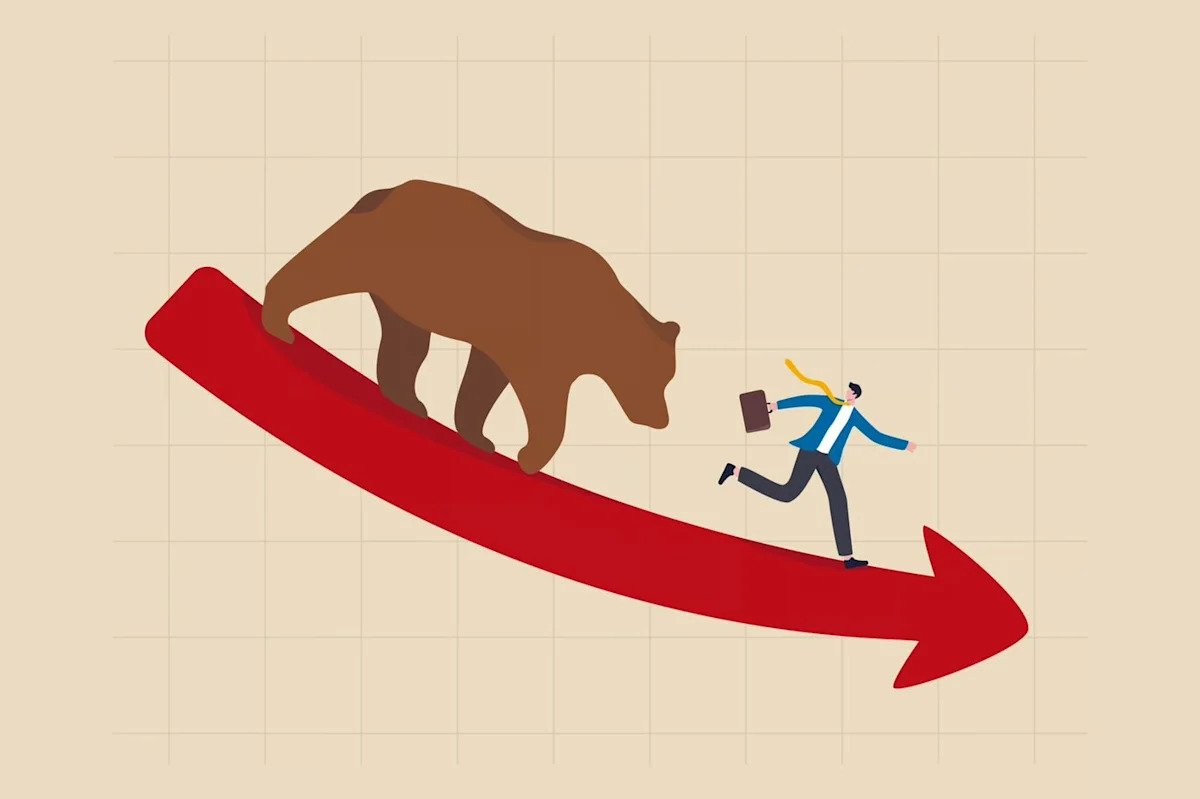
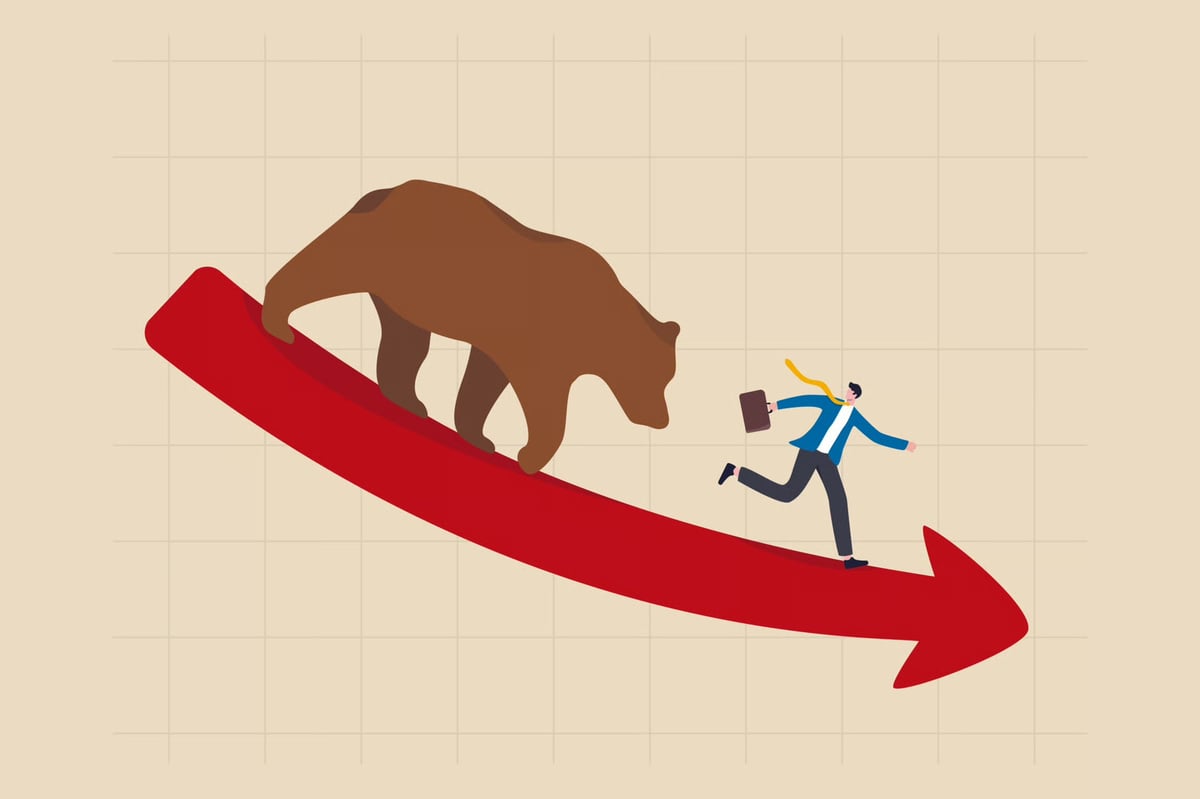
But the going has certainly been tougher for the stock market over the last five weeks. While most investors will attribute this weakness in equities to the Iran war and an energy supply shock, an argument can be made that an upcoming but historic change at America’s foremost financial institution, the Federal Reserve, has investors on edge.
Will AI create the world’s first trillionaire? Our team just released a report on the one little-known company, called an “Indispensable Monopoly” providing the critical technology Nvidia and Intel both need. Continue »
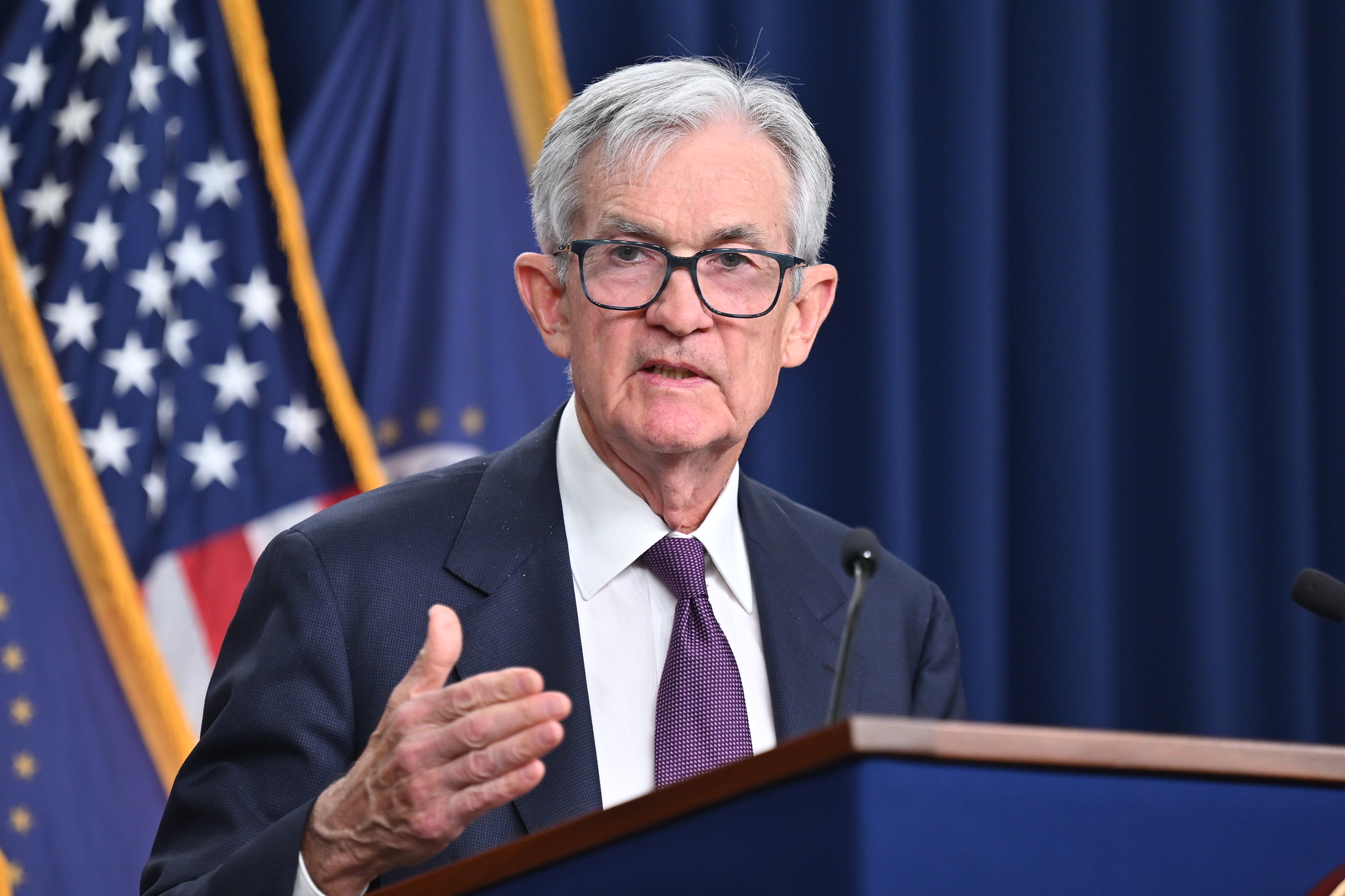
Jerome Powell’s term as Fed chair ends on May 15. Image source: Official Federal Reserve Photo.
Jerome Powell’s term as Fed chair is winding down
Roughly six weeks from now, on May 15, Jerome Powell’s term as Fed chair will conclude. Though this end date has been known for some time, it nevertheless marks a historic shift for the Federal Reserve.
Powell was initially nominated to succeed Janet Yellen as Fed chair during President Donald Trump’s first, non-consecutive term. He was nominated for his current/second term by former President Joe Biden.
The clues have been glaring for some time that Powell wouldn’t see a third term. Since Trump took office in January 2025, he’s vocally criticized Powell and the Federal Open Market Committee (FOMC) — the 12-person body, including the Fed chair, responsible for setting the nation’s monetary policy — for not being more aggressive in lowering interest rates.
Trump has opined that he’d prefer the federal funds rate be 1% or lower, compared with the current range of 3.50% to 3.75%. Lower interest rates would make it considerably easier for the U.S. to service its ever-growing national debt and would reduce borrowing costs for businesses. Progressively lower lending rates may boost hiring, acquisition activity, and innovation.
But Powell has stuck to the Fed’s dual mandate of stabilizing prices and maximizing employment by allowing economic data to guide the FOMC’s policy decisions. While this has resulted in six rate cuts since September 2024, it’s not been enough to appease Donald Trump.
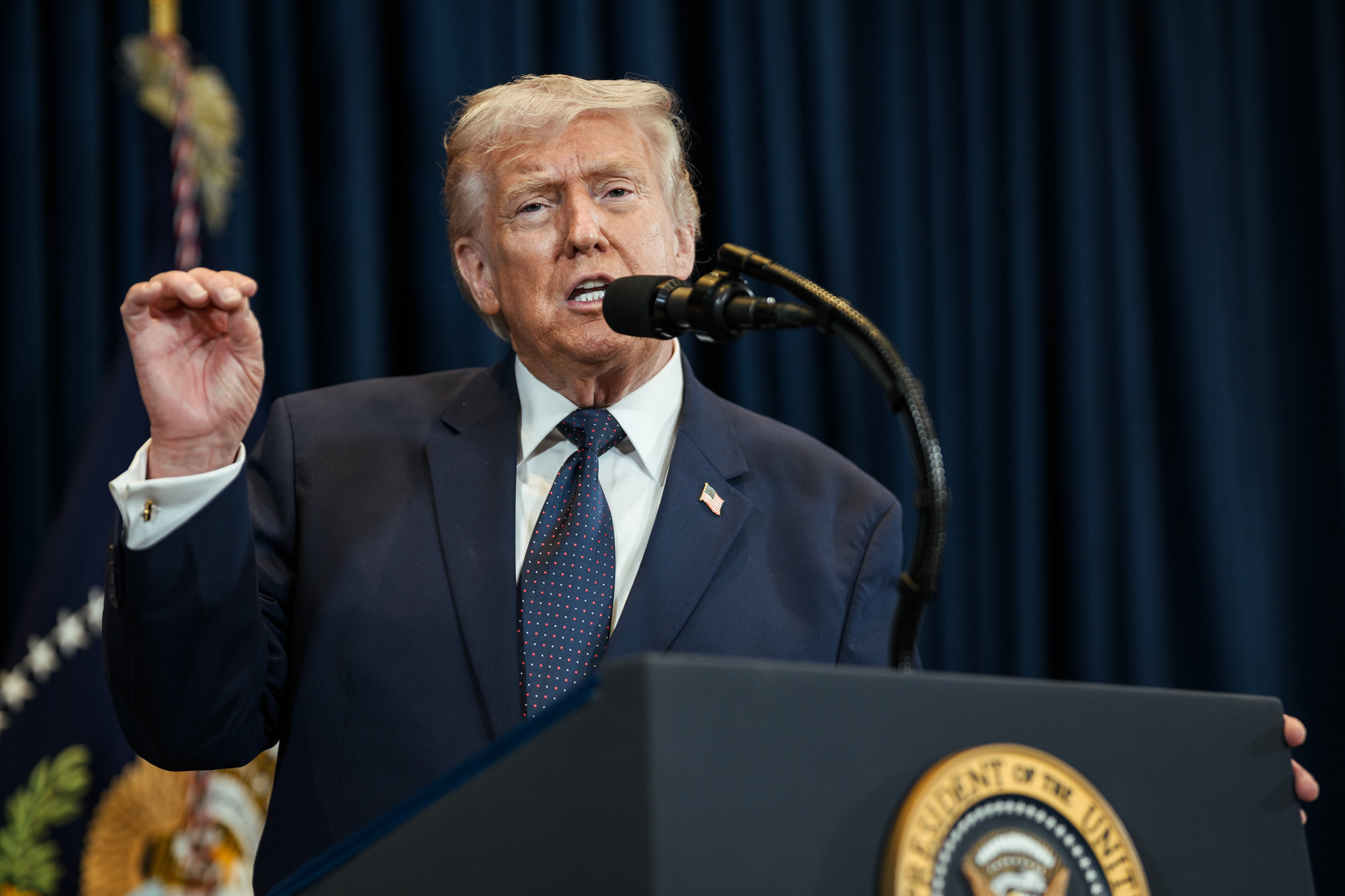
President Trump nominated Kevin Warsh to succeed Jerome Powell as Fed chair. Image source: Official White House Photo by Daniel Torok.
Trump’s Fed chair nominee may be the tipping point for Wall Street
On Jan. 30, Trump nominated former FOMC member Kevin Warsh to succeed Powell. Although Warsh brings a little over five years of experience as a member of the Board of Governors of the Federal Reserve to the table, his potential appointment may represent the tipping point for a historically expensive stock market.
Arguably, the biggest concern for Wall Street has to be Warsh’s track record as a voting member of the FOMC before, during, and after the financial crisis. While the case can be made that he was one of the foundational figures responsible for leading the U.S. economy through its toughest challenge in decades, his hawkish voting record points to eventual strife with President Trump and Wall Street.
With regard to the central bank, a “hawk” is someone who prioritizes low inflation above all other economic goals. Even as the unemployment rate rose during the financial crisis, Warsh remained persistently skeptical of inflation and often advocated that interest rates remain elevated. His voting record strongly suggests he won’t push for aggressive rate cuts, which could be a problem for a historically expensive stock market that’s been counting on several rate cuts to propel it higher in 2026.
“If Trump wants someone easy on inflation, he got the wrong guy in Kevin Warsh.”@AnnaEconomistpic.twitter.com/FGMfeSqHpU
— Daily Chartbook (@dailychartbook) January 31, 2026
But this isn’t the only potential pothole for the Dow Jones Industrial Average, S&P 500, and Nasdaq Composite.
Fed chair nominee Kevin Warsh has also been critical of the central bank’s bloated balance sheet in the wake of the financial crisis. Between August 2008 and March 2022, the Fed’s balance sheet ballooned from less than $900 billion in assets to nearly $9 trillion. As of March 25, close to $6.66 trillion is still held on the Fed’s balance sheet — mostly in U.S. Treasury bonds and mortgage-backed securities.
Trump’s Fed chair nominee would prefer the central bank be a passive market participant. This would entail selling off significant chunks of its Treasury bonds and/or mortgage-backed securities.
Kevin Warsh Nomination: one reason why market players are interpreting it as a hawkish pick- I agree-is because of his views on the need for a radical balance sheet reduction.
The $31 trillion-dollar American economy demands liquidity & financing needs that are larger than what… pic.twitter.com/zYunGAItV8
— Joseph Brusuelas (@joebrusuelas) January 30, 2026
Herein lies the problem: bond yields and prices are inversely related. Selling Treasury bonds would be expected to drag down their price but raise their yield. Raising bond yields would (drum roll) increase borrowing costs. Once again, we’re talking about an action that works against lower interest rates.
Typically, the appointment of a new Fed chair wouldn’t be precarious for stocks. However, the stock market entered this year at its second-priciest valuation since January 1871, according to the S&P 500’s Shiller Price-to-Earnings Ratio. Premium valuations of this magnitude leave virtually no room for error.
Between an expected spike in inflation caused by the Iran war and Warsh’s hawkish voting record, a utopian scenario for a historically expensive stock market has been thrown out the window. Rate hikes now seem more likely than rate cuts in 2026 — and that’s a tough pill to swallow for Wall Street and investors.
Should you buy stock in S&P 500 Index right now?
Before you buy stock in S&P 500 Index, consider this:
The Motley Fool Stock Advisor analyst team just identified what they believe are the 10 best stocks for investors to buy now… and S&P 500 Index wasn’t one of them. The 10 stocks that made the cut could produce monster returns in the coming years.
Consider when Netflix made this list on December 17, 2004… if you invested $1,000 at the time of our recommendation, you’d have $532,066!* Or when Nvidia made this list on April 15, 2005… if you invested $1,000 at the time of our recommendation, you’d have $1,087,496!*
Now, it’s worth noting Stock Advisor’s total average return is 926% — a market-crushing outperformance compared to 185% for the S&P 500. Don’t miss the latest top 10 list, available with Stock Advisor, and join an investing community built by individual investors for individual investors.
*Stock Advisor returns as of April 4, 2026.
Sean Williams has no position in any of the stocks mentioned. The Motley Fool has no position in any of the stocks mentioned. The Motley Fool has a disclosure policy.
This article contains syndicated content. We have not reviewed, approved, or endorsed the content, and may receive compensation for placement of the content on this site. For more information please view the Barchart Disclosure Policy here.