Good morning, investors. Markets rarely do anything without historical precedent.
Unprecedented as the current trading cycle feels, we actually do not have to look too far back in the past to find déjà vu.
Let’s dive in.
The market today looks eerily similar to last April.
Stocks tumbled on an unexpected policy shift, volatility spiked to levels that historically mark market lows, and oil prices signaled the path forward before anything else did.
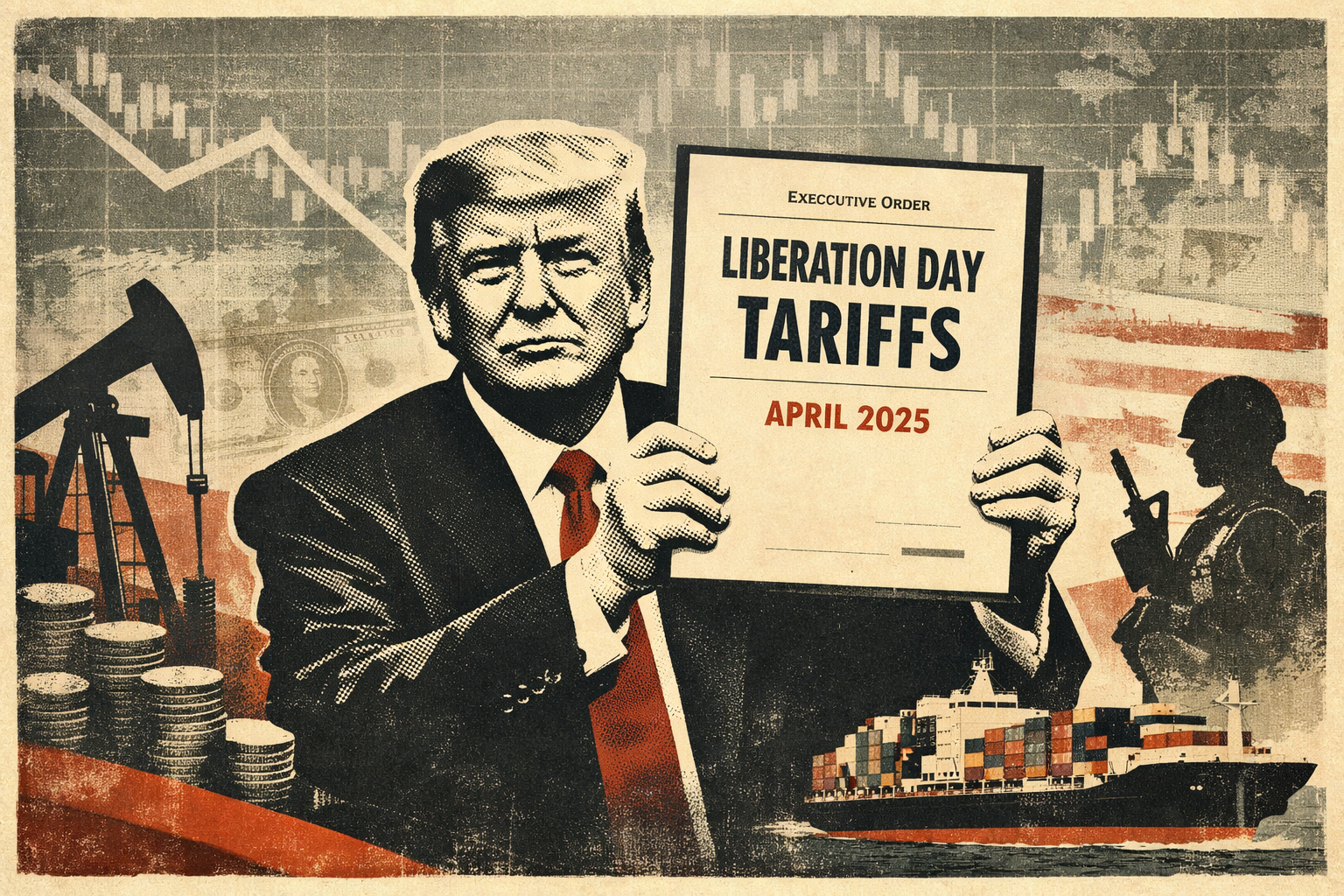
DataTrek Research highlighted the parallel in a new note to clients, arguing that the same pattern that produced a swift rebound after Liberation Day seems to be playing out again.
“Last year, the decisions that both created and relieved market stress solely emanated from Washington DC,” wrote DataTrek co-founders Nicholas Colas and Jessica Rabe.
Similar to the Iran conflict, unexpected policy changes have fueled market drops and rebounds.
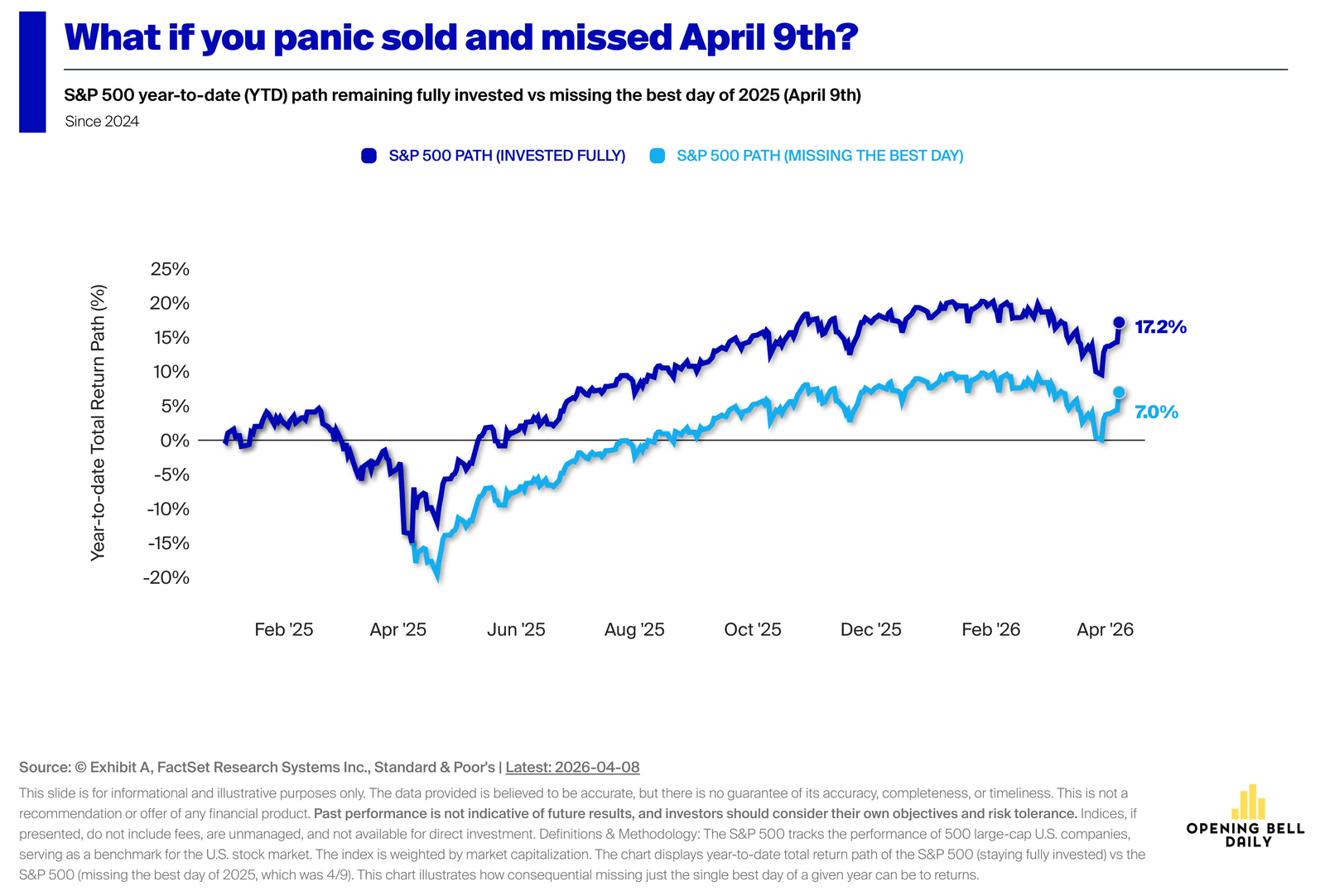
Investors who held through Liberation Day have outperformed those who sold (Chart courtesy of Exhibit A)
Crude prices have seen double-digit moves in both directions this week on account of the US-Iran ceasefire.
And while uncertainty remains, that’s the type of dramatic swing that historically marks a turning point for equities.
Just like after Liberation Day, US tech and international stocks have led this week’s relief rally.
The 1990 analog fits here too. When Iraq invaded Kuwait nearly four decades ago, oil prices peaked the same day that the S&P 500 bottomed.
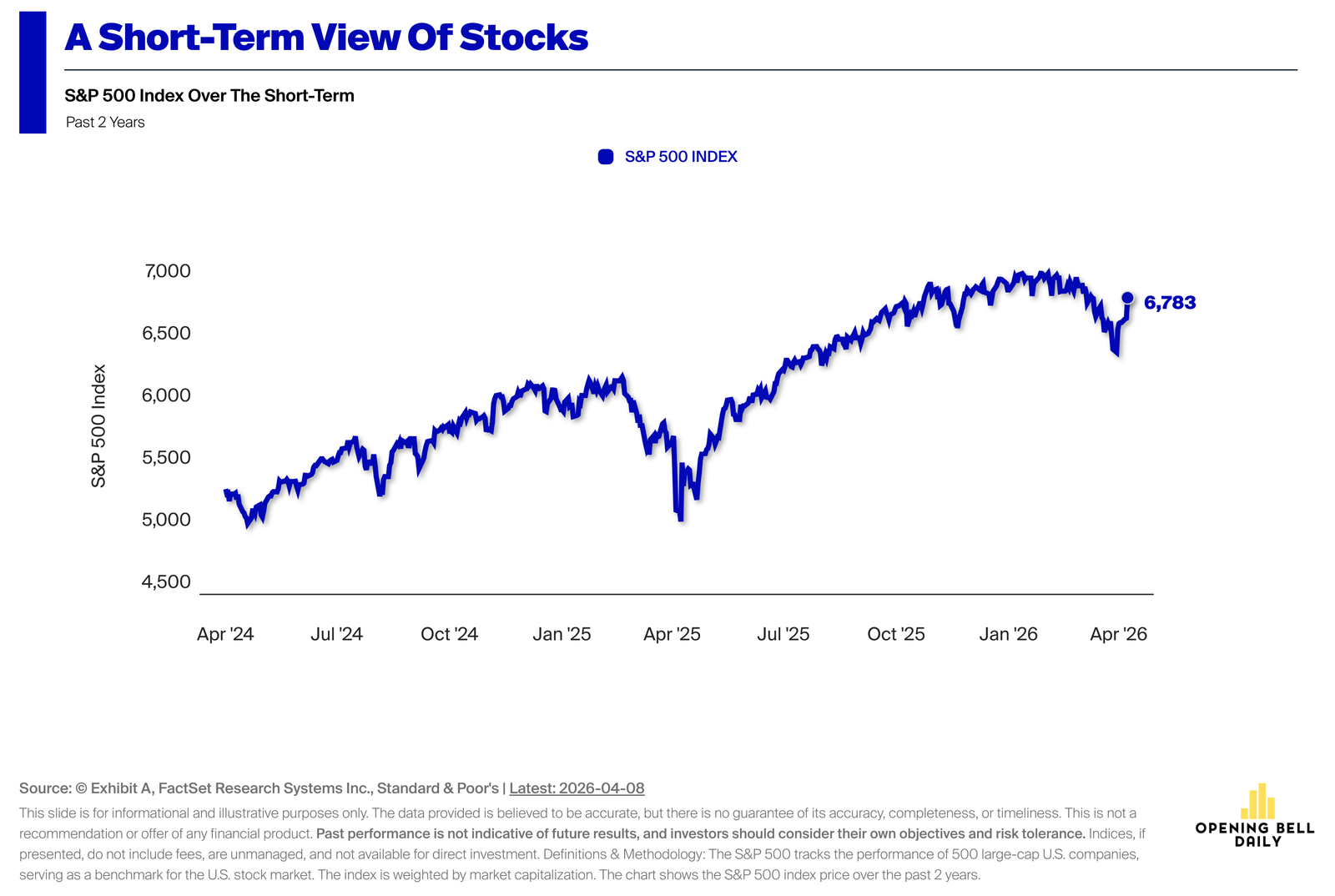
Near-term chop should be no surprise for investors (Chart courtesy of Exhibit A)
Iran accused the US of violating the agreement on Thursday, and oil prices remain unpredictable with the Strait of Hormuz still effectively closed.
Still, the VIX — Wall Street’s “fear gauge” —just saw its lowest close since the end of February and continues to hover well below its highs from the end of March.
“The 2025 experience is still fresh enough in investors’ minds that it will deeply inform how they think the next few weeks ‘should’ trade,” said Colas and Rabe.
“As long as Mideast tensions continue to deescalate, the near future should bear sufficient resemblance to the recent past to make this playbook useful.”
Staying on top of markets that hit a new all-time high seemingly every week, a never-ending news cycle and volatility that’s frankly…volatile is a lot of work.
No matter what the market is doing, tastytrade has the tools you need to stay up to date and trade your way through it.
With tastytrade you get advanced charts, in-feed news and smart tools to help you adapt your strategy when the market shifts. You can manage your entire portfolio (stocks, options, futures, forex, and crypto) all on one platform with low commissions.
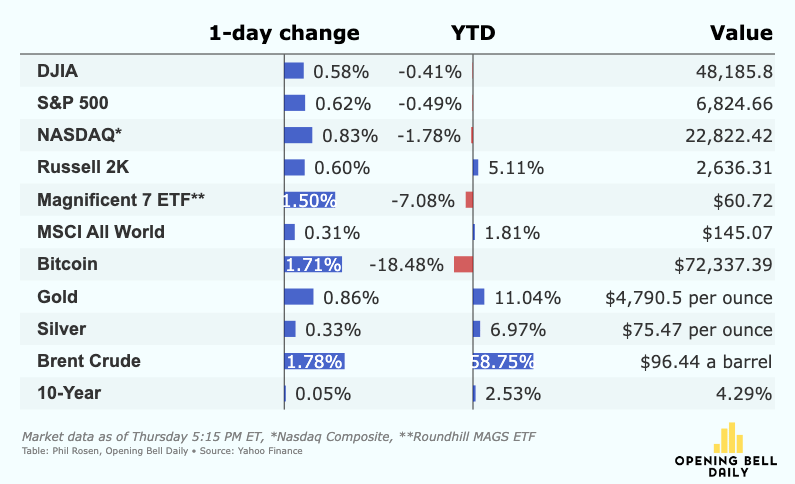
📈Iran’s $7.8 billion crypto economy is finding new ways to grow. The nation wants to receive tolls on oil tankers with cryptocurrency to ensure that funds cannot be traced or confiscated due to sanctions. (WSJ)
🏦 Goldman Sachs cut its near-term oil price forecast to $90 after the ceasefire deal. The bank warned risks remain tilted to the upside, with Brent potentially averaging $115 if Middle East production losses persist around 2 million barrels per day. (Reuters)
📊 Weekly jobless claims climbed to 219,000, beating estimates. The data landed ahead of Friday’s CPI report, the first major inflation print since the Iran ceasefire reshaped the oil market and the inflation outlook. (MSN)
I sat down with Anthony Pompliano, CEO of ProCap Financial, to discuss my new role at the company as chief market strategist, how we are building out Wall Street’s agentic AI research shop, and the first round of stock picks that our AI agents have discovered.
-
Lebanon is seeking a temporary ceasefire to allow broader talks with Israel (Investing.com)
-
Adam Back explains why he’s not the creator of bitcoin, Satoshi (Yahoo Finance)
-
The Strait of Hormuz is not open and Iran still controls access, UAE oil chief says (CNBC)
-
Mortgage rates fell for the first time in over a month to 6.37% (Yahoo Finance)
-
4 stocks that benefit from AI hitting unavoidable energy bottlenecks (ProCap Insights)
-
The US fertility rate just hit a record low (WSJ)
-
Palantir stock fell after “Big Short” investor said Anthropic was eating its lunch (Yahoo Finance)
🗓 April 10, 1962: US Steel CEO Roger Blough told President Kennedy the company was raising prices by $6 a ton. Kennedy called the increase “wholly unjustifiable” and forced a rollback to mark one of the fiercest government-business confrontations of the post-war era.
📩 Want to get in front of 207,000+ investors who get this newsletter and the 350,000 professionals who can access it on Bloomberg Terminals? Reply to this email and tell us why we should work together.