Stocks have risen and oil price futures have retreated back below $US100 a barrel overnight, as the US Navy’s blockade of Iranian ports has begun in the Strait of Hormuz.
Traders seem to be hanging onto hopes of a deal following comments from US President Donald Trump.
Follow the day’s financial news and insights from our specialist business reporters on our live blog.
Disclaimer: this blog is not intended as investment advice.
Key Events
Market snapshot
- ASX 200: +0.8% to 8,993 points (live values below)
- Australian dollar: flat at 70.92 US cents
- Wall Street: S&P500 +1%, Dow +0.6%, Nasdaq +1.2%
- Europe: Dax -0.3%, FTSE -0.2%, Eurostoxx -0.2%
- Asia: Nikkei +2.5%, Hang Seng +1%, Shanghai +0.5%
- Spot gold: +0.6% to $US4,767/ounce
- Oil: Brent futures -1.4% to $US97.95/barrel, WTI futures -2.2% to $US96.95/barrel
- Iron ore: -0.4% to $US105.9/tonne
- Bitcoin: +1.8% at $US74,537
Prices current at around 12:17pm AEST
Live updates on the major ASX indices:
Key Event
Qantas cuts domestic flight and raises fares as fuel costs blow out
This morning, Qantas said that to mitigate the impact of the conflict, it had increased fares, adjusted capacity and made changes to its international flight network.
The airline said it was closely monitoring the fuel situation and working with government and suppliers “who continue to provide confidence in fuel supply for the remainder of April and well into May”.
My colleague Stephanie Chalmers has more.
Key Event
ACCC probes retailers about potential misleading advertising of Black Friday sales
The Australian Competition and Consumer Commission (ACCC) says it’s investigating several retailers for making potentially misleading claims to consumers during last year’s Black Friday sales.
The probe, which followed a sweep announced last November, has found that around half of the 50 retailers reviewed made concerning claims in their advertising of Black Friday sales.
“We are concerned that retailers appear to be increasingly relying on tactics that manipulate consumers by creating a false sense of urgency that they will miss out on a discount if they don’t buy the product now,” ACCC deputy chair Catriona Lowe said.
“Sales tactics that create a false sense of urgency can mean that consumers are unable to make an informed purchasing decision as the fear of missing out can stop them from shopping around to ensure they are securing a genuine deal or the best deal available.”
The Black Friday sales sweep has found that some of the retailers reviewed were using potentially misleading countdown timers in their Black Friday sales online advertising, according to the watchdog.
These timers claimed the sale’s end was imminent, even though the sale actually extended beyond the indicated time, it said.
The ACCC says it has also identified that many retailers continued to make large, headline claims of ‘sitewide’ or ‘storewide’ sales alongside significantly less prominent disclaimers about exclusions to the sale.
The ‘gap’ between financial markets and the real world
That chasm between financial markets and the real world is widening.
RBA deputy governor Andrew Hauser is in the Big Apple talking about the nightmare scenario of stagflation, Qantas is axing some domestic flights as fuel bills soar and Westpac is preparing for a lift in late payments as energy costs drain cash from customers.
But stocks this morning are up strongly, and now tracking just 2.5% below the record high set in early March, just before Israel and the US began bombing Iran.
It’s not just here either. The disconnect is even more pronounced on Wall Street.
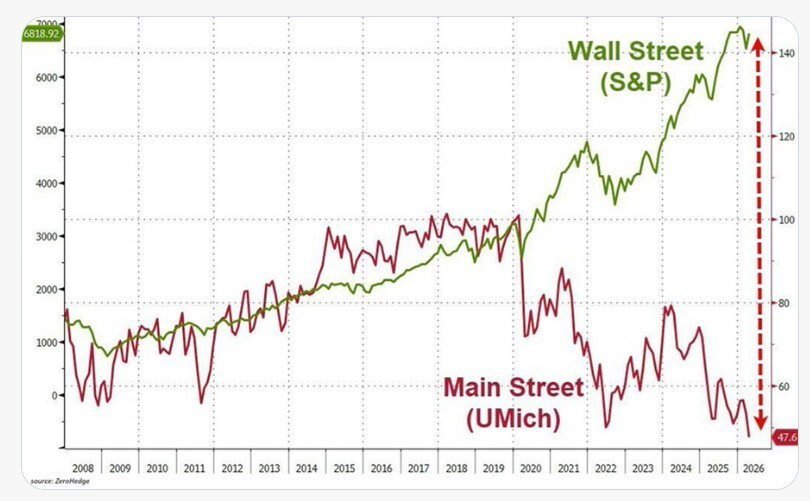
After years of a strong correlation, stocks have completely cast aside consumer sentiment, a trend that began during the COVID -19 crisis.
US consumer sentiment has now fallen below the pandemic nadir as measured by the University of Michigan. But Wall Street ended last night just 1 per cent beneath its all-time high.
Who cares about the real world?
Are rising fuel costs doing some of the job of rate rises?
That’s a question that RBA deputy governor Andrew Hauser was asked during a fireside chat in New York this morning, Australian time.
“We’re doing a new forecast round at the moment, that will be out in a few weeks’ time, where we will have to attempt to quantify those effects,” he responded.
“But it does add to the challenge, the challenge that we’ve described before, about evaluating whether this oil shock, if it is a shock, how big a shock it is, does some of the job of slowing the economy that rate rises would be expected to do.”
So too early to say whether rising fuel costs might give the RBA pause for thought about pushing through a third straight rate rise in May.
Key Event
RBA deputy talks about ‘central banker’s nightmare’ of stagflation
The Reserve Bank’s deputy governor Andrew Hauser did a fireside chat in New York this morning, before heading to IMF and World Bank meetings on in Washington DC later this week.
During the chat he spoke about the kind of extremely depressed consumer confidence figures that are not only being seen in Australia, but also in the US and many other countries too.
“I don’t think those surveys necessarily tell you a lot about what consumption is going to do,” he said, echoing recent comments by RBA governor Michele Bullock at her last press conference.
“But, if they’re right, we have a big income shock coming our way, we’re going to have to think about that.
“So it is the central banker’s nightmare, the stagflationary shock inflation up, activity down, judging the balance between those two is, I guess, how we earn our money.”
As reported below, Australian consumer confidence has just suffered its biggest monthly fall since the initial onset of the COVID pandemic.
Key Event
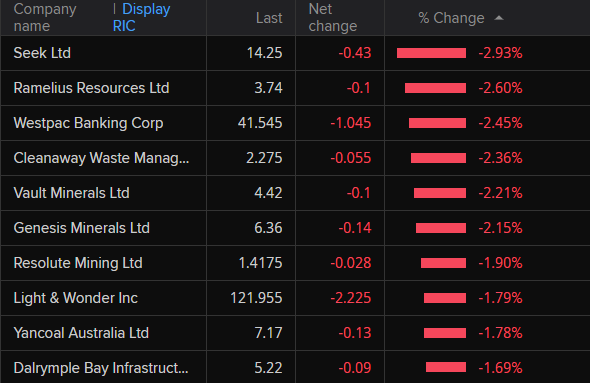
Risk-on day as traders shrug off Strait of Hormuz worries
To borrow a very Aussie turn of phrase, it seems like the bulk of share traders are saying, ‘She’ll be right’, when it comes to the Middle East conflict.
The benchmark ASX 200 index is up 0.4% in the first hour of trade, with some of the higher risk sectors driving the gains.
Real estate and technology are the best performing sectors, both up more than 1%.
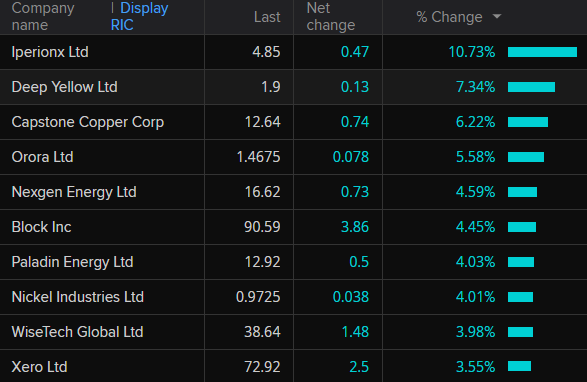
More defensive “consumer non-cyclicals” were the biggest drag (-0.6%).
Key Event
‘Consumer sentiment crashes’ in April as job loss fears surge
Consumer sentiment has plunged back to levels seen during the cost of living crisis of 2022-23 as surging fuel prices, rising interest rates and growing job loss fears cause heightened stress among households.
“The April sentiment drop is the biggest monthly decline since the onset of the COVID pandemic,” notes Westpac’s head of Australian forecasting Matthew Hassan.
“At 80, the index is back near historical lows, albeit above the extremes seen at the onset of the pandemic and during the recessions of the early 1990s and 1980s.”
The result mirrors, but is not yet as bad, as the ANZ-Roy Morgan weekly consumer sentiment survey, which has been plumbing record depths.
Mr Hassan says measures of current conditions are plunging as fuel prices and interest rates climb.
“Surging fuel costs are weighing particularly heavily on the ‘family finances vs a year ago’ sub-index which plunged 16.7% to 66.8,” he notes.
“This is an extremely low read, albeit a touch above the 65 average recorded between September 2022 and June 2024.”
Mr Hassan says Australians are also becoming increasingly fearful of losing their jobs, at a level not seen for a decade, outside of the COVID pandemic.
“The Westpac–Melbourne Institute Unemployment Expectations Index jumped 9.7% to 147.8 in April (recall that higher reads on this index mean more consumers expect unemployment to rise over the year ahead),” he notes.
“This is the worst read on job expectations since the 163 recorded in August 2020, one of the darkest moments during the COVID pandemic, just before the Federal government significantly expanded its JobKeeper policy to prevent widespread job losses.
“While the aggregate index is still well below previous cycle peaks, which have been in the 160–180 range, the latest shift is clearly worth monitoring closely.”
Unions seeks fuel surcharge for people who use their cars to get around to jobs
The big hit from increased petrol prices is inelastic and essentially unfair: it has the greatest impact on people with the most limited ability to shift their usage.
(Eg: in-home aged care workers can’t easily take the tools they need without a car, people in further-out suburbs have less access to public transport).
The union’s peak body is today launching an urgent case with the industrial umpire to increase vehicle allowances for workers – arguing that higher fuel prices are forcing Australians to pay out of their own pocket to do their job.
The Fair Work Commission application covers workers who need to use their own vehicles for travel during working hours and – importantly – are covered by modern awards with vehicle allowance provisions.
A vehicle allowance means employers pay employees a per-kilometre amount to cover their fuel and maintenance costs.
- Normally this is adjusted annually on 1 July
- Currently the average vehicle allowance is set at 99 cents per litre, with about 40% of that designated to cover fuel prices.
- Unions argue it should be lifted by at least an extra 10 cents to compensate for higher fuel prices.
In a statement, ACTU Secretary, Sally McManus said:
“Petrol prices have surged, but workers’ vehicle allowances have not even remotely kept up. Australians are paying out of their own pockets just to do their job, and that is not sustainable amid all the other cost of living pressures working people are enduring.
“It’s unacceptable for fast food delivery drivers, aged care workers and disability support workers to effectively subsidise their employers out of their own pay every time they fill up their vehicles.
“It is a basic principle that workers should not be out of pocket when they are required to use their own vehicle at work, they must be fully compensated. The current allowance is not delivering fair compensation to cover cost and so it must be adjusted.
“When someone supporting an elderly person or someone with a disability in their own home can no longer afford to do this essential work, we have a big problem as vulnerable Australians risk losing these workers and losing the support they depend on.”
According to the ACTU, average national unleaded fuel prices have increased by more than 35% on pre-Iran war averages.
It estimates an employee doing 40 kms of in-job driving each day would be shortchanged by nearly $800 a year. There are hundreds of thousands of home care workers in Australia, and most rely directly on awards for their pay and conditions.
Obviously, the figure rises even higher for those working in regional Australia, travelling longer distances on more expensive fuel.
Key Event
Qantas reduces domestic capacity
Shares in Qantas are down 1.1% after the airline announced an increase in its fuel cost estimates, to up to $3.3 billion for the second half of the financial year.
The airline has reduced domestic capacity by around 5 percentage points in the fourth quarter.
“Affected Qantas and Jetstar customers are being contacted directly and offered alternative flights or a refund,” the airline said.
“Qantas continues to see strong demand for international travel to Europe as customers seek alternative routes. In response, the Group has redeployed capacity from the US and its domestic network to increase flights to Paris and Rome.”
Market snapshot
- ASX 200: +0.7% to 8,991 points (live values below)
- Australian dollar: flat at 70.92 US cents
- Wall Street: S&P500 +1%, Dow +0.6%, Nasdaq +1.2%
- Europe: Dax -0.3%, FTSE -0.2%, Eurostoxx -0.2%
- Asia (Monday): Nikkei -0.7%, Hang Seng -0.9%, Shanghai +0.1%
- Spot gold: +0.4% to $US4,760/ounce
- Oil: Brent futures -2% to $US97.41/barrel, WTI futures -2.5% to $US96.64/barrel
- Iron ore: -0.1% to $US106.15/tonne
- Copper: +1.2% to $US12,845/tonne
- Bitcoin: +1.6% at $US74,375
Prices current at around 10:15am AEST
Live updates on the major ASX indices:
Key Event
Australian share market rallies 0.9% at the open
Just a few minutes into the session and the ASX 200 and the All Ords are both up 0.9%.
Banks raise more than 300 red flags in five months on illicit tobacco
Australia’s big banks have made hundreds of reports of suspicious activity related to illegal tobacco since the anti-money laundering regulator called for a crackdown late last year.
AUSTRAC chief executive Brendan Thomas told The Business dozens of “active leads” had been passed to law enforcement agencies as a result of intelligence the financial crimes agency had received from the banks.
The regulator wrote to the major banks in November, calling for increased oversight of tobacco and convenience stores with private ATMs and eftpos, raising concerns that bank services were being used to buy illicit tobacco and launder the proceeds.
Since then, more than 1,000 bank customers have been forced out of their bank or recommended for exit after reviews undertaken by the banks.
Loading…
When AUSTRAC and the Illicit Tobacco and E-cigarette Commissioner wrote to the banks in November, the anti-money laundering regulator also provided a unique reference code to use in suspicious matter reports, to help track illicit tobacco activity.
AUSTRAC said it had since received 337 suspicious matter reports using that code, and made 76 referrals to its partner agencies.
“Following the money is an effective way to disrupt organised crime, and banks play a critical role in protecting Australia’s financial system from being abused,” Mr Thomas said.
Read more:
Key Event
Qantas raises fuel cost outlook, halts buyback citing uncertainty
Qantas has issued an update in light of the ongoing conflict in the Middle East.
The airline said since its last financial guidance in February, “jet fuel prices have more than doubled and remain highly volatile”.
“The Group has hedged approximately 90 per cent of its 2H26 exposure in crude oil but is largely exposed to movements in jet refining margins, which have increased from US$20 per barrel in February to a peak of around US$120,” Qantas said.
“As a result, the estimated fuel cost for 2H26 is now $3.1 – 3.3 billion.”
The previous fuel cost forecast was $2.5 billion, according to its first half results.
Qantas said it was closely monitoring the fuel situation and working with government and suppliers “who continue to provide confidence in fuel supply for the remainder of April and well into May”.
The company said it will pay its interim dividend tomorrow as planned but given the “current uncertainty” its planned $150 million on-market buyback has not commenced.
🎥 Finance with Alan Kohler
It’s coming up on just an hour until local trade gets underway, so you may want to catch up on how we got here with Alan Kohler‘s finance report:
Loading…
Yesterday, the price of oil jumped and shares fell as Donald Trump threatened a blockade in the Strait of Hormuz.
Now it seems to be in force, and stocks and oil have done the opposite.
So let’s see how the day plays out!
Workers with unpredictable hours eat worse
Frequently, you’ll hear about research and think: why did they even have to ask that question? Like, duh.
Here’s one.
A Swinburne University researcher has found rotating shift workers consume more calories, salt and alcohol than those with fixed rosters.
Seems obvious, right? If you don’t know when you’re working, or you work unpredictable and unsociable hours, your eating options tend to be worse.
Sometimes the reason research is undertaken is to provide a research base that can either prove a contention or back up the vibes of something that is considered to be likely.
And it’s important because around 16% of working Australians are employed as shift workers, and almost half do not have a fixed schedule.
Lead author, Swinburne Dietetics Lecturer Dr Angela Clark, conducted the research while at Monash University alongside other researchers from the institution and Adelaide University to uncover these important insights into dietary profiles of shift workers.
Put simply: on average, all shift workers’ diets in the study were also low in carbohydrates and fibre while high in fat, saturated fat and salt. But those with these rotating shifts consume more calories, salt and alcohol than those on fixed night shifts.
“The diet of a shift worker may be contributing to the higher health risks for heart disease, diabetes, overweight and obesity.
“And rotating shift schedules may be having more of an impact on these risks than originally thought.
“Our results highlight that shift work schedules may impact both what and how much workers eat, and may be contributing to unexpected weight gain and worsened metabolic health.”
Shift work has long been associated with an increased risk of obesity and chronic diseases (like cardiovascular disease and type 2 diabetes).
The study is described as the first of its kind, because no large-scale studies have examined the diet of those on fixed nights compared to a rotating schedule until now.
Dr Clark explains that eating at night is associated with increased metabolic health risk, as it increases the risk of insulin resistance and lowers glucose and lipid tolerance , which are factors associated with risk of type 2 diabetes.
Eating at night may also promote weight gain as energy expenditure is lower at that point in time, due to a reduced metabolic rate driven by the circadian phase of sleeping and fasting.
And there’s some hope too: the research team suggests a targeted diet strategy and a push for the shift-working environments to have better access to healthier food choices.
“Australia’s shift working population is hard at work while we’re spending time with loved ones, sleeping or resting, and we need to give them the resources they need to thrive and do their job well.
“To do so, shift workers need targeted dietary strategies that address their unique challenges.”
Fireside chat coverage
If you’d been patiently waiting for some RBA commentary out of New York, we do apologise.
We haven’t been able to listen in to the central bank’s deputy Andrew Hauser speaking and it seems other Australian journalists are having similar issues.
We’ll bring you the wash-up of his fireside chat ASAP.
It’s apparently a sunny 24-degree spring evening in New York, but it was a bit chilly in Sydney this morning so wouldn’t have minded a bit of a fireside chat.
Loading
Key Event
Westpac flags profit hit amid Middle East conflict, RAMS sale
Major bank Westpac has flagged a hit to its half-year profit as it updates the market on the impact of the Middle East conflict and the sale of its RAMS mortgage book.
The bank said the sale of RMAS to Pepper Money, KKR and PIMCO is on track for completion in the second half of its financial year, and the transaction costs will reduce its net profit by $75 million this half.
As for the impact of the Iran war and the fallout, Westpac says it has increased credit provisions.
“With the supply shock from energy market disruption expected to result in higher inflation and higher interest rates, an expected slowing in economic growth will create a more challenging environment for some customers,” Westpac said in a statement to the ASX this morning.
It said interest rate volatility impacted net interest margins in its treasury and markets divisions, resulting in a lower contribution in the second quarter, while the depreciation of the New Zealand dollar affected revenue and costs.
However, Westpac emphasised that it was “well positioned to support customers amid ongoing geopolitical uncertainty” and described “solid” momentum in lending and deposit growth.
Westpac’s first half results will be released on Tuesday, May 5.
Could we biofuel our way out of the fuel crisis?
It’s been eye-opening digging into the world of biofuels in recent weeks.
As in, my eyes have frequently bulged out as I’ve learned:
- The vast majority of the canola we are exporting is being used to make fuel
- A lack of domestic demand means our local biofuels refineries are both exporting product (at lower price than what’s at the bowser) and not operating anywhere near capacity
- We have everything we need for a massive low carbon fuels industry that could end our reliance on carbon-emitting fuels, some of which are bought from countries that are literally funding terrorist acts in Australia
Now of course, it’s about money. To boost a local industry we’d have to pay more to get it going.
That could be a mandate that petrol has to have a certain percentage of biofuel blended in, or the juice in your plane need to also have a percentage of sustainable aviation fuels (SAF) in it.
(Something estimated to add about $2-3 per passenger to the cost of the average domestic flight)
But the upside? Almost immeasurable.
We control between 10 and 20% of our liquid fuels, meaning we rely on imports of the remaining more than 80%. California went hard during the Gulf War in the early 2000s, pushing electric vehicles and changing fuel rules.
Their current ‘fuel crisis’ is about the around 20% they import, not the 80% they control.
And that’s before you get to the jobs, fuel sovereignty, GDP benefit, yada yada.
As Fraser Thompson of Cyan Ventures puts it:
“We have the potential to be fully self-sufficient in Australia of our fuel, and not only that, we could be a major exporter globally with this.”
“We are in a bizarre situation right now that we are exporting our feedstocks, roughly $3 billion of exports of feedstock to other countries who then refine that fuel and then we send it back and we pay four times the price to actually then use it once it’s been refined. It is a completely nonsensical arrangement.”
An interesting field.
Loading…
Key Event
Australia’s LNG export window is closing, climate research group says
The long-term outlook for Australia’s liquefied natural gas (LNG) exports is structurally constrained by declining demand, and the current war in the Middle East may hasten that shift away from gas, a new report claims.
The report, The Last LNG Train Home: Australia’s LNG outlook in a demand-constrained world, is from the climate research and consulting group Climate Resource.
It stated climate targets announced by about 130 countries since late 2024 have altered projections for future fossil fuel demand.
It also said as demand from gas-importing countries “plateaus or declines” in the future, global LNG markets will experience structural oversupply after a huge wave of new export capacity — led by the US and Qatar — comes online by 2030.
It warned that most of Australia’s existing long-term LNG export contracts will expire between the mid-2030s and 2040, and when the contracts roll off, Australia’s major gas projects will be exposed to a very different world.
For that reason, the report said, Australia’s existing LNG export contracts may represent the “upper bound” of what our gas exporters can sustainably sell internationally.
“This has broader implications for Australia’s economy,” the report said.
“If export revenues from LNG decline, alongside similar structural pressures on other fossil fuel exports such as coal, Australia’s trade profile could shift materially by the mid-2030s.”
Analysts at ANZ separately noted that the volume of Australian LNG exported under long-term contracts will decline out to 2040 as contracts expire, and that suggests that more Australian gas exporters could end up selling LNG at spot prices or under short-term contracts in the future.
“Over the longer term, [gas] export earnings may become more sensitive to global price movements,” they said.
Read more from Gareth Hutchens: