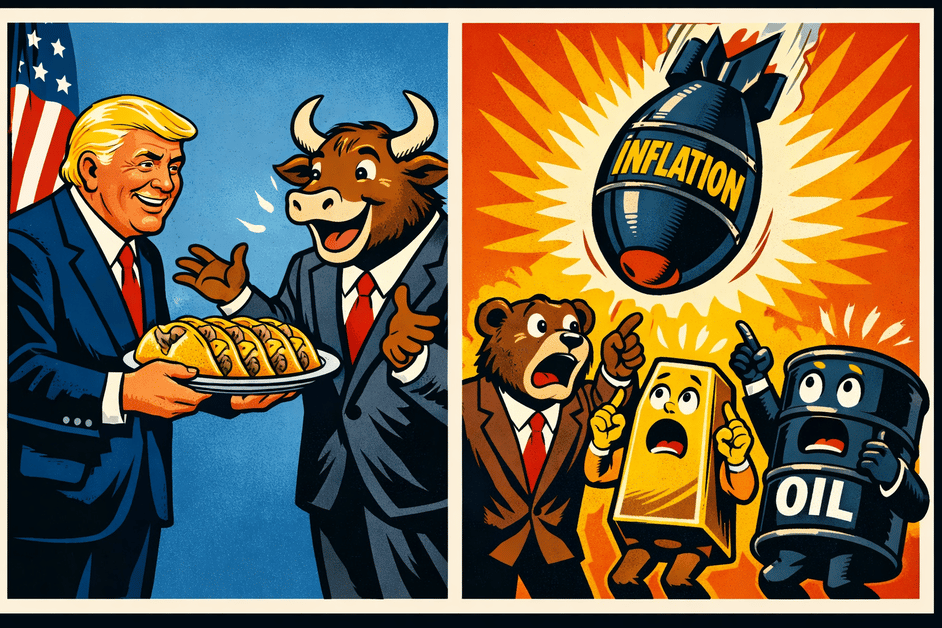
The stock market is trading as if the Iran war is a distant memory. Aborted Fed rate cuts may sour the mood again.
- Wall Street looks past the “war trade”: stocks are net up since the US struck Iran
- Crude oil, Treasury bonds, and gold prices continue to warn about inflation risks
- Sellers may punish equities anew as the spotlight turns to aborted Fed rate cuts
The US stock market has been roaring higher after last week brought a ceasefire in the US-Iran war. The bellwether S&P 500 stock index is now tracking up 4% since the conflict began, having been down as much as 6.3% amid the fighting. The tech-tilted Nasdaq 100 is up almost 6%, having been down as much as 7.5%.
Taken together with what looked like a short-covering rally in the last days of March, this puts Wall Street on track for its best three-week run since June 2020. That was when markets were just starting to climb back from the blistering selloff triggered by the COVID-19 pandemic.
Wall Street has abandoned the “war trade”. Other markets have not
At face value, traders seem to think that risks presented by the war and its lingering consequences are no longer relevant drivers of sentiment and can be set aside. As if to emphasize that point, futures tracking the S&P 500 and the Nasdaq 100 have returned to October highs. Parallel SPY and QQQ exchange-traded funds (ETFs) have broken them.
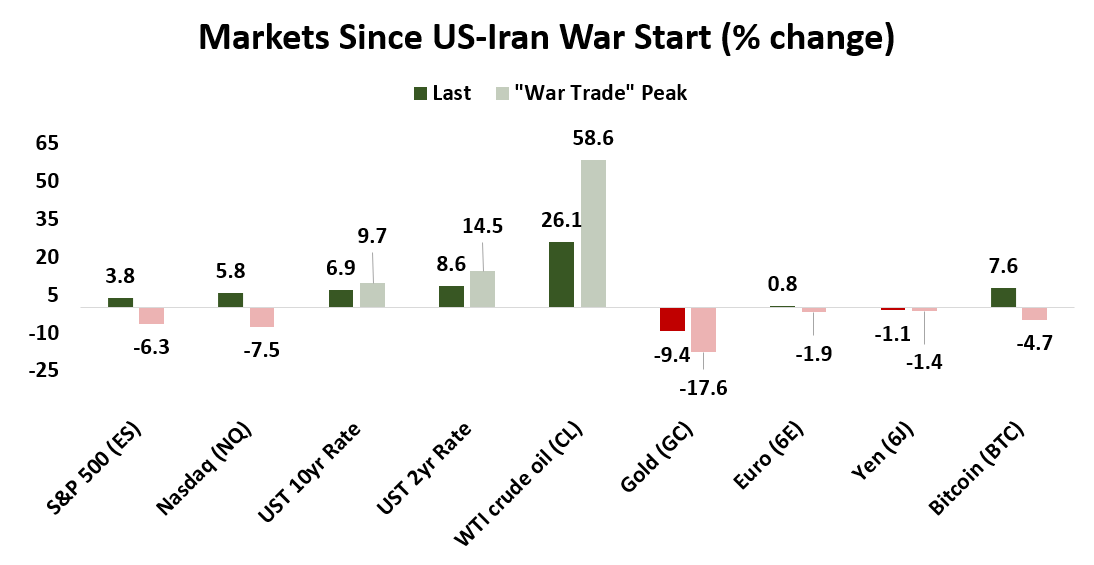
This begs the question. When the war broke out, price action across global financial markets painted a clear picture of how traders were interpreting events. Surging crude oil prices stocked inflation fears, which drove up interest rates as traders priced in a hawkish turn in monetary policy. Stocks, bonds, and gold prices fell. The US dollar rose.
After the ceasefire, stock markets have unwound that reaction, and then some. It is a different story elsewhere. Two- and ten-year Treasury bond yields are still up nearly 9% and 7% since the war began. Gold is still down over 9%. Those losses are now smaller than they looked at the peak of the “war trade”, but not by much.
Stocks may turn lower as joy after the Iran war ceasefire abates
Crude oil prices look the most dramatic. They’re up close to 30% since the US began pounding Iran with missile strikes. That marks a bit of moderation: the WTI benchmark was up as much as 58.6% by early April but has since settled back a bit. Nevertheless, the central “war trade” idea that an oil price shock beckons inflation remains very much alive.
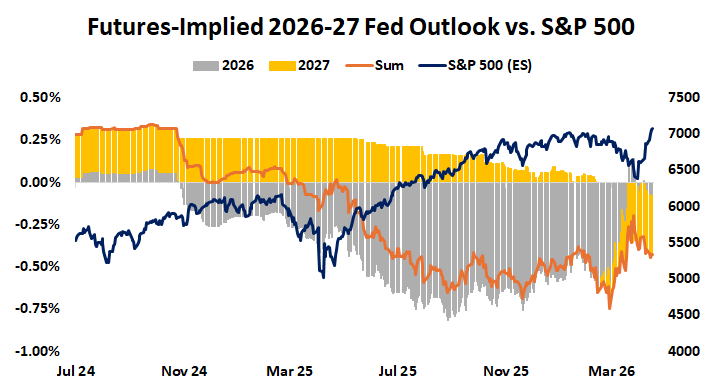
Indeed, that seems to explain what’s happening in Treasuries and in gold. The Federal Reserve was expected to cut interest rates by 50 basis points (bps) in 2026 before the war began. That has since vanished from the outlook and it has not returned after the ceasefire, no matter how sanguine Wall Street appears.
Fed policy speculation has been a key catalyst for stock markets since last year. The rally from “Liberation Day” lows in April 2025 after a selloff triggered by the Trump administration’s chaotic rollout of new tariff policies played out alongside building rate cuts bets. It hit a wall in late October, when Fed Chair Powell chastised traders for being too dovish.
The absence of any rate cuts in the markets’ current baseline for 2026 seems like it ought to have given Wall Street bulls at some pause. Sticky oil prices – and their reflection in gold and Treasury yields – suggest a dovish rethink is not forthcoming any time soon. That seems to put stock markets at risk after ceasefire exuberance runs its course.
Ilya Spivak, tastylive head of global macro, has over 15 years of experience in trading strategy, and he specializes in identifying thematic moves in currencies, commodities, interest rates and equities. He hosts Macro Money and co-hosts Overtime, Monday-Thursday. @Ilyaspivak
For live daily programming, market news and commentary, visit tastylive.com or @tastyliveshow on YouTube
Trade with a better broker, open a tastytrade account today. tastylive, Inc. and tastytrade, Inc. are separate but affiliated companies.
Options involve risk and are not suitable for all investors. Please read Characteristics and Risks of Standardized Options before deciding to invest in options.
© copyright 2013 – 2026 tastylive, Inc.