Major healthcare stock Cochlear crashed yesterday after slashing its profit guidance for the 2026 financial year.
Buyers have not moved in today in any significant way, sending the stock down further.
Meanwhile, the price of oil is higher, trading above $US101 a barrel.
Follow the day’s financial news and insights from our specialist business reporters on our live blog.
Disclaimer: this blog is not intended as investment advice.
Key Events
Market snapshot
- ASX 200: -0.5% at 8,799 points
- Australian dollar: -0.1 to 71.55 US cents
- Wall Street: Dow Jones (+0.7%), S&P 500 (+1.1%), Nasdaq (+1.7%)
- Europe: FTSE (-0.2%)
- Spot gold: -0.4% to $US4,721/ounce
- Brent crude: Flat at $US101.91/barrel
- Iron ore: +0.2% to $US107.10/tonne
- Bitcoin: -0.1% at $US78,354
Prices current at around 10:03am AEST
Cochlear stock price wipe-out continues
Yesterday we reported that major healthcare company Cochlear plunged 41 per cent by the close of trade.
Today, its stock price continues to slide.
The hearing implant maker reached a record high of $342.77 in early 2024.
At 12pm EST it was trading at $97.16.
It means the stock is now down 71% from its peak.
Auction volume to ease: Cotality
Property data firm has just posted this:
Auction activity is set to fall sharply this week, driven by a reduced number of homes scheduled to go under the hammer over the ANZAC Day holiday period.
There are currently 793 capital city homes scheduled for auction over the week ending April 26, down 68.9% from the 2,551 auctions held last week and 26.3% lower than the 1,076 auctions held over the same week last year (April 27, 2025).
The week-on-week easing in auction numbers is not unexpected, with the Anzac Day public holiday typically reducing auctions and contributing to a quieter week across the combined capitals.
Microsoft announces $25 billion AI investment in Australia
Microsoft CEO Satya Nadella has announced the company will invest $25 billion in Australian AI infrastructure by 2029.
The investment is expected to boost Australian supercomputing and cloud capacity, cybersecurity and training workers on AI products.
At the Sydney Convention Centre, the tech CEO walked out to an applause that rock stars could only dream of.
“It feels like when we moved from faxes and interoffice memos to emails and spreadsheets,” Nadella said.
Microsoft also announced an extension to its cybersecurity partnership with the Australian Signals Directorate, the Department of Home Affairs, and other federal agencies.
The tech giant also pledged to train three million Australians to be skilled with AI by 2028, after claiming it has already trained more than a million Australians and New Zealanders in AI skills.
Australia’s productivity is amongst the most sluggish in the rich world, and AI companies are more than happy to offer their products to help.
Anthropic, the company behind Claude, a large language model, is also expanding its operations in Australia, and is opening a new office in Sydney.
Can AI save Australia’s productivity problem?
At an event in Sydney this morning, Microsoft announced $AU25 billion in Australian AI infrastructure.
CEO Satya Nadella has spruiked the company’s new “agentic” AI models, that can work like humans and perform complicated tasks such as organising meetings or create PowerPoint presentations.
Experts are hoping AI can help improve Australia’s sluggish productivity growth, amongst the worst in the rich world.
An ABS report found the 20-year average productivity growth of Australian labour has dropped from 1.8% in 2003-2004 to 0.9% in 2022-2023
The federal government said in a statement the investment will make Australia more competitive and improve productivity but did not specify how.
Last week, the Federal Court of Australia warned law firms against using generative AI in legal proceedings, threatening fines and legal consequences.
There has been a spike in false citations generated by AI across the legal world, with the Federal Court issuing new guidance on how AI should be used in legal proceedings.
Santos stock up on stable guidance
Santos has posted its first quarter profit report.
The key line is, “Full year 2026 guidance remains unchanged.”
The stock is up 2.35% to $7.62 at 11:00am AEST.
Energy network charge overhaul could cost consumers more
Households would be charged more for the right to be connected to the grid regardless of how much electricity they used under changes proposed by the energy regulator.
The Australian Energy Market Commission has released a report claiming current tariffs are outdated and increasingly inequitable.
It suggests customers should pay a higher proportion of their bill via so-called fixed charges, which are set daily irrespective of consumption levels.
According to the AEMC, which sets the rules in the national electricity market spanning the eastern seaboard, existing prices were based on a time when households were “one-way” consumers of power.
They paid for the poles-and-wires networks through the electricity they bought from the grid.
Network charges typically make up about 40% of a household power bill.
However, the commission says the runaway take-up of rooftop solar and, more recently, batteries meant millions of customers were now providers of electricity as well as users.
As a consequence, it says households with solar panels, batteries and other “consumer energy resources” were now often paying far less in network charges than those without the technology.
This was despite the fact, the AEMC argues, that such households were doing little to reduce pressure on the grid at peak times and maintaining the “same level of access”.
“Looking forwards, this means that customers who cannot install CER (renters, those in apartments or on low incomes) may bear an increasing share of network costs,” the commission argues in the report.
Further market analysis
Laura Cooper, Managing Director, Head of Macro Credit and Global Investment Strategist at Nuveen says as markets rallied on Wall Street, investors are holding two opposing beliefs and trading as though only one matters.
“Any upbeat signals are seen as reasons to rally, looking through headlines to price in de-escalation.
“Brent crude remains near $US100, the Strait of Hormuz is effectively constrained, and while the ceasefire has been extended, negotiations have stalled.”
She says the dissonance isn’t sustainable and cannot hold forever.
“Markets have been remarkably effective at looking through risks — and may continue to be. But the list of risks is growing as resolutions remain elusive.
“At some point, the weight of what is being ignored could become the only one that matters.”
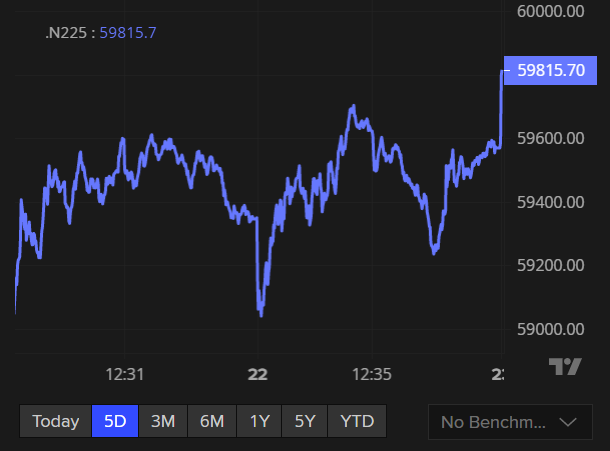
Record for Japan’s Nikkei
Japan’s Nikkei share average rises above 60,000 yen for the first time.
It has now dropped again slightly, but here is a look at its movements over the past five days:
ASX drops
The Aussie share market went from -0.3% down to -0.6% and then back up slightly to -0.5% within the first few minutes of morning trade, take a look:
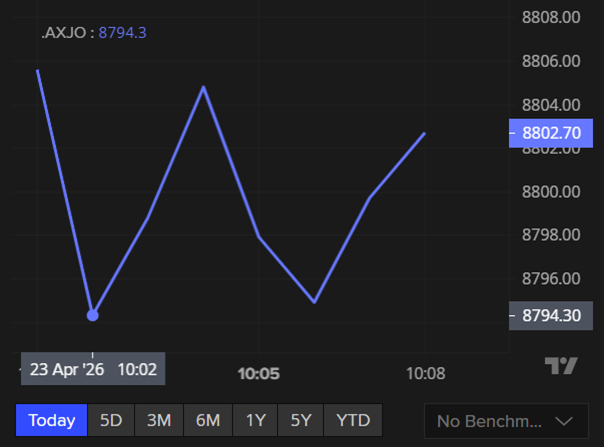
Right now it is down -0.8% to 8,775 points.
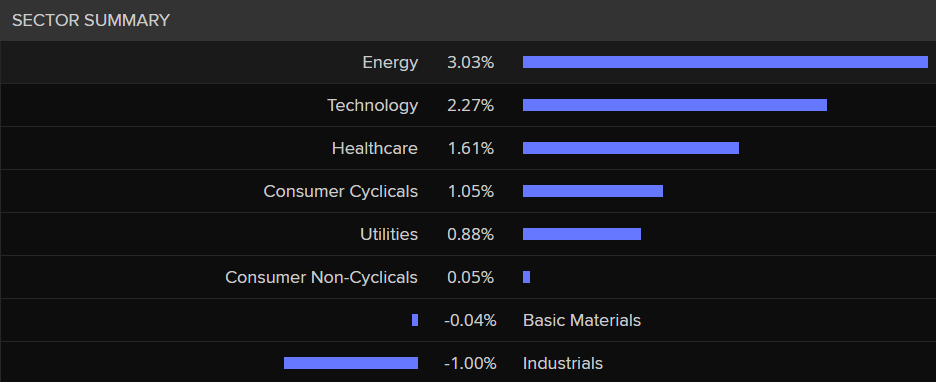
Energy is leading the way with the major sectors, followed by Basic Materials.
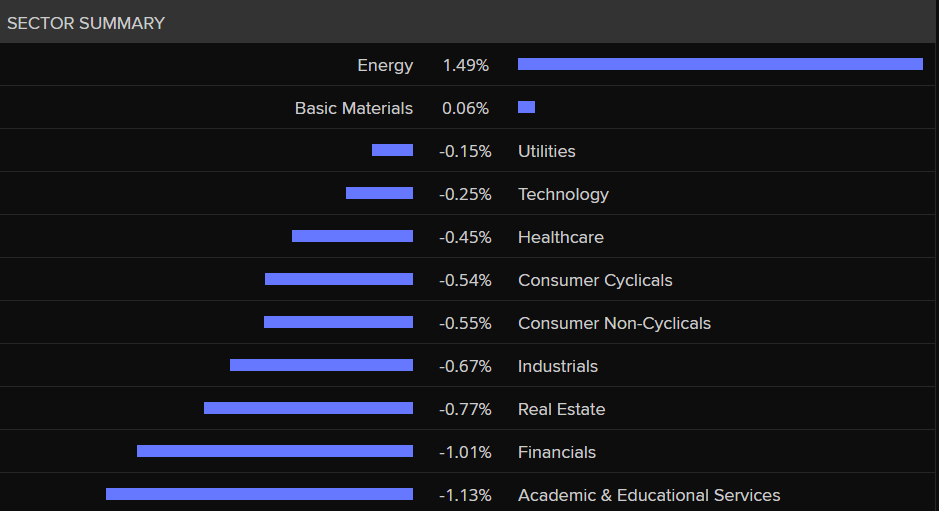
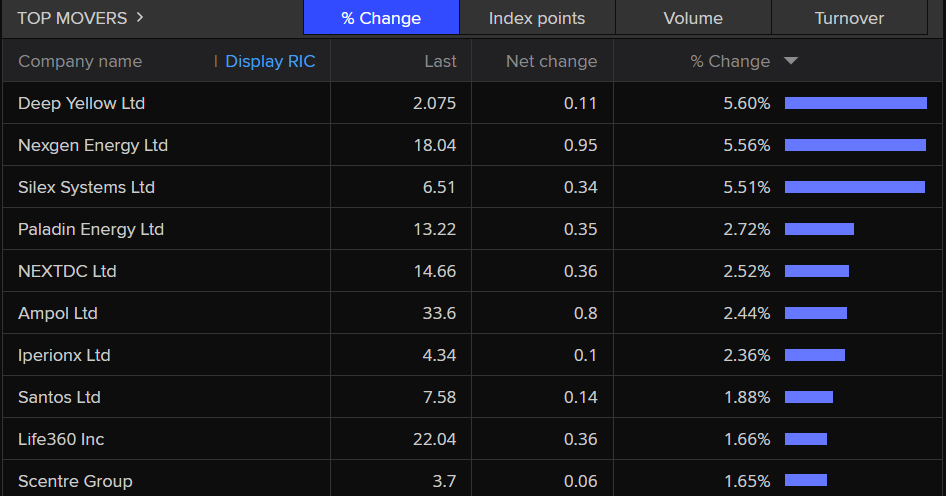
Of the major stocks, 156 are in the red, 4 are unchanged, and 40 are gaining.
Here are the top movers:
And here are the bottom movers:
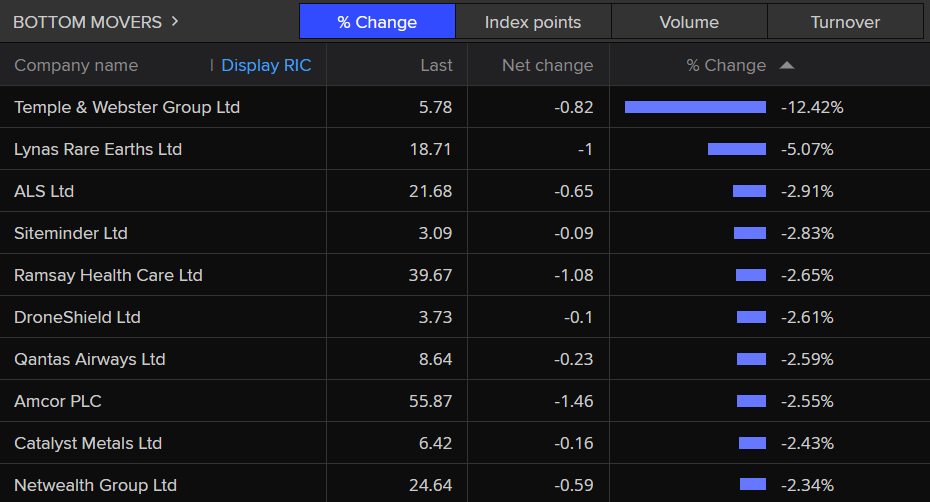
The Aussie dollar is trading at about 71 US cents.
ASX opens down
The ASX 200 has opened down -0.3% to 8,819 points.
More to come.
Wall St analysis
A look again at Wall Street and one analyst has some thoughts.
Senior Financial Market Analyst at capital.com Kyle Rodda says US President Donald Trump’s TACO approach to the war in the Middle East is “whetting investors’ risk appetite”, with a promised peace deal nowhere in sight.
“Every day that passes without a deal, the markets get closer to the energy cliff that awaits the global economy,” he says.
“For now, market participants are sanguine, willing to bet that not only does the ceasefire hold, which according to the Trump administration no longer has a definitive end date, that a peace deal will get done and the strait will re-open soon.”
And when it comes to Tesla, Mr Rodda seems to be cautious.
“With all the focus on the war, a forgotten theme that weighed on the market at the start of the year is artificial intelligence overinvestment and diminishing future returns.
“Tesla, as the first (robo-)cab off the rank for Magnificent Seven earnings, may have re-introduced the theme and the volatility it had once driven.”
Insurance premiums are on the rise but the Australian insurance industry’s profits are taking a hit.
That’s according to KPMG’s annual review of the general insurance industry which found extreme weather events like Ex-Tropical Cyclone Alfred have meant that profits have dropped.
ABC NewsRadio’s Sarah Morice spoke with KPMG insurance expert Scott Guse.
You can listen below:
Rental figures across the country
Following on from the Domain report, here are two tables looking at rental prices across the country, for houses and apartments.
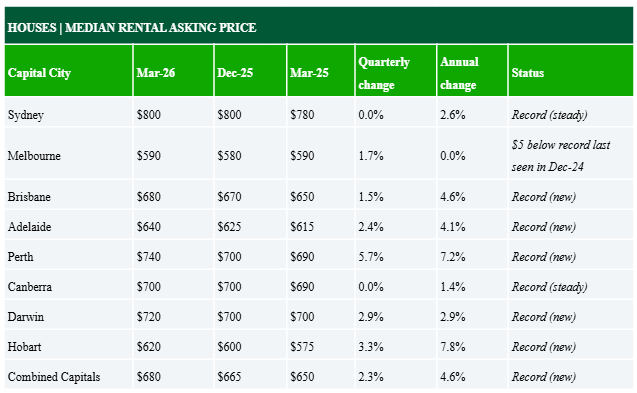
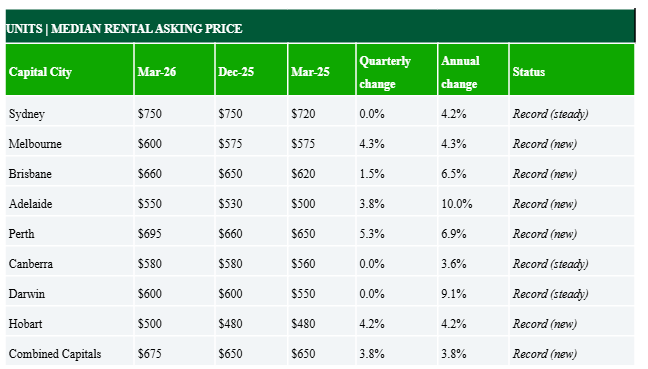
Rental pressure persists as affordability hits firm ceiling
Domain’s latest report for March shows that tenants can no longer absorb higher rents.
That’s despite national vacancy rates falling to a record 0.7% in the March quarter, intensifying competition across most capital cities.
But according to Domain, rents are no longer rising everywhere. Instead, growth is stalling or becoming increasingly uneven.
Tight conditions alone are no longer enough to push rents higher across the board.
Instead, Domain says renters’ budgets, not just the lack of available homes, are determining outcomes, particularly for younger Australians deciding when to move out of home and where they can afford to live.
Key points:
- Rents are holding flat in several cities, despite tighter supply, showing renters have reached their affordability ceiling.
- Renters are seeking cheaper locations and house-sharing, becoming more price-sensitive, slower to commit, and more willing to walk away when rents outpace incomes, even in tight markets.
- Perth recorded the strongest rebound in rents, while Brisbane continued steady gains. Sydney rents have plateaued at record highs, Melbourne’s recovery remains patchy, and Adelaide’s growth appears seasonal rather than sustained.
- Sydney house rents held at $800 per week, and unit rents at $750. It’s the first time in five years rents have stalled across multiple quarters despite some of the tightest rental conditions on record.
- In many cities, more renters are shifting toward units in search of affordability, resulting in steadier unit rent growth than houses. However, limited supply and a lack of suitable family-friendly apartments mean this is only a partial release of pressure.
“Vacancy rates are lower than ever and supply remains incredibly tight, but rent growth is no longer accelerating everywhere. That tells us households simply can’t stretch any further,” says Domain’s Chief Residential Economist, Dr Nicola Powell.
“In many cities, we’re seeing rents hold flat or rise unevenly despite worsening shortages. Affordability, not demand, is now the key constraint.
“Rental conditions still favour landlords due to the lack of supply, but the pace of growth is not being sustained at high levels. This isn’t because conditions have eased, but because renters have hit their limits.”
Wall St recap
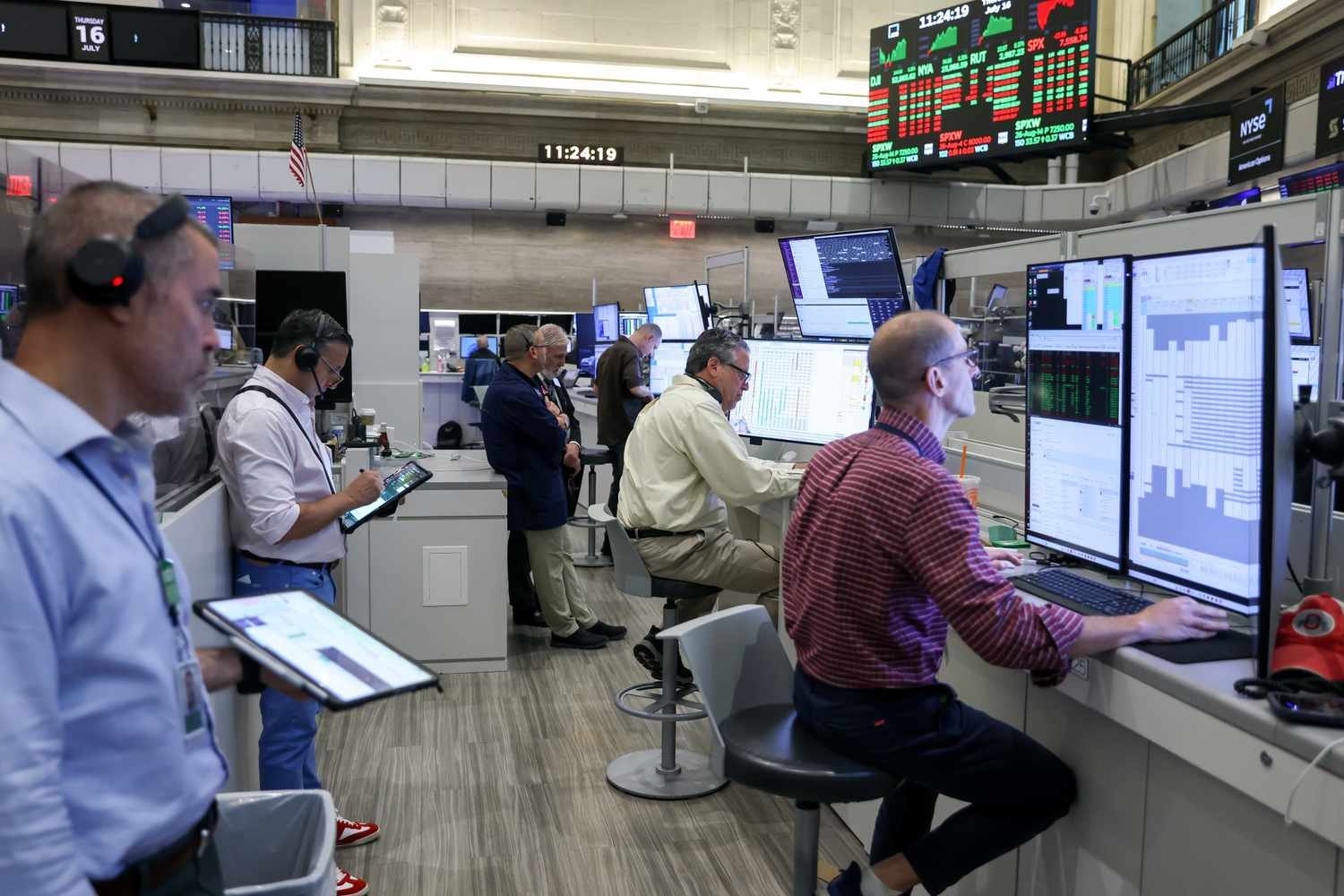
It was a sea of green on Wall Street as the trading day came to a close in New York.
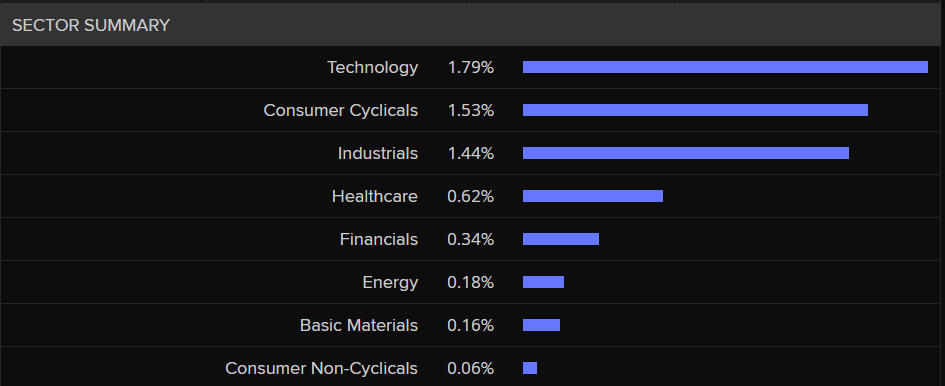
The S&P 500 finished up +1.1% to 7,139 points thanks to technology stocks.
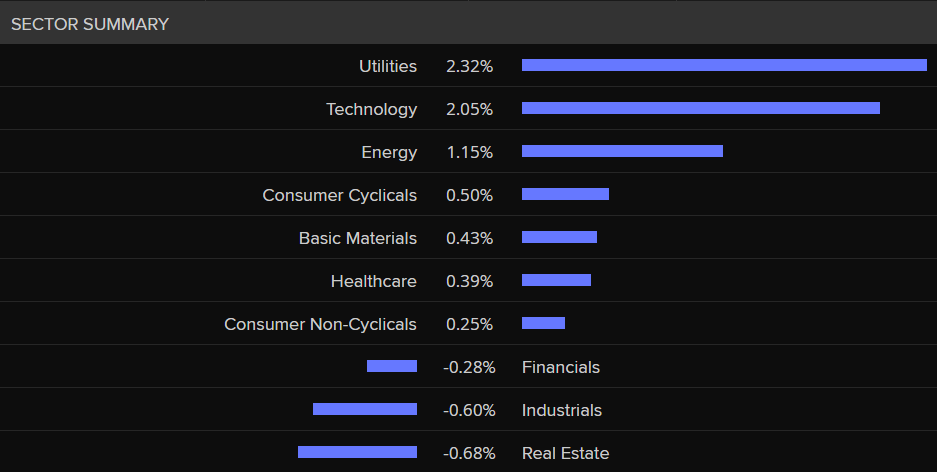
The Nasdaq also had a strong finish thanks to tech stocks, up +1.7% to 26,937 points.
The Dow Jones Industrial Average finished up +0.7% to 49,490 points, with the Technology sector leading the way, followed by Consumer Cyclicals.
ICYMI: Key savings measure of 2026 federal budget unveiled
Independent economist Chris Richardson explains why he believes the government’s NDIS changes are ambitious but necessary, and what the announcement signals about the government’s appetite for further budget reform.
Here is the interview with business presenter Kirsten Aiken:
Loading…
ICYMI: Wednesday finance with Alan Kohler
The war in the Middle East hit home on the local share market today when the share price of hearing implant company, Cochlear cashed, largely because of the war.
Loading…
Major US firms granted access to Anthropic’s Mythos to prepare against AI cyber threats, as Australian firms left out
Local banks, power providers and infrastructure firms do not have access to test their systems against a powerful new AI cybersecurity risk, Anthropic’s Mythos, which has not been made public.
Experts say this highlights the rapid pace of AI development and the challenges of defending against hacking and other security threats.
You can read and watch the full report from my colleague and business reporter Daniel Ziffer:
Loading…
Tesla reports surprise cash surplus in the first quarter
Tesla has surprised investors with a cash surplus in the first quarter, buying some breathing room as it starts to pour money into an ambitious $US20 billion-plus spending plan for the year.
The positive free cash flow, aligned with a better-than-expected profit, comes as Tesla’s capital expenditures were about 40% below what analysts on average were expecting.
Shares of the automaker were up +3.4% in extended trading.
Tesla is in the middle of one of the most expensive bets in its history. CEO Elon Musk pivoted the electric vehicle maker’s focus to building artificial-intelligence-powered self-driving cabs and humanoid robots, and much of Tesla’s $US1.2 trillion market cap rests on that vision.
Tesla’s cash surplus provides some runway for Musk to demonstrate that his bets outside its core autos business will pay off — and quickly.
Tesla reported positive free cash flow of $US1.44 billion in the first quarter, compared with estimates for a cash burn of $US1.43 billion, according to data compiled by LSEG.
The Austin, Texas-based automaker reported revenue of $US22.39 billion for the three months ended March 31, compared with analysts’ average estimate of $US22.6 billion, according to data compiled by LSEG.
Tesla delivered fewer vehicles than Wall Street expected in the first quarter, but deliveries were up +6.3% from a year earlier, when protests against Musk’s far-right politics had weighed on demand.
– Reuters