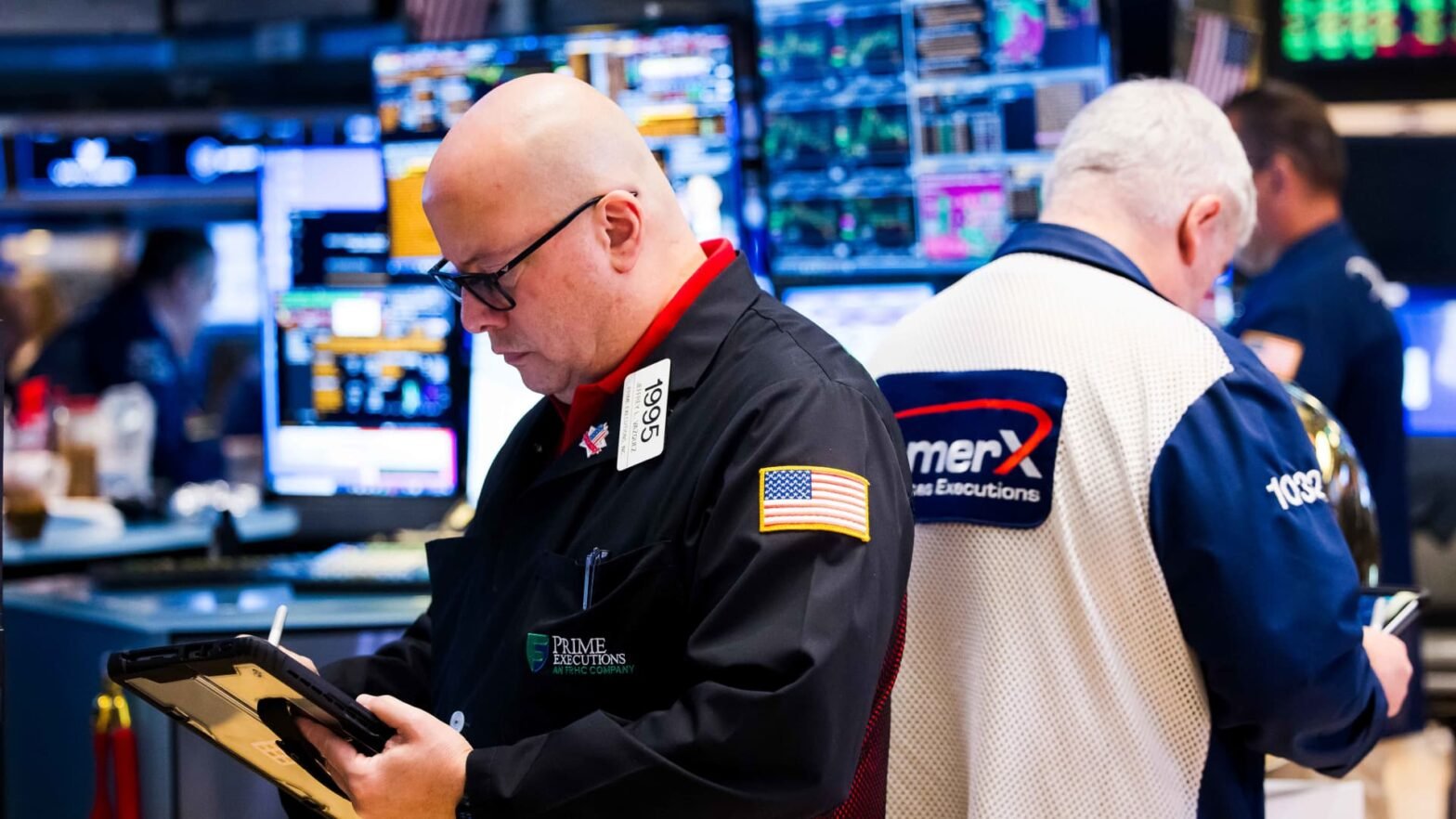
Indian stock markets extended losses for the third consecutive session, with Sensex and Nifty falling around 1% each amid rising worries over escalating tensions between Iran and the US, sparking a rally in oil prices, although broader markets continued to outperform.
Sensex declined over 800 points to the day’s low of 76,980, while Nifty 50 fell over 150 points, below 24,000.
Broader markets, which opened in the green, soon lost steam and slipped into the red. Nifty Midcap 100 and Nifty Smallcap 100 indices declined up to 0.8% each. This came as India VIX, which measures volatility in markets, spiked 3% to 19.17.
IT stocks including Infosys, HCLTech, Tech Mahindra and TCS were the top losers on Sensex, tumbling 2-4% after IT major Infosys’ Q4 earnings failed to impress Dalal Street. Sun Pharma, Eternal, Bharat Electronics (BEL) and Bharti Airtel declined up to 2% each. Bucking the trend, M&M, UltraTech Cement and IndiGo shares were trading with marginal gains.
Sectorally, Nifty IT declined nearly 3% to emerge as the top sectoral loser on the NSE, followed by Nifty Media. Around 2,222 stocks declined on the exchange, while 639 advanced and 72 remained unchanged.
Here are the top factors pushing markets down today:
1) Iran-US war escalates
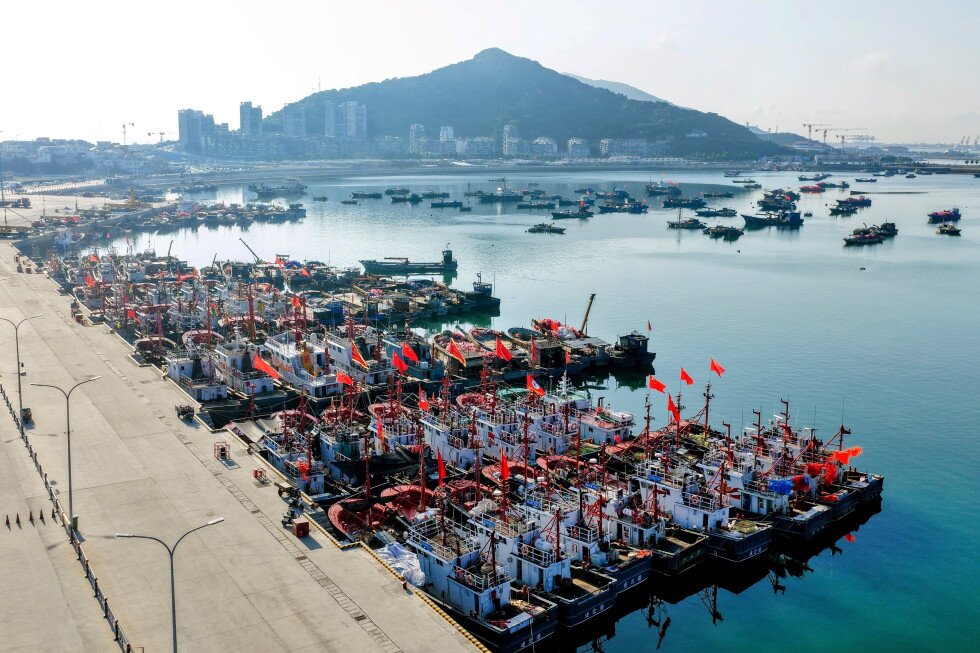
Despite previous hopes of tensions in the oil-rich Middle East easing soon with a second round of negotiations between Iran and the US, worries seem far from over. The US continues to blockade the Strait of Hormuz. Meanwhile, Iran has used a swarm of small, fast boats to seize at least two container ships near the critical waterway, raising concerns that Trump’s claims that the US has disabled Tehran’s naval threats might not be entirely accurate.
US President Donald Trump has acknowledged that while Iran’s conventional navy had been largely destroyed, its “fast-attack ships” had not been considered much of a threat. He said any such vessels coming near a US blockade set up outside the strait would be “immediately ELIMINATED” using the “same system of kill” deployed in the Caribbean and Pacific, where US air strikes have hit suspected drug boats and killed at least 110 people.
Iran on Thursday posted a video of commandos in a speedboat storming a large cargo ship after the collapse of peace talks, underlining its grip over the Strait of Hormuz, through which 20% of global oil and gas usually flows.
As investors and governments around the world look for an enduring peace, Trump said he would not set a “timetable” for ending the conflict with Iran and that he wanted to make “a great deal.” “Don’t rush me,” he said when asked how long he was willing to wait for a long-term peace deal with Iran.
2) Oil prices surge
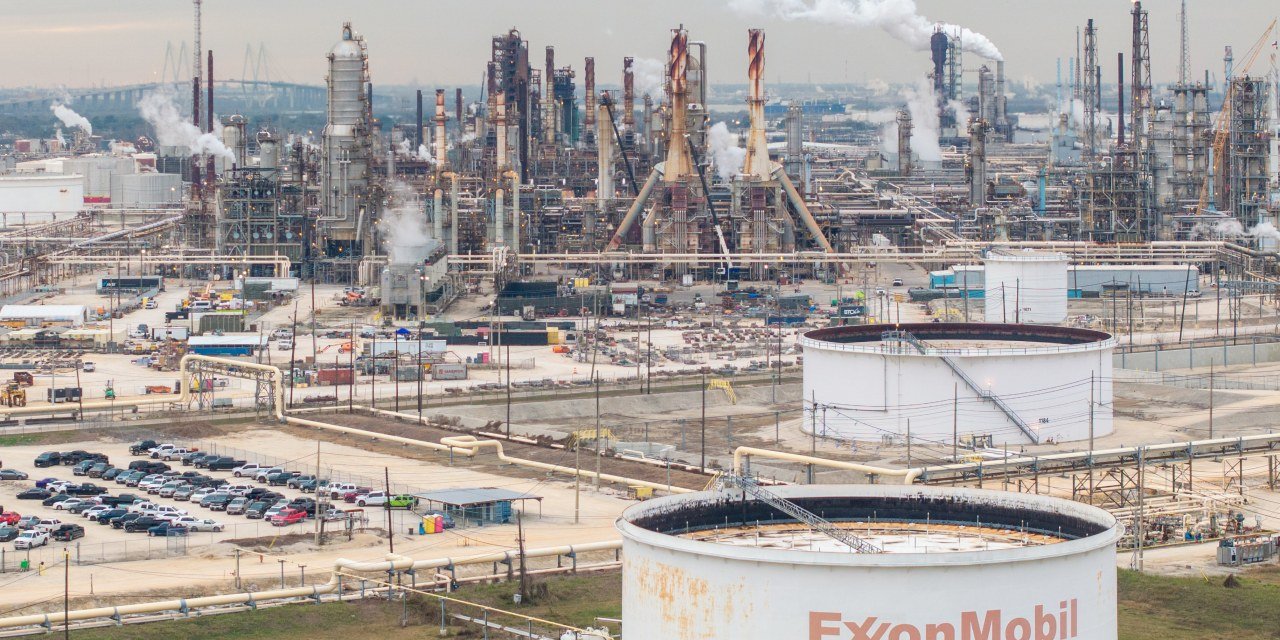
As a result of rising worries over supply disruptions through the Strait of Hormuz, oil prices extended gains. Brent crude futures were trading near $106 per barrel, while WTI crude futures were hovering near $96 per barrel.
Oil prices have resumed their upward trajectory, crossing the key psychological mark of $100 after falling below the level earlier this month. Oil prices had crossed the $100 per barrel mark earlier in March following the outbreak of the war between Iran and US-Israel, marking the first time since Russia’s invasion of Ukraine in 2022.
3) Rupee slides
The rupee dropped 24 paise to 94.25 against the US dollar on Friday, continuing to weaken against the American greenback. The currency has fallen each day this week, and there is little sign of relief ahead.
“Uncertainty around US-Iran talks and tensions in the Strait of Hormuz are further supporting crude, adding to inflation concerns and limiting rupee recovery. The dollar remains steady, which is also capping any upside in INR. Overall, the bias remains weak, with the rupee likely to stay event-driven and volatile in the near term,” said Jateen Trivedi, VP Research Analyst, Commodity and Currency, LKP Securities.
4) FII remain net sellers
Foreign investors continued to remain net sellers of Indian equities on Thursday, selling shares worth Rs 3,255 crore on Dalal Street, according to provisional data on the NSE. While this does not reflect their behaviour in Indian markets today, sustained selling by FIIs dampens sentiment and weighs on markets.
5) Global markets
Global markets remained mixed. While South Korea’s Kospi declined around 1%, Japan’s Nikkei gained around 0.4%. China’s Shanghai Composite dropped 0.6%, and Hong Kong’s Hang Seng was hovering in the red with marginal losses.
Wall Street ended yesterday’s session sharply in the red, with the tech-heavy Nasdaq declining around 0.9%. Dow Jones futures are currently in the red, indicating bearish sentiment may continue when the American stock market opens today. European markets closed mixed yesterday, with the UK’s FTSE and Germany’s DAX falling up to 0.2%, while France’s CAC outperformed, rising 0.9%.
6) Bond yields rise
As a result of renewed worries, bond yields rose. The yield on benchmark US 10-year notes rose to 4.33%, while the 30-year bond yield rose to 4.92%. The 2-year note yield, which typically moves in step with interest rate expectations for the Federal Reserve, jumped to 3.84%
7) Weak earnings
Weak earnings by heavyweight Infosys also may have dampened sentiment on Dalal Street. The company reported a 21% year-on-year rise in consolidated net profit for the quarter ended March 31, 2026, at Rs 8,501 crore, compared with Rs 7,033 crore in the same period last year. Brokerages like Jefferies and Morgan Stanley reduced its target price for the stock after the earnings, due to miss on estimates and weak revenue growth outlook.
Technical view
Nifty yesterday formed a bearish candlestick pattern, signalling consolidation with a corrective bias for the second session in a row after the recent strong upmove, said Bajaj Broking. “Nifty in the last two sessions witnessed profit booking after rallying more than 2,400 points in just three weeks, which has pushed the daily and weekly stochastic oscillators into overbought territory. The index in the last two sessions has reacted lower from the key resistance area of 24,650-24,800, being the confluence of the previous breakdown area, 200-day EMA and the 61.8% retracement of the entire decline from 26,373 to 22,183,” it said.
In this context, the domestic brokerage feels that some consolidation at current levels cannot be ruled out. “We expect the index to consolidate in the range of 23,600-24,800. Stock-specific action will continue to remain in focus as we progress through the quarterly earnings season. Short-term support is positioned around the 23,600-23,500 range, being the confluence of last week’s low and 38.2% retracement of the last three weeks’ pullback (22,183-24,601),” it added.
(With inputs from agencies)
(Disclaimer: Recommendations, suggestions, views and opinions given by the experts are their own. These do not represent the views of The Economic Times.)