Updated 2 min read
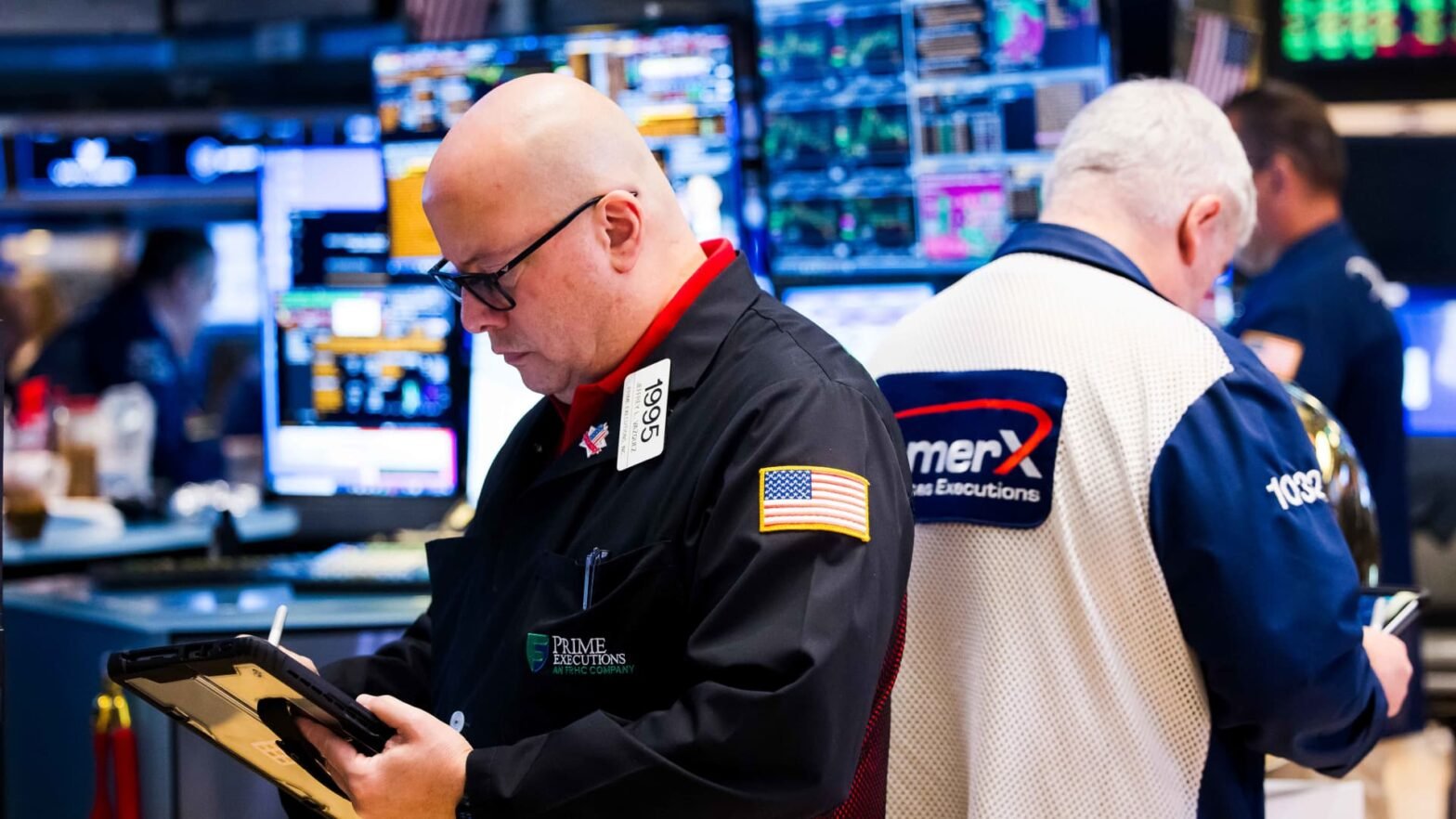
US stocks diverged on Tuesday as OpenAI (OPAI.PVT) doubts weighed on tech stocks and the United Arab Emirates said it would leave the OPEC group of oil producers.
The Nasdaq Composite (^IXIC) sank 1.3% to lead losses, while the S&P 500 (^GSPC) pulled back 0.7% on the heels of Monday’s record-high closes. Meanwhile, the Dow Jones Industrial Average (^DJI), which started the day higher, bounced around the flat line.
OpenAI has fallen short of its own targets for sales and users ahead of its highly anticipated IPO, the Wall Street Journal reported. Shares of partners such as Oracle (ORCL) slumped amid revived concerns about how long the AI spending boom will last.
Investors are now on high alert for clues to AI plans as the “Magnificent Seven” tech megacaps report quarterly results this week. Alphabet (GOOG), Amazon (AMZN), Meta (META), and Microsoft (MSFT) are on Wednesday’s docket, with Apple (AAPL) following the next day.
Meanwhile, the oil market is digesting news that the UAE is leaving the OPEC cartel, a move that deals a major blow to the bloc at an already historically precarious moment for Persian Gulf oil producers.
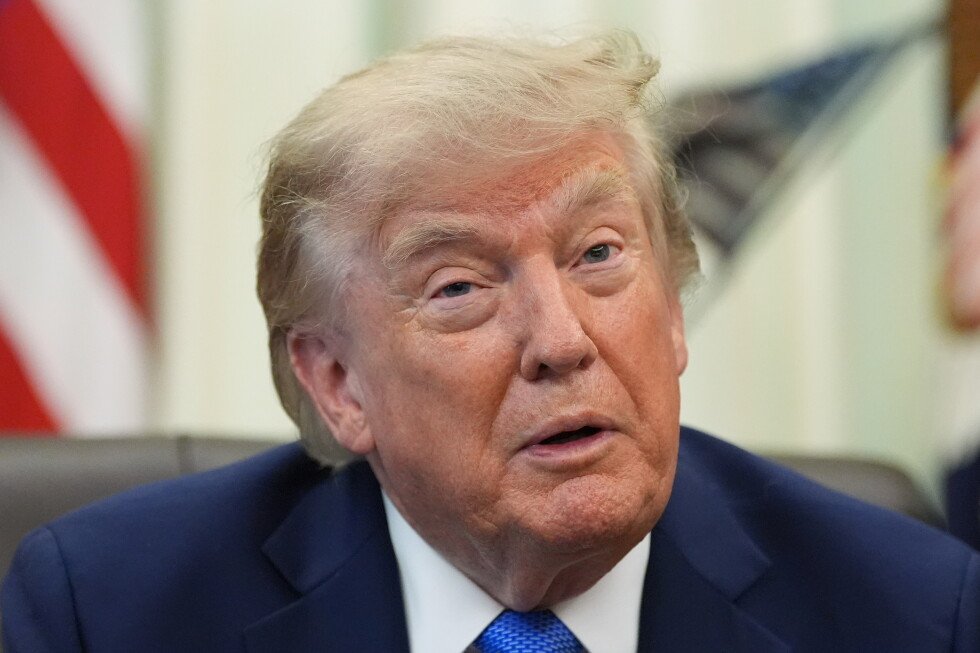
Wall Street is also watching for progress in peace talks, as the US-Iran standoff keeps traffic through the Strait of Hormuz at a standstill. President Trump will address Iran’s proposed interim deal to lift the blockade soon, the White House said, though Trump is reportedly not happy with the terms.
Brent crude (BZ=F) crossed $112 per barrel to erase all of its ceasefire-driven losses, per Bloomberg data, while US WTI crude (CL=F) crossed back over $100.
Also in focus, the Federal Reserve begins its two-day meeting on Tuesday. Policymakers are expected to hold rates steady in their decision on Wednesday, and investors will listen out for Fed Chair Jerome Powell’s comments as his term draws to a close.
LIVE 14 updates
-
JPMorgan’s Jamie Dimon says credit recession could be ‘worse than expected’
JPMorgan Chase CEO Jamie Dimon said Tuesday that if and when a pullback in the credit market emerges, it “will be worse than people think,” Bloomberg reported.
Speaking at a conference hosted by Norges Investment Bank, Dimon said that, given there are more than 1,000 private credit firms, some “may be brilliant, but I guarantee you not all 1,000 of them are.”
The comments from Dimon mark the latest in a string of remarks from the head of the world’s largest bank criticizing the private credit industry, which he has called a “roach” in the financial services sector.
Tempering his comments on Tuesday, Dimon said that a pullback in the sector “won’t be terrible, it’ll just be worse than people think in private credit.” He reiterated his view, laid out in his annual letter published earlier this month, that private credit “probably does not” pose a systemic risk to the financial markets.
JPMorgan is currently talking with a host of institutional investors about the bank investing billions of dollars in a private credit strategy.
-
Gold, silver plunge amid US-Iran stalemate
Gold (GC=F) futures tumbled more than 2% on Tuesday, while silver (SI=F) fell 3% as the US and Iran appear to be at an impasse in negotiations amid ongoing tensions in the Middle East.
Precious metals were under pressure as investors priced in the possibility of elevated interest rates remaining in place for longer, with policymakers seeking to curb inflation fueled by rising oil prices.
Read more here.
-

The bond market is testing Washington again
The US 30-year yield (^TYX) is back near the danger zone that has sent stocks tumbling before.
That level is roughly 5.0%. It has acted like a ceiling for the long bond several times over the past three years, with each approach tightening financial conditions and pressuring stocks before yields backed off — a dynamic I flagged in March.
But the pattern is getting harder to ignore. The 30-year has been making higher lows beneath that ceiling, turning the chart into a long squeeze between rising support and the same old 5% wall.
I keep going back to a comment by RSM chief economist Joe Brusuelas, who framed the political risk early. In December 2024, before Trump took office, he said, “The stock market [was] the barometer of the first Trump administration. So, the bond market’s likely to be [that of] the second.”
The market does not need a bond market tantrum for this to bite.
If the 30-year holds above 5%, the pressure shifts quickly to housing, small caps, and expensive growth stocks — and Washington will have a harder time looking away.
-
Consumer confidence rises on rosier job market outlook
Is that a glimmer of optimism we see?
Data released by the Conference Board on Tuesday showed that consumer confidence hit its highest level for 2026 in April, with the overall consumer confidence index climbing to 92.8 as expectations for the job market and pay improved.
-
OpenAI report hits a tired chip trade before Big Tech earnings
OpenAI (OPAI.PVT) didn’t start the chip sell-off — it gave traders a reason to press it further.
Semiconductor stocks are lower for a second straight session after a Wall Street Journal report raised questions about OpenAI’s ability to support massive future data center spending commitments.
But the move is coming after a blistering, record-setting run: The PHLX Semiconductor Index (^SOX) had just posted an 18-day win streak, with 13 straight record highs by the end of the run.
Chris Versace, chief investment officer at Tematica Research, said the story is likely to weigh on companies tied to “chips to networking equipment and other aspects of digital infrastructure.” He added that the story raises questions about artificial intelligence adoption, usage, and whether the recent ramp in hyperscaler capex expectations had gone too far.
Oracle (ORCL) briefly looked like the software-adjacent casualty of the AI infrastructure trade, but its early losses have faded a bit.
The timing gives hyperscaler earnings extra weight. Microsoft (MSFT), Alphabet (GOOGL), Meta (META), and Amazon (AMZN) all report Wednesday after the bell.
Those reports are the real test of whether the AI capex story still has support from the hyperscalers, or whether traders keep pressing the weakest links in the build-out trade.
-
Home price growth is slowing down — and even turning negative — in more of the country
Yahoo Finance’s Claire Boston reports:
Home price growth slowed again early in the year, a small relief for homebuyers still facing mortgage rates above 6% and limited inventory.
The S&P Cotality Case-Shiller 20-City Composite Home Price Index, which measures home prices in 20 of the nation’s largest metropolitan areas, rose 0.9% in February from a year earlier, according to data released on Tuesday. That’s down from a 1.19% annual jump in January.
The national index, which encompasses home prices across the country, showed an even smaller 0.67% year-over-year gain.

A house for sale is pictured in Alexandria, Va., on March 22, 2010. REUTERS/Molly Riley · REUTERS / Reuters -
US stocks open Tuesday on mixed footing
The US stock market opened Tuesday’s trading session on mixed footing as doubts around OpenAI (OPAI.PVT) dragged down the tech sector and the UAE’s announcement that it is leaving the OPEC bloc rocked oil markets.
The Nasdaq Composite (^IXIC) sank 1.1% to lead losses, while the S&P 500 (^GSPC) pulled back 0.4% on the heels of Monday’s record-high closes. Meanwhile, the Dow Jones Industrial Average (^DJI), which includes fewer tech stocks, rose 0.4%.
News that OpenAI reportedly fell short of its targets for sales and users sent shares in partners such as Oracle (ORCL) down. The news comes as five of the “Magnificent Seven” stocks prepare to report earnings on Wednesday and Thursday.
Also, on Tuesday morning, the UAE announced that it is leaving OPEC at a moment when global energy markets are already on edge. Brent crude (BZ=F) briefly rose above $112 per barrel (last trading at around $104) to erase all of its ceasefire-driven losses, per Bloomberg data, while US WTI crude (CL=F) climbed back over $100.
-
Earnings season is rewarding guidance — and punishing perfection
Earnings season is coming down to guidance.
Catching bids: Omnicell ( OMCL) is the biggest mover on the board, up more than 20% premarket after beating Q1 expectations and raising 2026 guidance. LGI Homes (LGIH) is up 10% after lifting its full-year margin outlook, while Centene (CNC) is adding 3% after a strong profit beat and higher revenue forecast. Coca-Cola (KO) is also trading higher after better-than-expected earnings and a higher profit outlook.
The misses: Corning (GLW) is down a little under 10% even though it is still up over 90% year-to-date, with investors looking past a Q1 beat and focusing on a softer-than-expected Q2 sales outlook. Spotify (SPOT) is off similarly after its Q2 profit and premium-subscriber outlook missed expectations. UPS (UPS) is down almost 5% after reporting lower quarterly revenue and adjusted EPS, even as management reiterated its full-year outlook.
The read-through is pretty straightforward: Investors are still rewarding companies that can raise the bar, but they are not giving much room to stocks that already had big runs into earnings.
And this is still before Wednesday’s post-bell barrage from four of the “Magnificent Seven”: Alphabet (GOOGL), Microsoft (MSFT), Meta (META), and Amazon (AMZN).
-
UAE to leave OPEC in May, dealing blow to oil bloc
The United Arab Emirates, one of the world’s major oil producers, will leave the Organization of Petroleum Exporting Countries (OPEC/OPEC+) effective May 1.
The surprise move from Abu Dhabi is likely to deeply shake the oil producer alliance. OPEC+ derives much of its power from a strong consensus and its ability to influence global oil prices thanks to the production power of its members.
The decision “reflects the UAE’s long-term strategic and economic vision and evolving energy profile,” the UAE’s state news agency WAM said in its announcement on Tuesday morning. It is based on“our national interest and our commitment to contributing effectively to meeting the market’s pressing needs,” WAM added.
While Saudi Arabia has long been seen as the dominant voice among the group of 12 countries, the UAE has in recent years seen its strategic influence rise. The country has strengthened both its oil production and its Abu Dhabi National Oil Company, which has raised its international profile.
The UAE’s decision to exit the cartel comes at a markedly precarious moment for Middle Eastern oil powers, which have seen their ability to export oil out of the Persian Gulf cut to near-zero as Iran has asserted military dominance over the Strait of Hormuz, the world’s most critical chokepoint for global energy flows.
-
OpenAI-linked stocks slump on report of startup missing targets
Bloomberg reports:
Shares in OpenAI (OPAI.PVT) partners such as SoftBank (SFTBY, 9984.T) and Oracle (ORCL) are falling after the Wall Street Journal reported that the AI startup recently failed to meet targets for sales and new users, reviving worries about spending ahead of tech earnings.
… While OpenAI has struck deals with dozens of firms, markets tend to focus on a smaller subset of major partners including Nvidia (NVDA), SoftBank, Oracle, Microsoft (MSFT), Coreweave (CRWV), and AMD (AMD) as investment proxies for the creator of ChatGPT.
Investors are on high alert for evidence that tech companies are staying committed to previously-announced plans for huge capital expenditure to build out AI infrastructure.
“That’s what the market needs to see to keep the AI narrative intact,” said Amanda Lyons, head of research at Energy Group Capital. “The nuance is that it’s a narrow path: any hint of slowing spend would be taken negatively for the ecosystem, but a sharp step-up would likely raise questions around returns and sustainability.”
-
Spotify stock falls as Q2 operating guidance disappoints
Spotify (SPOT) stock tanked 11% after its second quarter operating income guidance missed the mark.
For Q2, Spotify guided for an operating income of 630 million euros ($736 million), below estimates of 675 million euros ($789 million). In the first quarter, operating income was 715 million euros, with higher costs driven by marketing and cloud and AI spend.
For the first quarter, Spotify beat estimates on the top and bottom lines. Revenue grew 8% year over year to 4.53 billion euros ($5.3 billion), slightly ahead of estimates of 4.52 billion euros. Earnings per share of 3.45 euros beat the estimate of 2.95 euros.
The company reported 761 million monthly active users, slightly ahead of its guidance for 759 million users, while the 293 million premium users were in line with guidance.
-
GM earnings preview: Tariffs, weaker consumer may weigh on Q1 results
General Motors (GM) is expected to report quarterly results Tuesday morning that will reflect a mixed environment for the automaker, with tariffs, consumer fears, and a weaker electric vehicle business all top of mind for investors.
Yahoo Finance’s Pras Subramanian sets out what’s in play for the Big Three automaker.
Analysts expect GM to post first quarter revenue of $43.68 billion, down slightly from the $44 billion reported a year ago. GM is expected to report Q1 adjusted earnings per share of $2.62.
… Earlier this month, GM said Q1 US sales fell 9.7% from a year ago to 626,429 vehicles, though the automaker held onto its US sales crown thanks to a strong March, which helped claw back ground lost during a winter-storm-disrupted January and February.
GM said that year-over-year comparisons were skewed by an exceptionally strong Q1 last year, before President Trump’s tariffs went into effect on April 1.
-
OpenAI fails to hit revenue targets before upcoming IPO
Reuters reports:
OpenAI has fallen short of its goals for new users and revenue in recent months, sparking concern among some company leaders over whether it can support its extensive data-center spending, the Wall Street Journal reported on Monday, citing people familiar with the matter.
• CFO Sarah Friar has expressed concerns to other company leaders that the ChatGPT creator might not be able to pay for future computing contracts if revenue doesn’t grow fast enough, according to the report.
• OpenAI missed multiple monthly revenue targets earlier this year after losing ground to Anthropic in coding and enterprise markets, the report said.
• “This is ridiculous. We are totally aligned on buying as much compute as we can and working hard on it together every day,” CEO and co-founder Sam Altman and Friar said in an emailed statement to Reuters.
• ChatGPT’s growth slowed toward the end of last year, the WSJ report said, adding that OpenAI fell short of an internal target to reach 1 billion weekly active users for the artificial intelligence chatbot by year-end.
• The company has also grappled with subscriber defections, the report added.
-
Oil holds just below $110 a barrel with Iran peace proposals leaving markets unchanged
Bloomberg reports:
Oil held a gain as traders weighed the next steps toward peace talks over the Iran war, with the US discussing a proposal from Tehran while the crucial Strait of Hormuz remained almost impassable.
Brent (BZ=F) crude traded near $108 a barrel after advancing 2.8% on Monday, while West Texas Intermediate (CL=F) was above $96. US President Donald Trump convened a meeting to discuss the proposal, but maintained red lines on any deal to end the war, including preventing Tehran from obtaining a nuclear weapon.
A ceasefire has broadly held since early April, but a blockade of the Strait of Hormuz by Iran and the US has reduced daily transits of the waterway to near zero. The closure has choked off flows of crude, natural gas and oil products, driving up energy prices and raising concerns about an inflation crisis.