Every morning before the opening bell, the Schwab Market Update sets the stage for the day ahead, covering key market movers, economic developments, and emerging themes. Each edition includes “Three things to watch” and every Thursday features a weekly section, “Crypto currents.” This recap revisits select items for those who may have missed them, helping traders head into the weekend better informed.
Strong earnings growth and reduced focus on the war in Iran helped stocks climb to their recent record highs. At the same time, there’s still a lot of froth in the market and many stocks have come a long way very quickly. Meaning it’s not all about fundamentals. “The market continues to look like a casino floor,” said Liz Ann Sonders, chief investment strategist at the Schwab Center for Financial Research, or SCFR. “There’s tons of short attention span money all chasing the same themes, with cohorts playing off other cohorts’ positioning.” With the midway point of the year coming up soon, investors might want to check their positioning and consider rebalancing. The long rally could have many market participants more exposed to stocks—particularly high-flying tech and chip names—than they might have initially planned. Another concern is summer doldrums that sometimes show up this time of year when earnings season ends and near-term catalysts fade. While there’s nothing in stone when it comes to seasonal factors, historically June tends to be a weak month.
If there were any doubt, the Conference Board’s consumer confidence survey for May confirmed that higher prices are hurting consumers. Two-thirds of consumers said rising prices are causing them to cut spending on items such as clothing and footwear, according to the survey, which was released Tuesday. Executives at big box retailers echoed related concerns during earnings calls last week. Walmart (WMT), Home Depot (HD), and Lowe’s (LOW) all cited higher fuel prices as a cost pressure, with Walmart warning that the elevated prices may lead to broader retail inflation as soon as the current quarter. Home Depot said the higher gas prices are hard to separate from broader pressure on consumer spending, while Lowe’s Chief Financial Officer Brandon Sink said only about 20% of tax refunds have been spent so far, with about 50% going into savings and the remainder to offset higher gas prices. Sink added that another $50 billion in refunds remained to be distributed. But the retailers didn’t predict a rebound in consumer demand. In fact, Home Depot said its expectations for moderately higher second-half comparable sales were “solely driven by a return to normal storm activity.”
Bitcoin malaise marches on
Short-term momentum has turned down for bitcoin after it failed repeatedly in recent weeks to climb above its 200-day moving average. As of Friday morning, the cryptocurrency was trading at around $73,000, near its lowest level in six weeks, having slid below a rising 50-day moving average. One measure of recent selling: Last week, spot bitcoin exchange-traded products (ETP) suffered their worst weekly net outflows since January, losing $1.3 billion, according to Glassnode data. That followed net outflows of about $1 billion the previous week. A convergence of multiple forms of technical resistance may be at least partly to blame for the reversal. That included the 200-day moving average and the average cost basis for ETP investors at around $83,000. But bitcoin also lacks a strong catalyst in an unfavorable macro environment—at least for now. The AI trade and prediction markets are pulling in hot money, while inflation and bond yields are rising, which is bullish for the dollar and bearish for bitcoin.
AI trade drives Asian economies and markets
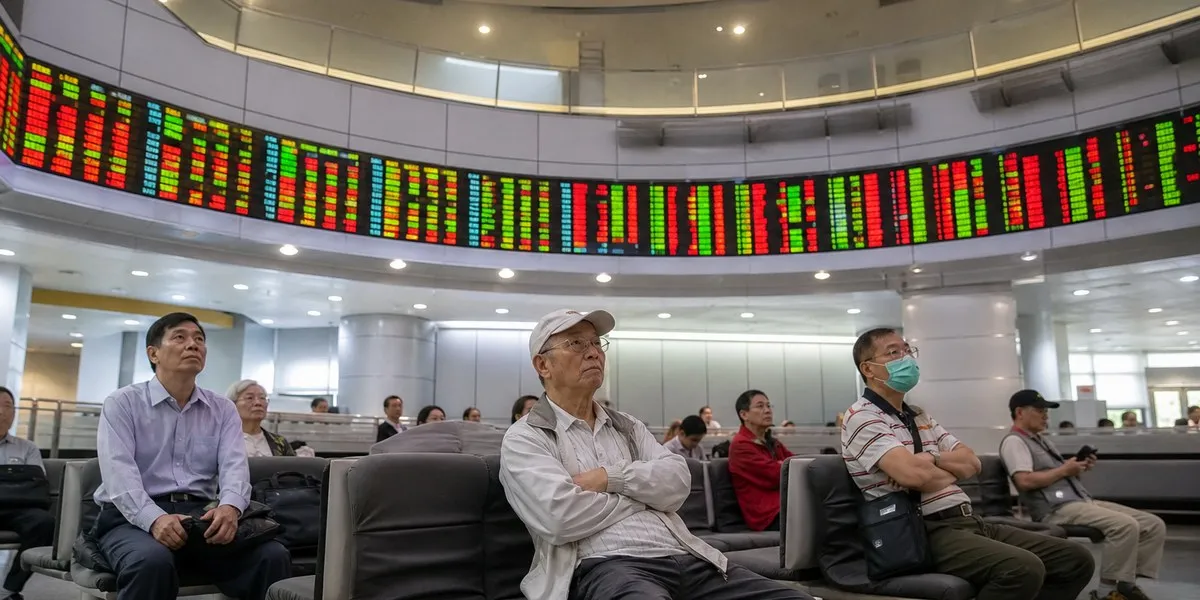
Taiwan’s stock market on Tuesday passed India’s to become the fifth-most valuable in the world, worth nearly $5 trillion. Investors can thank the AI trade. Taiwan is just one of the countries in Asia that is playing a key role in the global AI trade with exports of advanced semiconductors, memory, and other key equipment, said Michelle Gibley, director of international equity research and strategy at SCFR. “Certainly, we’re seeing countries across Asia really participate in this AI capex boom.” Companies in the AI hardware supply chain that support the growth of data centers have been the winners so far this year, while also driving accelerating export growth, economic growth, and consumer spending in Taiwan, South Korea, and Japan, Gibley said. And that in turn has pushed their stock markets to all-time highs in recent weeks.
The spread between the S&P 500® Index earnings yield and the 10-year Treasury yield, known as the equity risk premium (ERP), reflects the additional return investors receive for owning equities over bonds. While earnings yields have risen alongside strong first quarter results, the increase in Treasury yields has more than offset that improvement. According to Bloomberg, the spread has narrowed sharply from 0.70 to 0.17 over the past three months, driven largely by the rise in the 10-year yield from 3.93% to 4.44%. As that spread compresses, equities offer less relative value compared with bonds. For the ERP to widen back to prior levels, either earnings growth must remain exceptionally strong, or bond yields must move lower. That may prove challenging, however, given persistent inflation pressures, higher oil prices, and a Federal Reserve that appears more inclined to hold rates higher for longer—or potentially raise them.
Begin your trading day with Schwab’s expert insights and all the market news you need to know. Subscribe to our morning Schwab Market Update on Schwab.com.