Photo: Michael Gonzalez/Getty Images
By the end of 2026, it’s likely that SpaceX, Anthropic, and OpenAI will all have gone public, asking investors to plow hundreds of billions of dollars into the companies and assigning them valuations of upwards of $1 trillion or more apiece. Some people — for instance, the banks helping these firms IPO and the firms’ owners who will become even more cartoonishly rich as a result — think this is terrific news. Others not so much, opposition that likely has to do with fears about artificial intelligence destroying the environment, displacing workers, killing independent thought, and also literally killing people in war, to name just a few things. Given the ever-growing resistance to the technology, people with not-great feelings about AI — like, say, the Pope — might comfort themselves with the thought that, at the very least, they will never own shares of these companies, thereby taking a small stand against giving them even more money and power. But actually, a whole lot of people will, whether they want to or not.
As the New York Times notes, “If you own a broadly based U.S. stock index fund” — and the majority of U.S. retirement accounts do — “you are likely to own shares of these companies soon, regardless of your personal preferences. Many of the institutions that construct major stock market indexes have declared that they will include them within days of their first sales. That includes CRSP, FTSE Russell and MSCI,” with the S&P Dow Jones Indices expected to soon follow to keep up with its competitors.
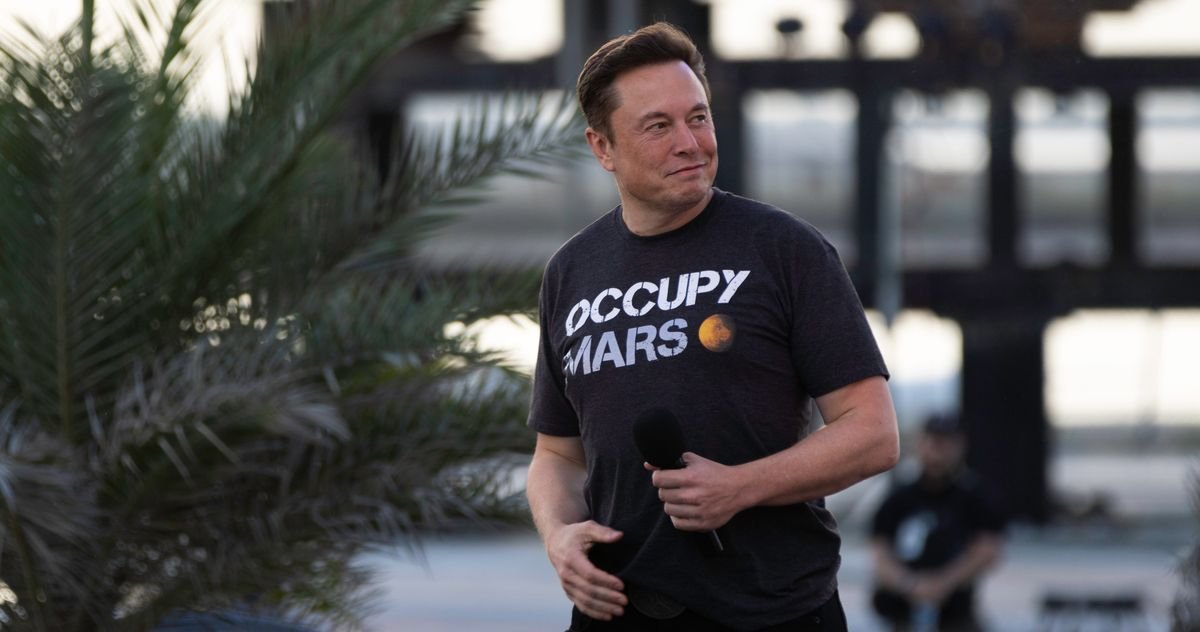
If that bothers you, you probably will be equally unhappy to know that the rules are being changed specifically for the benefit of these companies; previously, in order to join the S&P 500, a company had to (1) trade publicly for at least a year and (2) show four straight quarters of profitability, guardrails that were put in place after the dot-com bubble burst. We don’t yet know how much money Anthropic, which filed with the SEC this week, has made and lost, nor do we have an inside look at OpenAI, which is expected to soon follow. But we do know Elon Musk’s SpaceX lost billions last year and $4.3 billion in the first three months of this year alone, losses the company attributed to spending on AI. While SpaceX has been primarily seen as a rockets-and-satellites company, with its acquisition of xAI last year, it is also very much in the business of artificial intelligence.
(Speaking of retirement accounts, Musk said in January that people shouldn’t “worry about squirreling money away for retirement in 10 or 20 years,” because with the advancement of AI, it “won’t matter.” The richest man in the universe explained that with the coming robot takeover, the population will enjoy not a universal income but a “universal ‘you can have whatever you want’ income.” So relax!)
Anyway, being force-fed shares of SpaceX, Anthropic, and OpenAI may be a bitter pill to swallow for the many Americans who are not at all excited about artificial intelligence. In April, a Gallup poll showed just 18 percent of people ages 14 to 29 feel hopeful about AI, down from 27 percent in 2025. The same month, an Economist/YouGov survey showed more than 70 percent of Americans believe AI is developing too quickly with 79 percent of people 65 and older agreeing. Also in April, a Texas man threw a Molotov cocktail at OpenAI CEO Sam Altman’s house and later showed up at an OpenAI office and threatened to “burn down the building.”
Lawmakers on both sides of the aisle have expressed concerns about the technology. “People just feel like they’re under siege,” Republican Senator Josh Hawley, who has proposed legislation to put new requirements on data centers and AI firms, told The Wall Street Journal. At a Congressional hearing this month, Democratic Representative Alexandria Ocasio-Cortez held up a jar of brown water collected from a tap in Georgia where a Meta data center is being built, telling an EPA official, “This is not just inconvenience. This is a basic public-health issue.” On a recent podcast, Dylan Patel, CEO of AI-infrastructure consulting firm SemiAnalysis, said he expects massive protests against Anthropic and OpenAI within several months. “People hate AI. AI is less popular than [Immigration and Customs Enforcement],” he said. “AI is less popular than politicians.”
Of course, not everyone feels negatively about AI, and not everyone wants to stay as far away from these IPOs as possible. On Wall Street, investors are already experiencing preemptive FOMO. “More people are biased to participate than not because no one wants to miss it,” Renos Savvides, the head of equity capital markets Neuberger, which owns shares of SpaceX through one of its mutual funds, told the Times. “There’s a lot of enthusiasm for the deal, in part because people believe that there is enthusiasm,” said Craig Coben, former global head of equity capital markets at Bank of America. “So many people need this to go well. It’s a steamroller.”