The stock market loves a fresh narrative. Every time a new Federal Reserve chair takes office, investors immediately begin looking for clues about what comes next: lower rates, higher rates, easier money, tighter policy, or some combination of all four. The challenge is that markets rarely offer a clear verdict right away.
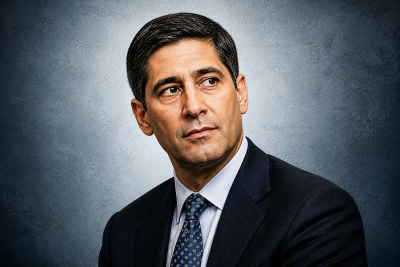
Yet Kevin Warsh’s first week as Fed chair delivered something investors had never seen before. The question now is whether that remarkable start tells us anything about what lies ahead — or whether history suggests investors should be looking elsewhere.
A Record-Breaking Start for a New Fed Chair
According to data compiled by Carson Research, the S&P 500 rose during each of Kevin Warsh’s first seven trading days as Federal Reserve chair. No new Fed chair had ever started with a longer winning streak.
The previous record belonged to William Miller in 1978, whose tenure began with five consecutive daily gains. Before that:
- Two Fed chairs started with three-day winning streaks in 1948 and 1979
- Two began with two-day streaks in 1930 and 1970
- Three managed only a single up day
- Most new Fed chairs saw no winning streak at all
That’s a remarkable statistical outlier. Given how closely investors scrutinize every word from a new Fed chair, markets historically have been hesitant to immediately embrace a leadership change.
Warsh’s arrival coincided with continued enthusiasm surrounding artificial intelligence, resilient economic growth, and expectations that interest rates may gradually move lower over time. Together, those forces helped fuel a seven-session rally that set a new record.
Does a Strong Start Predict Strong Returns?
Here’s where things get interesting.
Carson Research also looked at market performance during the tenure of each Fed chair. Surprisingly, there is little evidence that a strong opening streak translates into superior long-term returns.
Miller’s five-day record start in 1978 did not usher in one of the great market eras. The S&P 500 gained 19.1% during his tenure, far below the 47.8% median average. Although the annual average gain was 13.2%, one of the best performances, he was only chair for 1.4 years.
William Martin had no days of stock gains to start his term in 1951, but presided over the largest median gain by the market — 295.8%. Of course, he held the position for nearly 20 years, so the average annual return was just 7.8%.
In contrast, Warsh’s predecessor Jerome Powell also had zero gains his first week, but ended up with a more than respectable 12.7% average annual return.
That’s because investors eventually stop focusing on the individual and start focusing on the fundamentals of policy:
| What Matters Most | Why Investors Care |
| Inflation | Determines future rate decisions |
| Employment | Signals economic strength or weakness |
| Corporate earnings | Drives long-term stock valuations |
| Financial conditions | Influences borrowing and investment activity |
In other words, the market’s first impression of a Fed chair often proves less important than the economic backdrop they inherit.
The Honeymoon Is Already Over
The seven-day streak is already history. The S&P 500 fell 0.74% yesterday following earnings from Broadcom (NASDAQ:AVGO | AVGO Price Prediction). While the semiconductor giant reported fiscal second-quarter revenue of $22.19 billion, ahead of Wall Street estimates of $22.13 billion, investors focused on guidance that failed to fully satisfy elevated expectations.
That reaction highlights the challenge Warsh now faces. Markets have become accustomed to near-perfect execution from AI-related companies. With a large share of recent S&P 500 gains concentrated among technology and AI stocks, even small disappointments can trigger outsized reactions.
Warsh’s real test won’t be whether stocks can extend a seven-day rally. It will be managing a monetary policy environment filled with competing risks:
- Inflation remains above the Fed’s long-run 2% target, and is rising.
- Economic growth has slowed from post-pandemic highs.
- AI-related capital spending continues at record levels.
- Equity valuations remain elevated compared with historical averages.
That balancing act will determine whether investors look back on this opening streak as the beginning of a larger advance or simply a historical curiosity.
Key Takeaway
In short, Kevin Warsh has already achieved something no new Fed chair ever has: seven consecutive market gains to start his tenure.
Granted, that’s an eye-catching statistic. But history suggests investors shouldn’t place too much weight on those first few trading sessions. Long-term market returns have depended far more on inflation, economic growth, earnings, and monetary policy than on the market’s initial reaction to a new Fed chair.
The record-setting streak has given way to a more familiar reality. The honeymoon period is over. Now comes the hard part — navigating inflation, AI-driven market exuberance, and interest-rate policy in a market that increasingly expects perfection.