Rich Duprey
5 min read
Quick Read
-
Warsh’s inflation-hawk record and backing for shrinking the Fed’s $6.7 trillion balance sheet directly contradict Wall Street’s hopes for aggressive rate cuts.
-
Each of the possible policy paths delivers a negative outcome for stocks, whether that means higher-for-longer rates, balance sheet runoff, aggressive cuts, or Fed and White House conflict.
-
Whether Warsh resists Trump or caves to political pressure, stocks lose their most powerful tailwind in certainty, raising correction risk sharply.
-
Don’t wait: the analyst who called NVIDIA in 2010 just revealed his top 10 AI stocks. See the full list FREE now.
The stock market has spent much of 2026 climbing a wall of optimism. The S&P 500 rallied on expectations of lower taxes, lighter regulation, continued artificial intelligence spending, and the belief that monetary policy would eventually become more supportive. Yet markets rarely move in a straight line.
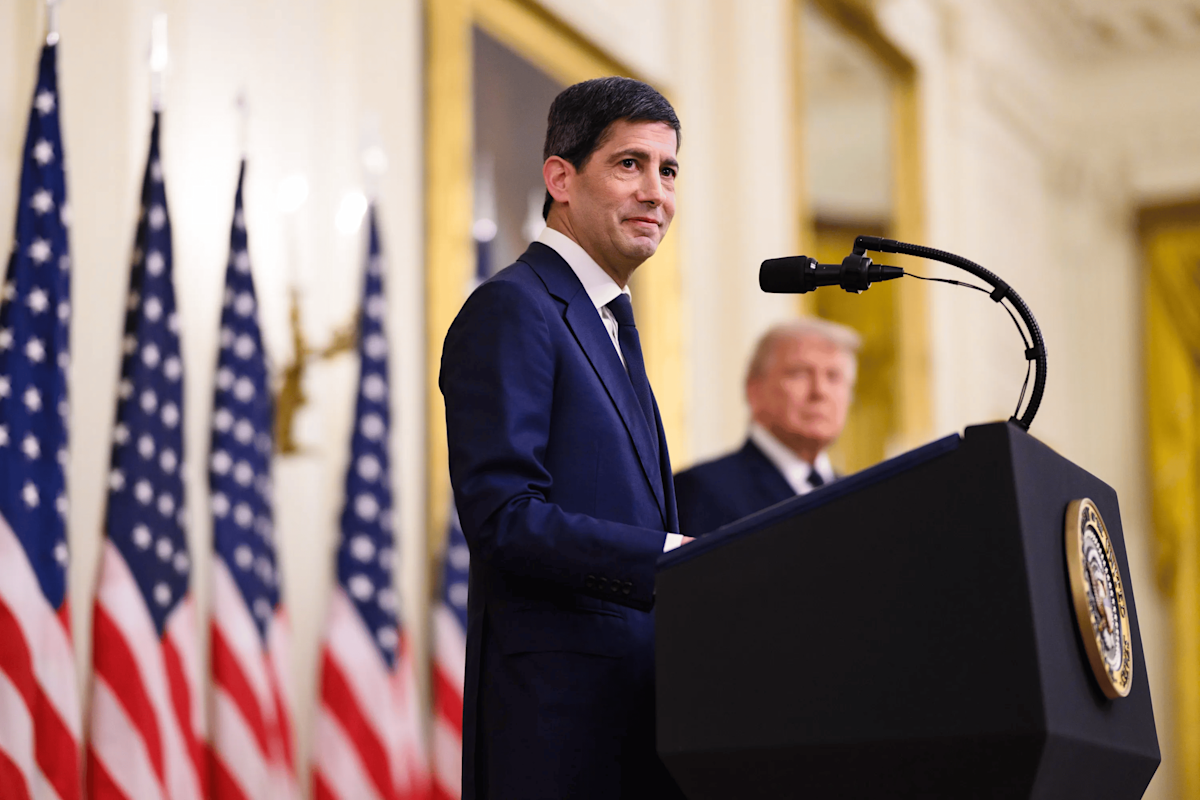
The latest challenge isn’t corporate earnings or economic growth. It’s the increasingly uncomfortable relationship between President Trump and Federal Reserve Chair Kevin Warsh. What began as a seemingly aligned partnership is showing signs of strain, and investors may discover that neither side can deliver the outcome Wall Street wants.
The Expectations Gap Is Getting Wider
When Trump nominated Warsh to replace Jerome Powell earlier this year, many investors assumed the White House had found a Fed chair more willing to embrace lower interest rates.
The logic was straightforward. Trump has repeatedly argued that lower borrowing costs would support economic growth, boost business investment, and help sustain the market’s rally. The honeymoon period that followed Warsh’s confirmation reflected those expectations. Investors anticipated a Fed that would be more accommodating than Powell’s.
The problem is that Warsh’s record suggests something different. As a former Fed governor from 2006 through 2011, Warsh developed a reputation as an inflation hawk who prioritizes price stability and institutional independence. He has also expressed concerns about the Fed’s balance sheet, which still exceeds $6.7 trillion after years of quantitative easing and pandemic-era stimulus.
That creates an immediate conflict. Trump wants lower rates. Warsh wants credibility. Those goals can overlap for a while, but they become harder to reconcile when inflation pressures remain elevated.
Don’t wait: the analyst who called NVIDIA in 2010 just revealed his top 10 AI stocks. See the full list FREE now.