Trevor Jennewine, The Motley Fool
5 min read
The S&P 500 (SNPINDEX: ^GSPC) returned 12.7% annually under former Federal Reserve Chair Jerome Powell, its best performance under any chairman since Paul Volcker took the position in 1979. Yet President Trump repeatedly criticized Powell and other Fed officials for keeping interest rates too high.
The president’s attempts to influence monetary policy didn’t stop at verbal attacks. Since Trump returned to office, the Justice Department has launched criminal investigations into Powell and Fed Governor Lisa Cook, moves that many economists warn could erode trust in the central bank.
Will AI create the world’s first trillionaire? Our team just released a report on the one little-known company, called an “Indispensable Monopoly” providing the critical technology Nvidia and Intel both need. Continue »
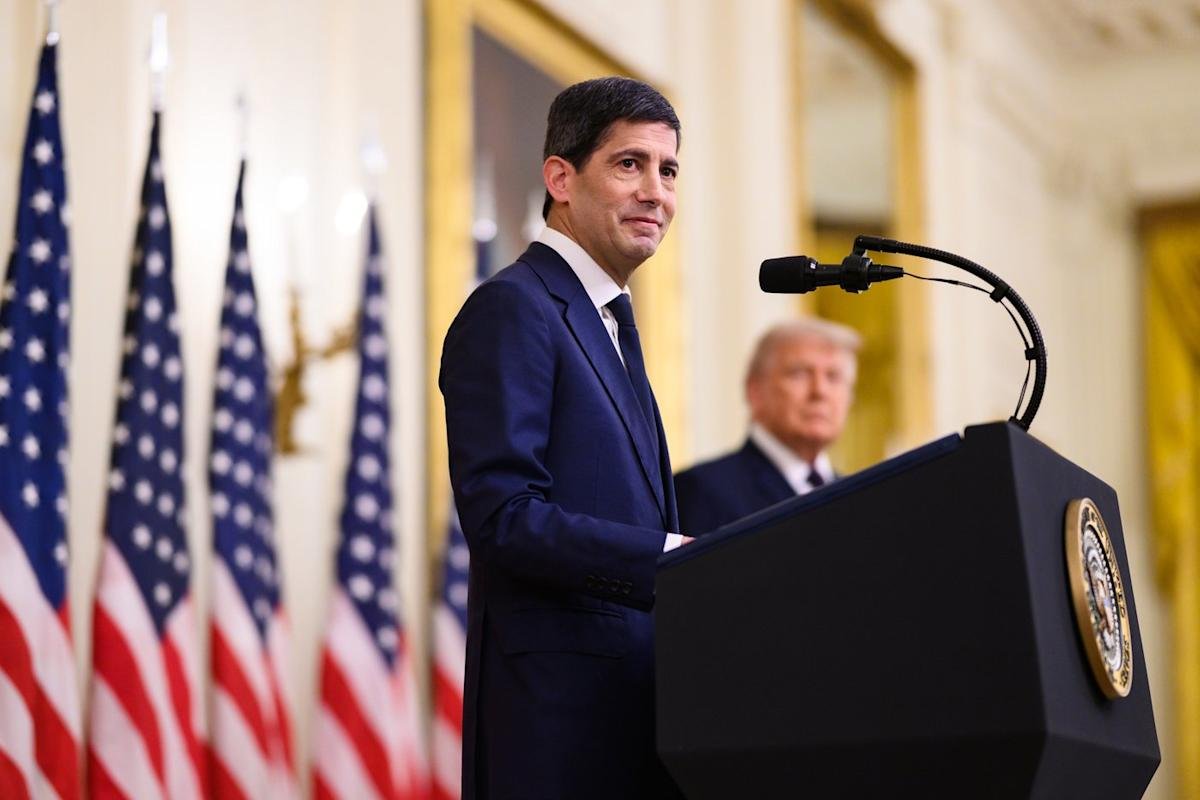
Enter Kevin Warsh, a former Fed governor who has argued for lower interest rates since last year. “We can begin reform at the Fed with a rate cut, which is just the first step to regime change,” he told CNBC in July 2025. Warsh officially replaced Powell as Fed chair in May after securing Trump’s nomination earlier this year.
However, Warsh’s plans for a regime change in the conduct of monetary policy have been complicated by Trump’s attacks on the Fed and his decision to wage war in Iran.

Warsh says the deflationary impact of AI leaves room for interest rate cuts
Warsh believes the Federal Reserve is setting monetary policy based on outdated models that fail to account for the deflationary impact of artificial intelligence. “We are probably in the early innings of a structural decline in prices,” he told CNC last year. “AI is going to make almost everything cost less.”
Warsh argues AI-driven productivity gains would support lower interest rates. But I doubt that argument will fly in the current climate. Investors actually expect the Fed to raise interest rates early next year to curb inflation tied to the Iran war. If Warsh votes to cut rates any time soon, it could damage the Fed’s credibility and sink the stock market.
CPI inflation increased to 3.8% in April, its worst reading in three years, as the Iran war pushed energy prices higher. And the situation is still deteriorating. A forecasting tool from the Federal Reserve Bank of Cleveland shows CPI inflation accelerating above 4% in May and June.
Against that backdrop, rate cuts would be met with extreme skepticism. Investors would wonder if President Trump had compromised the Fed’s independence. Even the perception of political interference would make the central bank less credible, and that could have a devastating impact on financial markets.