The U.S. stock market fell sharply in March after President Donald Trump authorized military strikes in Iran, but the major indexes recovered very quickly. Since April, the S&P 500 (^GSPC +0.50%) and the Nasdaq Composite (^IXIC +0.31%) have delivered astonishing gains of 12% and 18%, respectively.
The market has shrugged off geopolitical tensions and elevated oil prices because many companies reported first-quarter financial results that beat Wall Street’s expectations. In particular, several technology companies tied to the artificial intelligence (AI) boom posted exceptional numbers.
However, the stock market may be more fragile than it appears. Jerome Powell issued two critical warnings during his final months as Federal Reserve chairman, and investors who ignore the warnings may pay a high price for their complacency. Here’s what you need to know.

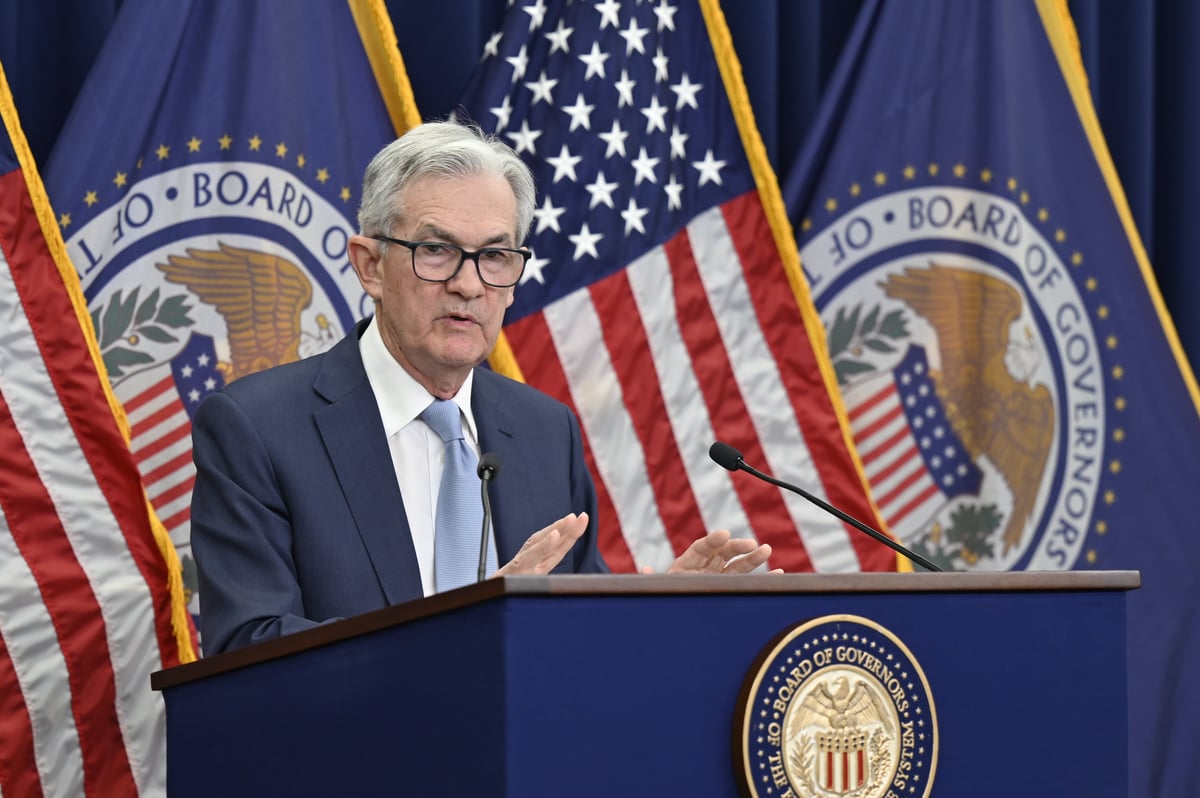
Former Federal Reserve Chairman Jerome Powell speaks following an FOMC meeting. Image souce: Official Federal Reserve Photo.
The Federal Reserve may have to raise interest rates
In January, the market expected the Federal Open Market Committee (FOMC) — the branch of the Federal Reserve that sets monetary policy — to cut its benchmark interest rate by at least a half percentage point this year. At the time, lower rates seemed like a sure thing because the jobs market was struggling and inflation was cooling.
But the economic environment looked much different by April. Job growth had bounced back, and inflation had reaccelerated due to rising oil prices tied to the Iran conflict. So, the FOMC held rates steady for the third straight meeting, and Jerome Powell gave this warning during his final press conference as Fed chair:
The economic outlook remains highly uncertain and the conflict in the Middle East has added to this uncertainty. … In the near term, higher energy prices will push up overall inflation. Beyond that, the scope and duration of potential effects on the economy remain unclear.
One source of uncertainty is the extent to which the oil shock will bleed into core inflation (which excludes volatile food and energy). The oil shock directly impacts headline inflation by raising gas and utility prices, but it also impacts core inflation indirectly by raising transportation and manufacturing costs.
The next few weeks are critical. Michael Cembalest at JPMorgan Chase writes, “If the Strait of Hormuz is not reopened sometime in June/July, global oil inventories will hit an operational floor and result in greater rationing.” That would push energy prices higher and raise the odds that the oil shock bleeds heavily into core inflation.
So what? The Fed may overlook transitory increases in headline inflation, but a sustained increase in core inflation would likely warrant higher interest rates, and history says that would be bad news for stocks. Since 1999, the Fed has started four rate-hike cycles, and the S&P 500 and Nasdaq Composite have always declined over the following three months.
The stock market is expensive by historical standards
The FOMC does not make monetary policy decisions with specific asset prices in mind, nor do Fed officials claim to know what the correct price for any specific asset might be. But last September, Jerome Powell warned, “Equity prices are fairly highly valued.”
At the time, the S&P 500 traded at 22.5 times forward earnings. The index is slightly cheaper today with a forward price-to-earnings multiple of 20.1, but that is still a premium to the 10-year average of 19. And the current valuation is particularly concerning when considered alongside the possibility of higher interest rates.
Higher interest rates mean businesses and consumers pay more to borrow money, which reduces spending and corporate profits. Higher interest rates also compress stock market valuations by making bonds look more attractive. When investors can get decent returns from less risky alternatives, they are less likely to pay large premiums for stocks.
Here’s the big picture: The stock market is more fragile than it appears because inflation may force the Fed to raise interest rates at a time when valuations are already elevated. That could easily lead to a correction or even a bear market. Investors should keep that in mind when they make decisions. Now is not the time to take big risks.