Michael Nagle/Xinhua via Getty Images
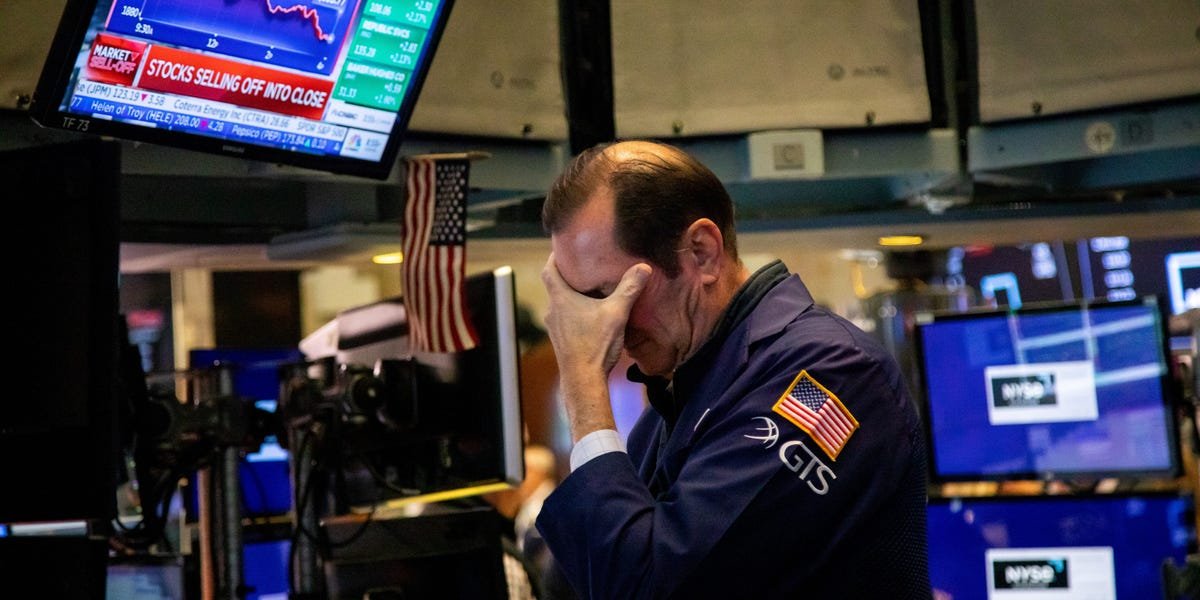
A top-rated fund manager says the Nasdaq is primed to drop 35% this year, as pressure from inflation and an IPO-led liquidity crunch team up to derail the bull rally.
Semiconductor and growth stocks generally have seen big swings in the last two weeks, with the Nasdaq falling 4.8% on June 5 alone. Slavik Kolesnik, a bond investor who co-manages the Leader Capital High Quality Income Fund (LCATX), which is rated 5-stars by Morningstar, said dips like this are early signs of a larger decline to come.
“That’s just the beginning,” Kolesnik said.
A major driver behind Kolesnik’s call is the wave of mega-IPOs coming to market this year, starting with SpaceX’s debut on Friday. These stocks will see large inflows, and that funding will likely come from other stocks, particularly Magnificent Seven name, which make up a huge chunk of major indexes like the Nasdaq, he said.
SpaceX’s IPO is indeed seeing massive investor demand. According to a Reuters report, demand for SpaceX shares is around four times oversubscribed. Plus, Anthropic’s and OpenAI’s IPOs are still expected to come later this year.
“This is capital that has to come from somewhere, and that somewhere is the Magnificent Seven,” he said.
Second, Kolesnik said inflation will continue to surge. The Consumer Price Index rose to 4.2% year-over-year in May, the highest in three years. So far, core inflation — which excludes energy and food price due to their volatility — has remain subdued, but Kolesnic said higher energy prices will eventually seep through to prices across economic sectors.
When inflation jumps, long-term bond yields tend to rise as investors price in higher-for-longer interest rates. That usually means trouble for growth stocks, as their earnings prospects are weighed against a risk-free government bond rate.
Kolesnik said his base case is for Core PCE (short for personal consumption expenditures) to surge to around 4%. In April, it hit 3.3% year over year.
Kolesnik’s portfolio reflects his views on inflation — most of the fund’s holdings have a 0-1-year or 3-5 year durations, which are less sensitive to inflation than the longer end of the yield curve.
As for why he sees a 35% decline specifically, Kolesnik said this implies a return to the Nasdaq’s 200-day moving average, a key technical level.
Read next
William Edwards is a senior investing reporter at Business Insider primarily covering the US stock market and the broader economy.He’s interviewed some of the most influential voices in the market, including Joseph Stiglitz, Jeremy Grantham, Rick Rieder, Rob Arnott, Savita Subramanian, Nouriel Roubini, Ken Rogoff, Mike Wilson, Claudia Sahm, Albert Edwards, Andrew Ross Sorkin, and more.William launched BI’s annual Oracles of Wall Street list (2023, 2024, 2025), highlighting top calls from strategists, economists, and analysts. He also writes BI’s Where to Invest $10,000 column, and contributes to the First Trade newsletter.Prior to Business Insider, William covered the US economy for Bloomberg News in Washington, DC and contributed to TV tech coverage for CNBC in San Francisco. He has also spent time studying or reporting in France, Germany, and Tunisia.He is based in New York.

Follow Following
Every time publishes a story, you’ll get an alert straight to your inbox!
Look out for an alert in your inbox the next time publishes a story!
Every time a new story is published, you’ll get an alert straight to your inbox!
Look out for an alert in your inbox the next time a new story is published!
By clicking “Sign up”, you agree to receive emails from Business Insider. In addition, you accept Insider’s Terms of Service and Privacy Policy.