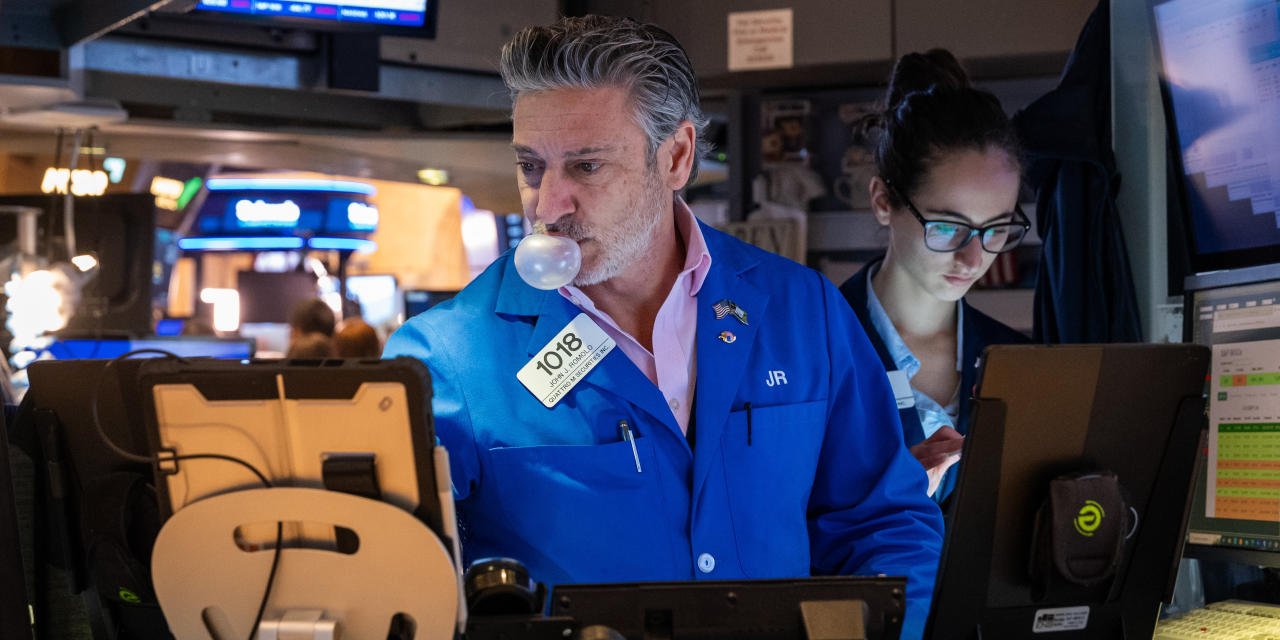
Question: if the economy is doing great – as in lots of jobs being added in a particular month and the unemployment rate stays low — why does the stock market tank? That is what happened on Friday, June 5. The jobs report for May was released showing that the economy created 172,000 jobs. The prediction had been for a disappointing 80,000. Good news, right? Certainly people in the White House were crowing. You can hear President Trump saying, “I told you we have the hottest economy.”
[For a detailed journalistic analysis of the data, see https://www.reuters.com/business/world-at-work/us-posts-another-month-strong-job-gains-may-unemployment-rate-steady-43-2026-06-05/
For the Bureau of Labor Statistics official release, see https://www.bls.gov/news.release/empsit.nr0.htm]
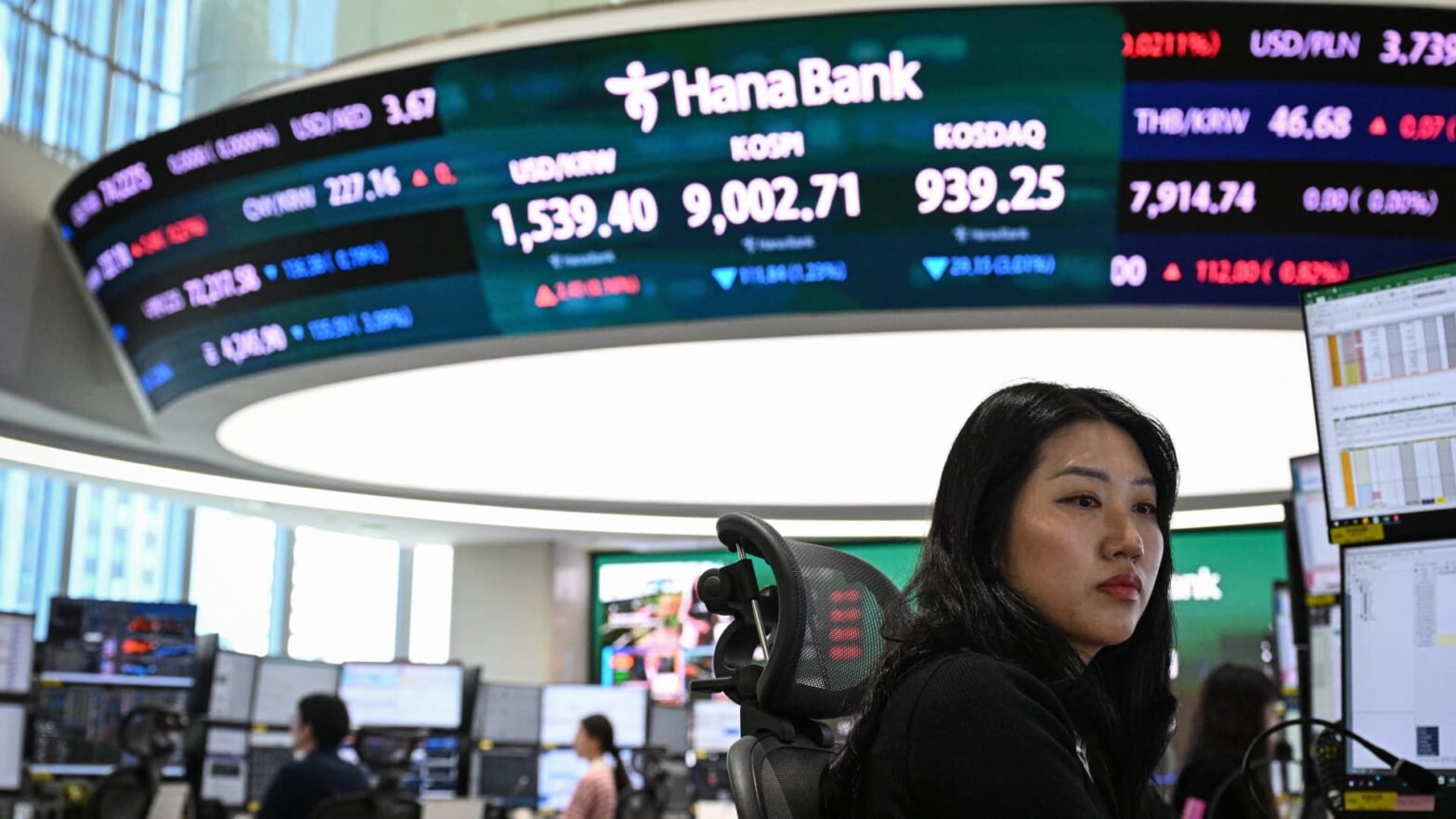
So why did the stock market take its biggest tumble in years, wiping out almost all the gains since January?
[Check out the following short report on You Tube for the stock market reaction to the “good” news: https://www.youtube.com/watch?v=Mrs109CH5MA]
The economist Paul Krugman released a Substack on June 6 that attempted to make sense of the short run information. For those who do not read Krugman, the short answer to why the stock market is tumbling is that good news on the job front predicts bad news on the interest rate front.
Interest rates, as most people know, are controlled by actions of our nation’s Central Bank, the Federal Reserve – or the Fed for short. The Fed’s Federal Open Market Committee (FOMC) meets eight times a year (the last meeting was in April, the next one is June 16 and17) to make decisions on which way and how far to move the Federal Funds Rate (the short-term interest rate banks charge each other for loans of their excess reserves – often these loans are only overnight!) or whether to leave it where it is.
[For the FOMC’s calendar, see https://www.federalreserve.gov/monetarypolicy/fomccalendars.htm]
Though the Federal Funds Rate is the only rate the FOMC controls directly, (they also set the discount rate but that applies only to what banks are charged when they borrow from the Fed), that rate has an impact on all other interest rates. The FOMC’s decisions are announced immediately and the minutes of the discussion are published a few days later. The announcement is very important because it signals to the actors in the economy the direction the Fed wants policy to go and why they have decided to go in that direction.
Though the Fed has a “dual mandate” (high employment and stable prices), that translates into only one specific goal: Two percent inflation. The Fed explains that it is impossible to have a quantitative goal for unemployment because the realties change. The vague definition of “maximum employment” is a rate of unemployment not so low as to trigger an increase in inflation. In the 1970s that was identified as the Non-Accelerating-Inflationary-Rate-of-Unemployment or the NAIRU, and though there has been strong criticism of that policy tool – in large part because no one knows the exact number for the NAIRU and theorists and Central Bankers alike admit that it changes from time to time. Right now, according to the Fed, the NAIRU is close to 4 percent.
So, for example, the Fed lowered interest rates a number of times in 2025 because unemployment after starting at 4 percent crept upward over the course of the year. However, so far, this year, the Fed has been very cautious about lowering interest rates. First of all, the economy seemed to be doing relatively well as the unemployment started to fall. Second, the Fed was worried about the danger of inflation stemming from Trump’s crazy-making tariff changes over the last 14 months as well as the impact of the war with Iran on the price of crude oil.
Thus, the Fed has chosen not to cut rates this year.
[For the press release after the April meeting of the FOMC, see https://www.federalreserve.gov/newsevents/pressreleases/monetary20260429a.htm. For the transcript of the Press Conference of Chairman Jerome Powell, see https://www.federalreserve.gov/mediacenter/files/FOMCpresconf20260429.pdf]
As some listeners might know, Trump has argued that the Fed should have cut interest rates dramatically and has said that the former Fed Chair Jerome Powell made terrible decisions about interest rates. With Powell’s term as chair ending (he is still on the Fed Board until January of 2028), Trump appointed Kevin Warsh as chair. He has been on record as voting for rate cuts at previous FOMC meetings. However, despite being the chair of the Federal Reserve, no matter what his personal views, Warsh will be only one vote out of 12 on the FOMC.
So why would the improved labor market be “bad” for Fed interest rate decisions? The answer is, that with the better-than-expected jobs report, the danger that the economy might “over heat” and raise the rate of inflation will make it more likely that the Fed will refrain from cutting rates and might even raise rates. It is that fear that the Fed will stop cutting rates that led to the tanking of the stock market.
Trump, of course has a different view. He told Meet the Press recently “….Nowadays, when you have good reports, the market goes down because they think they’re going to raise interest rates. There’s no reason to raise interest rates. … We should actually lower interest rates. Now, if inflation comes, and, you know, people live with inflation, but if inflation comes what happens is you stamp it out. But success can kill inflation just like higher interest rates.”
In other words, according to Trump, a rapidly growing economy (what he calls “success”) can in his words, “kill inflation.” And he also seems very sanguine at the possibility that if “inflation comes,” it will be easy to “stamp it out.”
That last assertion is incorrect. The last thing the members of the FOMC want is to find themselves in a situation such as existed during the 1970s when expectations of rising inflation were built into decision-making by businesses and workers. That led in the 1970s to a wage-price spiral that was only wrung out of the economy with a deep recession in 1982 and 1983. Even since then, the Fed has wanted to pre-emptively head off anything that might make inflation self-perpetuating.
Meanwhile, it is possible for economic growth to reduce inflation if the inflation had been caused by shortages which could be solved by an increase in production. For example, if the Strait of Hormuz were to be opened soon, the increase in the quantity of oil shipped through it should lower the price of oil. However, given how long it will take to rebuild supply, and given the uncertainties about other prices, it is hard to imagine the price of oil dropping all the way to what it was before Trump started the war with Iran. Meanwhile, the rapid expansion of employment in the context of a relatively low unemployment rate means that wages could start to go up in the not-so-distant future. That would revive the fears of a 1970s style wage-price spiral.
To make matters worse, on June 9, the Bureau of Labor Statistics released inflation figures for the month of May. The spike in the price of oil led to the big increases in fuel costs. Led by gasoline, (including diesel fuel), home heating oil and airline fares, the overall rate of inflation jumped from 3.8 percent in April to 4.2 percent in May.
[For details, including a breakdown of which specific prices rose the most, see https://www.nytimes.com/live/2026/06/10/business/inflation-report-cpi?campaign_id=60&emc=edit_na_20260610&instance_id=176959&nl=breaking-news®i_id=59542766&segment_id=221292&user_id=e34224fbe0b7ae7eac485434278fa4fe]
With those numbers it is impossible to imagine the Fed cutting interest rates and they may actually raise them at the next meeting.
As I prepared this expanded version of a radio commentary I had already recorded, Trump and the Pakistanis announced that an agreement had been reached and a signing ceremony would take place in Switzerland on June 19.
Trump posted to Truth Social – let the oil flow. If this happens we can be confident there will be an immediate drop in the price of crude oil which will probably translate into a drop at the gas pump. However, given that there has been a long period of depleting oil reserves and given how long it will take the backlog of shipping to finally get to their destinations, it will be very unlikely for the price of oil to get down to where it was before the war began.
And remember, the other aspects of the inflation we have experienced here in the United States – Trump’s tariffs and the implications of a good jobs report for inflation fears.
Therefore, the same summary with which I began the recorded commentary still holds: A good jobs report indicating strong growth in the economy leads to stock market falls because such a report predicts the Fed will not lower interest rates and might very well raise them down the road.
Michael Meeropol is professor emeritus of Economics at Western New England University. He is the author with Howard and Paul Sherman of the recently published second edition of Principles of Macroeconomics: Activist vs. Austerity Policies.
The views expressed by commentators are solely those of the authors. They do not necessarily reflect the views of this station or its management.