WASHINGTON (AP) — The U.S. is pushing back on complaints from Iran’s national team that it was forced to leave the country immediately after its first World Cup match instead of having a day to recover in a hotel, saying that was the plan for the team all along.
“We were clear this was the process,” Andrew Giuliani, the executive director of the White House FIFA Task Force, told The Associated Press on Tuesday.
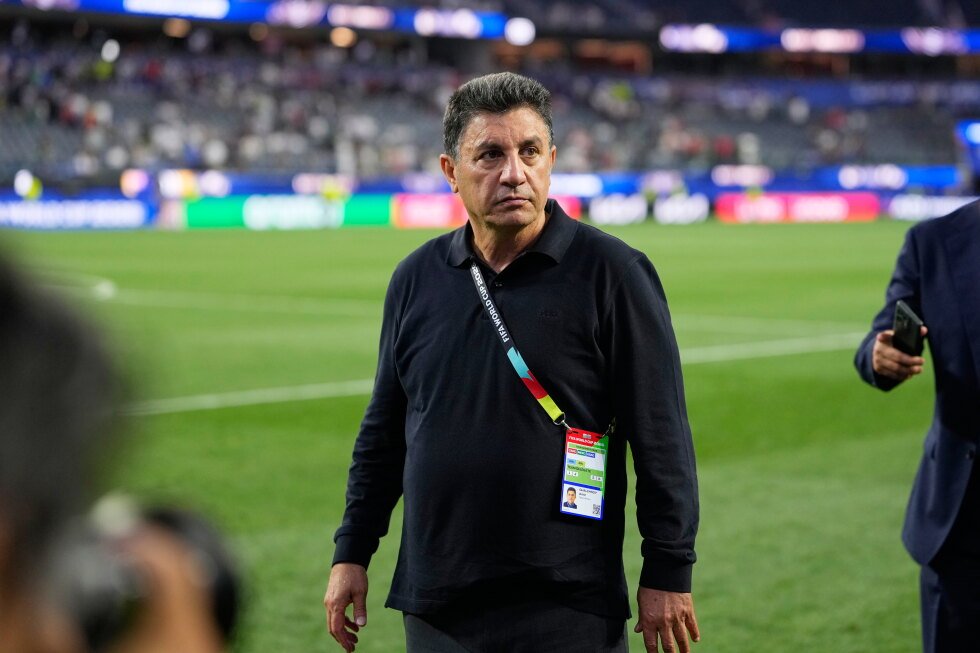
Iran coach Amir Ghalenoei said after Monday’s night’s 2-2 draw with New Zealand that the team had been ordered to leave the U.S. and return to its training base in Mexico only a few hours later. Ghalenoei said the team had expected to spend the night in California to maximize the normal recovery process after its opening game.
Iran winger Mehdi Torabi’s entry visa had also expired after the first game. Team officials confirmed Tuesday afternoon that they had secured Torabi a new, multiple-entry visa after he visited the U.S. Consulate in Tijuana.
“This issue has been resolved,” the State Department said Tuesday. “As soon as we became aware of the issue, we worked to ensure that the player can participate in every game.”
Giuliani said during an interview broadcast Monday night on CBS News that some of the Iranian team’s support staff and team officials were denied entry into the U.S. But he said that all the players and coaches had received visas. He also outlined the conditions by which the Iranian team would be able to come into the U.S. for their games.
“The team will be allowed to come in, match day minus one, so the day before the match. They’ll be asked to leave the day that the match wraps up, so the evening of the match. And they’ll be able to do that again in Los Angeles. They’ll be able to do it again in Seattle,” Giuliani said. The team’s next match is Sunday, in LA.
When asked about why some support staff and team officials had been denied entry, Giuliani wouldn’t go into details but referred to previous comments made by Secretary of State Marco Rubio about denying entry to people with direct ties to Iran’s Revolutionary Guard.
“Secretary Rubio said very clearly: Anybody with direct ties to the IRGC is not coming into the United States of America, and they’re not going to let the World Cup be the reason why they can come in,” Giuliani said. “So I think it’s very clear why.”
Iran’s federation said in a statement Tuesday evening that it had asked FIFA to follow up on the cases of those who hadn’t received visas, noting that “the team’s media duties were being handled by one of the analysts, which is neither professional nor an appropriate arrangement.”
“Like the other 47 participating teams, the Iranian delegation is expected to have its full operational staff in place, including a team manager, a media officer, and an administrative manager,” the federation said. “Their absence creates obvious challenges for the team’s daily operations and is not consistent with standard tournament procedures.”
The Iranians’ World Cup cycle has been in upheaval since the U.S. and Israel began a war against Iran on Feb. 28. Iran ultimately decided to compete even after FIFA rejected its request to move its three group-stage matches out of the U.S.
Iran captain Mehdi Taremi said the team endured five hours of travel and security checks during what’s normally a very short trip from Tijuana to the Los Angeles area on Sunday.
“I think FIFA have to help us more than this,” Taremi said.
___
Vertuno reported from Austin, Texas. AP Diplomatic Writer Matthew Lee in Washington and journalist Gabriela Aoun Angueira in San Diego contributed reporting.
___
AP World Cup coverage: https://apnews.com/hub/fifa-world-cup