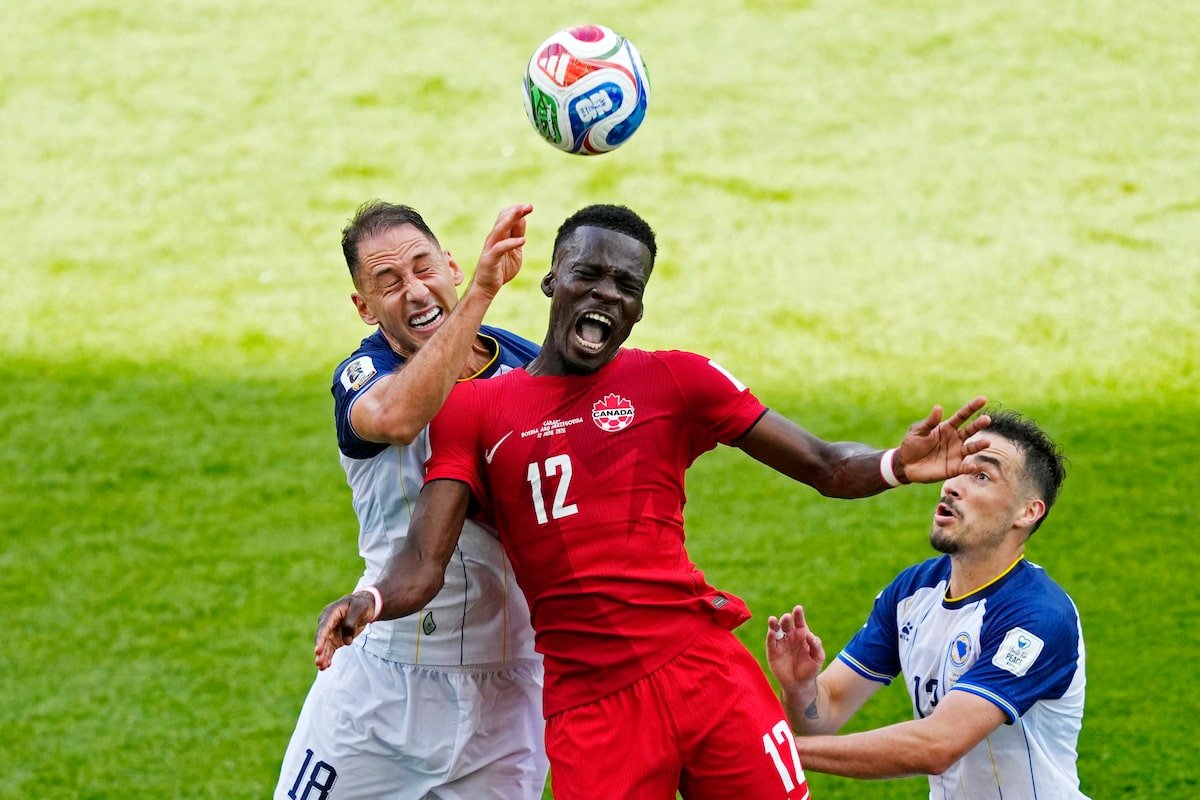

Forward Tani Oluwaseyi (12) battles to head the ball in Canada’s World Cup-opening draw with Bosnia-Herzegovina in Toronto on June 12.KEVIN SOUSA/Reuters
If you believe the stock market is a rational place, consider the World Cup effect.
Over the years, a handful of researchers have explored whether the emotional highs and lows of the tournament show up in stock prices.
Sure enough, there seems to be statistical evidence that soccer outcomes can influence risk appetite.
It comes down to investor mood. And nothing spoils the national mood quicker than getting keenly routed on the pitch.
A loss in the elimination stage of the World Cup translates into an “abnormal” decline of about 0.5 per cent in the losing country’s stock market the following day. That’s according to one commonly cited paper on the topic that looked at stock returns from 39 countries between 1973 and 2004.
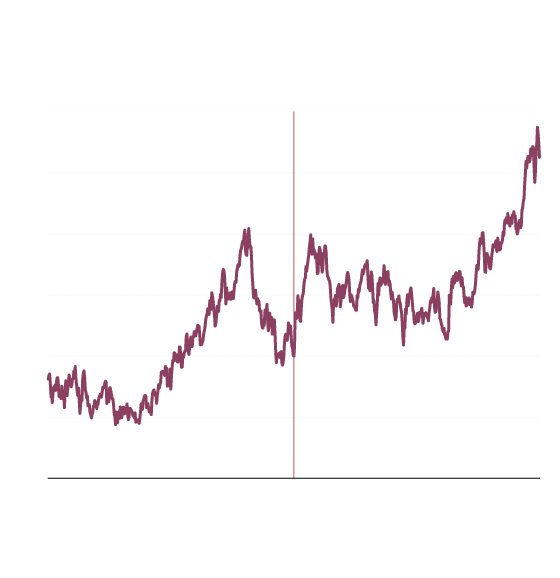
Victory, on the other hand, can lift spirits and portfolios alike. Should Canada shock the world and win the whole thing, starting with a trouncing of Qatar on Thursday, the TSX should see a meaningful bump. Over the past 50 years, World Cup champions’ home markets have outperformed global stocks by an average of 5.5 per cent in the month after the final game, according to a report by investment bank William Blair.
World Cup effect
Performance of the winning country’s stock market relative
to global stocks, after the final game of the World Cup
120 basis points
Day 0= First trading
day after final match
115
110
105
100
95
90
-365
-310
-255
-200
-145
-90
-35
20
75
130
185
240
295
350
the globe and mail, source: william blair
World Cup effect
Performance of the winning country’s stock market relative
to global stocks, after the final game of the World Cup
120 basis points
Day 0= First trading
day after final match
115
110
105
100
95
90
-365
-310
-255
-200
-145
-90
-35
20
75
130
185
240
295
350
the globe and mail, source: william blair
World Cup effect
Performance of the winning country’s stock market relative to global stocks,
after the final game of the World Cup
120 basis points
Day 0= First trading
day after final match
115
110
105
100
95
90
-365
-310
-255
-200
-145
-90
-35
20
75
130
185
240
295
350
the globe and mail, source: william blair
Does this make for a tradeable strategy? Probably not. It’s more of a glimpse into the weird world of behavioural finance, which tells us the stock market is about much more than earnings and interest rates.
The stock market is a daily referendum on the hopes and fears of real people, who act on emotion as much as rational self-interest.
Researchers have found stock markets tend to perform better on sunnier days, for example. Others have linked investor behaviour to the lunar cycle.
Sleep disruption caused by the switch to and from daylight saving time also shows up in trading statistics. One recent study found that investors tend to misprice earnings announcements in the days after the clocks change.
Sentiment has a way of skewing financial judgment, which is why the World Cup offers the people who study this kind of a thing a unique opportunity – because so many people are emotionally invested in the outcome.
“It is hard to imagine other regular events that produce such substantial and correlated mood swings in a large proportion of a country’s population,” according to the authors of the 2007 research paper, Sports Sentiment and Stock Returns.
At game time, they turn away from money matters in droves. The 2010 World Cup saw trading volumes decline by 38 per cent in Europe, and 43 per cent in the United States, when their respective teams took to the pitch, according to William Blair.
Haaland’s goals against Iraq literally shook Norway, seismology institute reports
If their team happened to be eliminated, investors carried the loss with them into the following trading day. The glow of triumph, on the other hand, did not last, at least prior to the tournament’s final. The 2007 paper found no evidence of a positive effect in next-day trading.
With only the sting of defeat seeming to linger across national stock markets mid-tournament, you’d expect to see a global downtrend in stocks over the duration of the World Cup. That’s just what a subsequent study identified – a decline of 2.6 per cent in the U.S. market, on average, from 1950 to 2007.
During the last World Cup, the S&P 500 index lost 5.4 per cent, according to a report cited in Morningstar. But it would take a brave soul to short the U.S. stock market on that basis alone.
The World Cup effect gives Canadian investors one more reason to hope for a monumental upset when the tournament concludes on July 19. A big boost to domestic stocks from a win in the final is nothing to sneeze at.
Nobody is giving the Canadian team, which is ranked 32nd in the world, much of a chance. But in soccer, as in investing, fortunes can change in an instant.