A potential peace agreement between the US and Iran could become a catalyst for global financial markets, though it may take months for the global energy market to stabilise, say analysts.
Finnomena, a Thai investment management platform, said reduced geopolitical risks would ease inflationary pressures, driving a broad-based rally in risk assets.
A preliminary agreement between Washington and Tehran could lead to the reopening of the Strait of Hormuz, a critical route for global energy shipments. The firm believes such a deal would lower geopolitical risk premiums, improve the global growth outlook and create a more favourable environment for equities.
Lower oil prices resulting from easing tensions could reduce inflationary pressures and allow major central banks to adopt a less hawkish stance, said Jessada Sookdhis, chief executive and co-founder of Finnomena.
The company sees opportunities in artificial intelligence (AI)-related investments, including technology firms, cloud data centres, smart grid infrastructure, renewable energy, and semiconductor businesses that could benefit from lower financing costs and stronger capital inflows.
“A weaker US dollar, declining bond yields and improving investor sentiment would support risk assets, particularly sectors linked to the AI supply chain,” he said.
Despite the positive outlook, Tisco cautions that a peace deal may not immediately restore stability to global energy markets.
Komsorn Prakobphol, head of Tisco Economic Strategy Unit, said it could take several months before Iranian oil supplies fully return to global markets.
“Reopening the Strait of Hormuz does not mean oil exports will immediately normalise. Shipping insurance concerns and unresolved nuclear negotiations could continue to create uncertainty,” Mr Komsorn said.
If talks over Iran’s nuclear programme fail, he said tensions could resurface and disrupt shipping routes again.
Meanwhile, global crude inventories remain tight. If additional supply does not reach the market within 2-3 months, oil prices could rebound to US$90-100 per barrel, said Mr Komsorn.
THAI MARKET
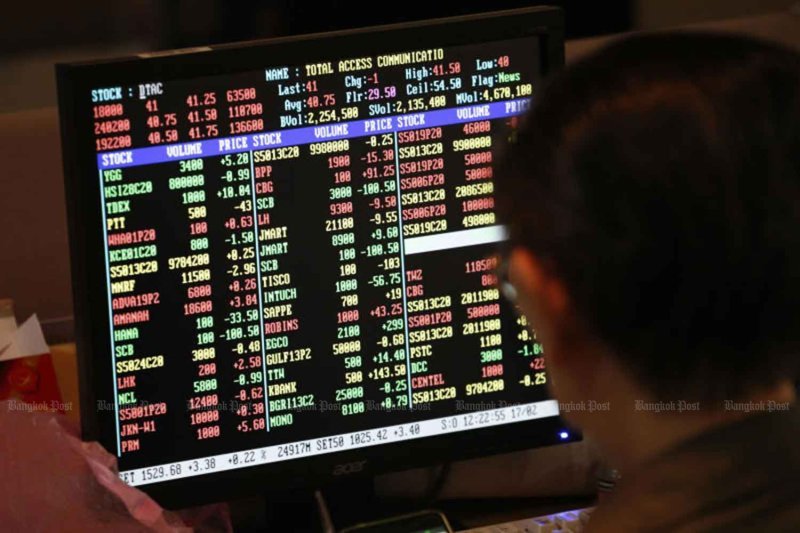
He said the Thai economy and stock market are relatively well-positioned to withstand a prolonged period of global uncertainty or stagflation. Historically, Thai equities have outperformed many regional peers during periods of high inflation and slowing growth due to their heavier exposure to traditional industries rather than high-growth technology stocks.
Thailand’s market is dominated by energy, banking, healthcare, industrials and commodity-linked sectors, which tend to be more resilient during volatile economic conditions.
If geopolitical risks remain elevated, Tisco continues to favour energy, materials, healthcare and financial stocks.
Energy and materials companies are closely tied to commodity prices and could benefit from supply constraints. Healthcare stocks offer defensive characteristics and strong pricing power, while financial institutions may gain from interest rates remaining higher for longer. Although a successful peace deal could pressure energy stocks through lower oil prices, commodities will remain an essential investment theme in the second half of the year, Mr Komsorn noted.