Tue 23 Jun 2026 at 7:30am
Market snapshot
- ASX 200 futures: +0.2% to 8,831 points
- Australian dollar: Flat at 70.00 US cents
- Dow Jones: +0.3% to 51,712 points
- S&P 500: -0.4% to 7,472 points
- Nasdaq: +1.3% to 26,166 points
- FTSE: +0.7% to 10,437 points
- EuroStoxx: +0.6% to 639 points
- Spot gold: +0.7% to $US4,190/ounce
- Brent crude: -3.5% to $US77.95/barrel
- Iron ore: -0.4% to $US101.40/tonne
- Bitcoin: +1.5% to $US64,234
Prices current around 7:30am AEDT.
Live updates on the major ASX indices:
Tue 23 Jun 2026 at 11:01am
Full KPMG statement on leadership overhaul
I’ll take it apart shortly, but here’s the full note from interim CEO Stan Stavros:
KPMG Australia announces leadership changes and governance overhaul to rebuild trust.
KPMG Australia today announced leadership changes, a governance overhaul and a comprehensive action plan to address integrity issues and strengthen accountability across the firm.
The actions include:
- Departures and leadership changes
- A major governance restructure, including the appointment of its first independent Chair, and additional independent directors
- An immediate external lessons-learned review into the whistleblower matter and related failings
- A comprehensive action plan focused on governance, culture and ethics, and controls
The measures are designed to address identified failings, improve oversight and controls, and begin the work of rebuilding confidence in the firm.
Two Audit Partners, Paul Rogers and Eileen Hoggett, are leaving the firm.
The firm will overhaul its governance arrangements, including appointing its first independent Chair. It will also appoint independent members to the Australian Board and ensure a balance between KPMG representatives and independents. The firm will review and update the Board’s role and remit in line with corporate governance best practice. This will include involving independent Board members in new sub-committees focused on priority areas such as audit quality, ethics, whistleblower oversight and other matters of public interest.
National Chairman Martin Sheppard supports the need for a change in governance, including an independent Chair and has announced that he will leave the firm shortly. A short transition period will assist a smooth handover. He will also retire from his regional board responsibilities.
A process is progressing to appoint a new CEO, who will refresh the executive team and ensure the firm has strong, ethical leadership for the future.
An external third party will be appointed to undertake an immediate lessons-learned review into the whistleblower matter.
These actions form part of KPMG Australia’s Action Plan, published today.
Interim CEO Stan Stavros said: “The decisions announced today are necessary and immediate. We did not meet the standards expected of us, and we recognise the impact this has had on the whistleblower, our people, our clients and the community.
“We are acting where it matters: changing leadership, strengthening independent governance, commissioning external reviews, improving whistleblower oversight, tightening controls and reinforcing accountability across the firm.
“Trust will only be rebuilt through sustained action and demonstrable change. We are determined to confront what went wrong, act transparently and ensure these failings are not repeated.”
“The Parliamentary Committee’s enquiries highlighted issues, including unethical behaviour by senior personnel and the human impact of KPMG’s handling of the whistleblower. KPMG Australia is focused on ensuring those failings are understood, addressed and not repeated,” he said.
KPMG Australia’s Action Plan focuses on three priority areas: governance, culture and ethics, and controls and include:
Governance
- Appointing an independent Chair.
- Appointing independent directors to the Australian Board to ensure balance of independent and non-independent members going forward.
- Reviewing and updating the role and remit of the Board in line with corporate governance best practices. This will include ensuring independent Board members are involved in Board sub-committees overseeing matters including audit quality, ethics, whistleblower oversight.
Culture and ethics
- Conducting an independent retrospective review of the firm’s whistleblowing system, with Principia Advisory appointed to conduct the review. Publishing the Principia Advisory findings.
- Reviewing and updating its conduct and consequences framework to further discourage misconduct and ensure that appropriate sanctions and other consequences are applied if misconduct occurs.
- Updating its whistleblower policies and procedures and providing associated firmwide training to ensure clear guidance and requirements for how whistleblower disclosures must be identified, escalated and governed, and for how whistleblowers should be managed.
Controls
- Strengthening the firm’s system of quality management, with a specific focus on controls related to compliance with professional and ethical standards.
- Amending Audit pursuit policies and procedures and strengthening firm-wide ethical barriers.
- Mandating firmwide training on client confidentiality, privacy and information protection, with additional targeted confidentiality training for all Audit partners and directors.
The Action Plan is intended to be a ‘live’ document, updated as findings and recommendations from the third-party reviews become available, or as new information comes to light. KPMG will engage a third-party to assess and assure progress against this Action Plan and will publish updates periodically.
These measures are in addition to the independent review announced by the Commonwealth Department of Finance, which KPMG welcomes and will cooperate with fully.
The full Action Plan is attached. Some actions are subject to partner approval.
Stan Stavros added: “While these issues are serious and require decisive action, they do not define the vast majority of our Partners and people. Every day, our people act with integrity, do the right thing and deliver high-quality work for clients, communities and the public interest.
“Our responsibility now is to ensure stronger systems, clearer accountability and better leadership. We will keep clients, people and stakeholders updated on our progress and hold ourselves accountable as we drive meaningful, lasting change.”
Tue 23 Jun 2026 at 10:59am
KPMG chair Martin Sheppard gone
The chair of embattled consulting firm KPMG Australia will leave his post, the firm has confirmed.
Martin Sheppard faced a tough day of questioning on Friday, and a long fight about whether the firm would cough up documents the committee investigated the scandal desired.
After declining to do so, citing the protection of legal professional privilege, he changing his mind about 5.30PM after hours of evidence about KPMG’s dissembling.
Tue 23 Jun 2026 at 10:56am
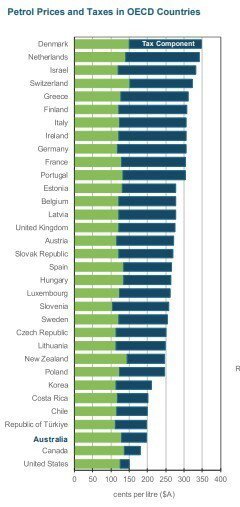
Petrol is cheap. Really cheap.
I’ll keep posting this one until anyone believes me.
Australia has among the lowest and most lightly-taxed petrol prices of all OECD countries.
(Diesel is about the same too).
It might not feel it, but the figures are true.
Tue 23 Jun 2026 at 10:51am
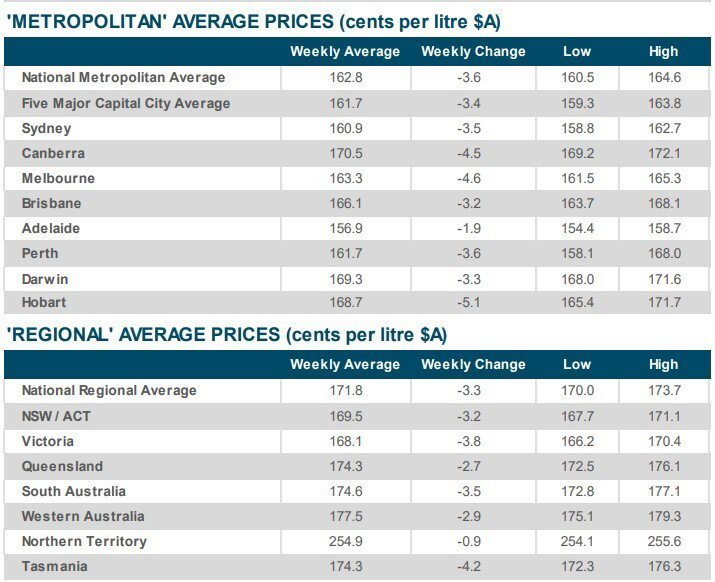
What is petrol costing where you are?
OK, so the national average price of a litre of unleaded petrol is down 3.5 cents to 165.8 cents in the week to Sunday.
But what you really want to know is what it’s like where you live?
And thanks to the dedicated boffins at the Australian Institute of Petroleum, here’s that very data.
Tue 23 Jun 2026 at 10:50am
CGT changes to pass Parliament
Labor’s changes to the capital gains tax and negative gearing will pass parliament, with support from the Greens.
The minor party has announced it will support the measures, after securing an amendment to the legislation, preventing Self-Managed Super Funds borrowing to purchase properties.
The Greens says as part of the deal, it has also secured a longer inquiry into the National Disability Insurance Scheme.
Tue 23 Jun 2026 at 10:45am
Petrol down 3.5 cents in a week
The national average price of a litre of unleaded petrol is down 3.5 cents to 165.8 cents in the week to Sunday.
Weekly data from the Australian Institute of Petroleum details the slip, which still puts the average well below the 12-month average figure of 185.3 cents and the ‘last 12 weeks’ average of 191.7 cents.
Tue 23 Jun 2026 at 10:33am
Viva Energy shares fall on fire recovery news
Shares in fuel refiner and retailer Viva Energy are down -1.4% in early trade on news about its recovery from a massive fire earlier in the year.
Reassurances about the operation don’t appear to have mollified investors. A share in the $3.4 billion company is worth $2.10 at the time of writing, practically where it was a year ago before the fire and before the crisis in the Middle East.
Tue 23 Jun 2026 at 10:22am
One of the key arguments for payday super
I am surprised that many entities are decrying payday super as a ‘pressure on cashflow’. Accrued super is not an asset of the business and in fact using such funds for business operations is illegal. As a small business operator myself for many years , payg tax , super, gst was quarantined separately as it accrued. If a business is reliant on future cash coming in to fund debts already incurred , it smacks of insolvent trading.
– Phillip
Hi Phillip, you’ve totally hit the nail on the head with this comment.
This is a key reason that payday super has been introduced, because a not insubstantial number of businesses were using employee super entitlements to help ‘smooth’ cashflow.
The problem of course arises when a business does become insolvent before that super has been paid, meaning staff could miss out on up to three months of entitlements.
The delay in payments also meant many staff couldn’t find out their super wasn’t being paid until many months after it had been accrued.
It’s a key factor behind why there are a staggering $6.2 billion a year in unpaid superannuation entitlements, according to ATO estimates.
That’s a lot of money that some business owners have been profiting from their workers.
Tue 23 Jun 2026 at 10:11am
Viva Energy gives update on fire recovery
Just out, an update from fuel giant Viva Energy about the recovery from a massive fire on April 15.
Works to fix and restart the Residue Catalytic Cracking Unit (RCCU), a key processing unit at the Geelong
Refinery, have been completed.
With that, a associated units, returning to operation this week,
production is expected to return to over 90% of normal capacity as previously advised.
But it’s not all happy-happy-joy-joy.
“The Alkylation unit, has been isolated from refining operations and will remain offline. This will impact the capacity of the refinery to convert LPG, a by-product from other refinery processes, into gasoline.
“An assessment of options to repair or replace this unit is underway. While this will be progressed with highest priority, it is expected that the refinery will operate without the Alkylation unit throughout 2027 based on current assessment of the damage sustained.”
So, what happened?
“The Company continues to investigate the cause of the incident and is working with insurers regarding property damage and business interruption.
“While investigations remain ongoing, preliminary information
indicates that the incident was due to failure of a section of piping within the Alkylation unit, releasing fuel
which ignited.“The immediate response to the incident by our refining team contained the fire and minimised the impact to people and the rest of the plant.”
Tue 23 Jun 2026 at 10:04am
ASX 200 opens higher
The flagship index that tracks the value of our 200 largest listed companies is up 33 points or +0.3% in early trading, to 8,840 points.
Tue 23 Jun 2026 at 9:53am
Mayors v data centres
Interesting report from Reuters about city mayors from, London to Melbourne, concerned about the burdens data centres are placing on water and power.
Here’s Simon Jessop from Reuters on the issues
- Initial 40 cities back Global Urban Data Centres Pact
- Launched during London Climate Action Week
- Aims to limit negative impact amid growth surge
Mayors from 40 cities, including London, Phoenix and Melbourne, have agreed to work together to curb the growing strain the rapid growth in data centres is placing on electricity grids, water supplies and local communities, city leaders said.
A global surge in demand for computing power, much of it connected to artificial intelligence, is driving trillions of dollars in investment in new sites, sparking protests in countries from the United States to South Africa and Britain.
The Global Urban Data Centres Pact, due to be launched on Tuesday at London Climate Action Week, aims to set standards to ensure data centres use clean energy and all resources more efficiently, and are better integrated into urban planning, mayors from Phoenix and Melbourne told Reuters.
While the rules will be adapted to local conditions — cooling needs in Iceland differ from those in Manila — the mayors said the framework was meant to guide permitting and planning decisions, as well as negotiations with companies and governments.
Melbourne Lord Mayor Nicholas Reece said about 50 major data centres already operated in the city and were projected to account for about 10% of local power demand by 2030 and as much as 20% by 2040 in a city of 5.5 million people.
“Data centres are the biggest thing to hit the energy grid since air conditioning in the 1950s … Where the rollout of air conditioning took decades, this is happening in a few short years”.
The centres could use about 20 billion litres of water a year, equivalent to 4% of the city’s drinking supply, highlighting the pressure on local resources, he added.
‘Race to the bottom’
Reece said investment into data centres was happening at “breakneck speed”, outpacing regulation, leaving cities at risk of a “race to the bottom” as governments compete to attract investment, sometimes bypassing environmental scrutiny.
Phoenix Mayor Kate Gallego said the city and surrounding region had 225 existing or planned data centres, with proposals that could double electricity demand.
Gallego said utilities that experienced decades of steady demand were now facing growth in a few years comparable to the previous century, driven largely by AI-related computing needs.
“The demand for electricity … is unprecedented,” she said.
This has prompted disputes centred on noise, land use and safety risks from battery storage, alongside broader concerns about putting up infrastructure in residential neighbourhoods, she said.
London Mayor Sadiq Khan, meanwhile, said in a statement that while AI and digital infrastructure would play “a major role in the future prosperity of cities around the world … residents are right to expect growth to be managed responsibly”.
Data centres account for an estimated 2.5% to 3.7% of global greenhouse gas emissions, according to the World Economic Forum — more than aviation — with their electricity demand rising faster than overall power consumption.
Coordinated by C40 Cities, a network of nearly 100 of the world’s biggest cities working together on climate action, others to sign up include Barcelona, Chennai and Boise in the US state of Idaho.
“In the race to be smart cities, we don’t want to ruin the planet,” Reece said.
Tue 23 Jun 2026 at 9:46am
We didn’t have fuel rationing … but we kind-of did
During the fuel crisis, I spoke a few times to John Blackburn, who has the kind of CV that makes you realise you probably haven’t achieved enough, given we all have the same amount of hours available in the day.
He’s got some interesting thoughts on fuel supply, essentially that we were “rationed by price, by persuasion and at the bowser”.
And that pretending we didn’t is going to mean we’re unprepared for the next shock.
This is all on his subscription site:
“On 20 June Energy Minister Bowen gave his weekly fuel-stock update and added a little political flourish “Now, there were those who said rationing and shortages were inevitable. The opposition said shortages were inevitable and played politics. One Nation called for rationing, demanded rationing. There were experts in the newspaper saying rationing would be inevitable.” In other words, those who had warned, during the worst of the Strait of Hormuz crisis, that Australia faced rationing and shortages were merely playing politics.
“Two things the Minister stated in his update are true and worth saying plainly. Our reported fuel stocks did rise to their highest levels in years. And the government did not invoke the formal rationing powers of the Liquid Fuel Emergency Act.
“Credit where it is due: that is a better outcome than many of us feared in March.
“The government is right that it avoided formal national rationing. But it is wrong to imply that warnings about constrained access were baseless or merely political. Rationing is not a single switch a government flicks. It is a spectrum. At one end is the formal, statutory kind, where the state dictates how much you may buy. At the other is price: when fuel becomes expensive enough, demand is rationed by the wallet rather than the rulebook. In between sit two further tiers, governments asking the public to consume less, and retailers limiting what any one customer can take.
“In March and April, Australia experienced the first three of those tiers. Petrol hit a national record of around $2.38 a litre, and the government cut the fuel excise precisely to relieve the “financial stress” that price was causing households. It also launched a multi-million-dollar campaign urging Australians to drive less. And at the petrol stations the controls were concrete: some regional service stations capped purchases for each customer, while on one day in late March more than 100 stations ran dry in Victoria and 165 were without diesel in New South Wales.
“That is rationing by price, by persuasion and by the pump. It seems to have worked; the Government’s Fuel Statistics website notes this month that “Industry reports demand for fuel is generally lower than normal.”
“The only tier we avoided was the fourth. Not all the people who warned it was coming were “playing politics”; they were describing, in milder and more localised form, what eventually occurred.
“The fair criticism of those warnings is one of degree, not direction. A catastrophic supply cliff did not arrive. Reserve measures, diplomacy with our trading partners and falling global prices all helped, and prices have since come down sharply. None of that is in dispute, and those who did that work deserve acknowledgement.
“But “it was less bad than the worst case” is the opposite of “it didn’t happen.” And here the framing becomes not just inaccurate but corrosive. When you recast a near-miss as proof the risk was never real, you discredit the very people urging preparedness, and you tell a complacent nation exactly what it wants to hear: relax, the system held.
“We import over 90 per cent of our transport fuels, whether as refined fuel or oil for processing in our last two refineries. We have been non-compliant with our 90-day IEA member country reserve obligation since 2012. The sovereign share of our supply, Australian crude, refined in Australia, is just a few per cent … that is not a characteristic of an energy resilient nation.
“The 2026 crisis we are experiencing does not refute the case for addressing our serious national security and resilience problem — it demonstrated it. If we accept the Minister’s claims that the warnings were politically motivated, then we could ignore the warnings and fail to act to improve our national resilience. We have managed so far (at some significant cost to Australians and business); however, there is still a long way to go and there will be ongoing pressures on our fuel supplies as global energy systems reconfigure.”
Tue 23 Jun 2026 at 9:35am
Market outlook this week
Thanks to my colleague Stephen Letts, who blogs the absolute Monday out of the start of the week, for this summary of things to watch out for this week, starting with Australian inflation and jobs data.
Australia:
Wed: CPI (May), RBA Deputy Governor Andrew Hauser speaks
Thu: Job & unemployment (May), Job vacancies (Q2), Household spending indicator (May)
International:
Mon: EU — Consumer confidence (Jun)
Tues: JP, EU, UK & US — PMIs
Wed: US — New home sales (May)
Thu: US — PCE inflation (May), GDP (Q1)
It’s a big week on the local data front with May readings for both inflation (Wednesday) and the jobs market (Thursday).
The CBA economics team is forecasting headline inflation will ease slightly to 4.1% thanks to lower fuel prices, but underlying inflation, the measure the RBA watches more intently, will edge higher to 3.5%.
“There continues to be a lot of uncertainty around the extent to which businesses pass higher costs on to consumers,” CBA said in a weekend note.
“While we expect some increase in pass through during May, the available data suggest that the more severe inflation scenarios considered in the immediate aftermath of the Middle East conflict have so far not materialised.”
On the labour market front, the expectation is that the soft April numbers will bounce back, basically because the series can be volatile.
After the 19,000 decline in jobs in April, market forecasts range from gains of 15,000 to 45,000, with 30,000 the average pick.
Westpac says the unemployment rate should drop a notch to 4.4% due to the participation rate nudging up.
On the global front, the US Federal Reserve’s preferred measure of inflation, the Personal Consumption Expenditure (PCE), is expected to show a solid increase of 0.4% over the month in headline terms and 0.3% for the core measure. It’s potentially an outcome that would do little to argue for rate cuts.
The US will also get its final estimate of Q1 GDP (Thursday) and there will be a flurry of Purchasing Manager Index readings from across the major economies (Tuesday).
Tue 23 Jun 2026 at 9:25am
Iluka secures $1.2 billion loan from Australia for rare earths refinery
Iluka certainly hasn’t heeded the seeming lessons of Australian business.
It’s seeking to build a refinery for rare earths. Yes! Not just shipping them out for another country to create and capture the value, but do it here.
Reuters reports that Iluka Resources has secured a $1.6 billion loan from the federal government to build the Eneabba rare earths refinery in Western Australia.
Here are the details:
- Iluka said the loan access was confirmed by Export Finance Australia, our export credit agency.
- The funding comes as Western countries look to reduce their dependence on rare earths from China, the largest producer, for the materials that are vital for electric vehicles and other technologies.
- Iluka expects the first tranche of the funding, comprising $1.25 billion, to be fully drawn by 2026-end, when Eneabba is expected to be 75% complete. The refinery is currently more than 50% complete, the company said.
- Eneabba will be Australia’s first fully integrated rare earths refinery, according to the company.
- The miner said Civmec has been awarded a contract for structural, mechanical, piping, electrical and instrumentation (SMPEI) works at the refinery.
- Separately, Iluka said it had concluded a binding agreement for the supply of magnet rare earth oxides to an unnamed global automotive company.
- The agreement has an initial term of four years and represents about 10% of Iluka’s planned production over that period.
- Iluka expects revenue over the contract period to be $155 million minimum and $172 million assuming prices forecast by the industry.
Tue 23 Jun 2026 at 9:12am
‘Impossible situation’ for KPMG: former judge
Former New South Wales Court of Appeals judge Anthony Whealy has told The Business KPMG is in an “impossible situation” and agrees the accounting firm is facing an existential crisis.
KPMG is the latest to be at the centre of a global scandal emanating from its Australian operations.
It is accused of using information obtained in audits of its clients that it knew was off-limits to win new business.
Loading…
Tue 23 Jun 2026 at 9:03am
CGT? No, it’s MNAV that’s the issue
If you thought the business community would stop discussing changes to the capital gains tax (CGT) discount, you are mistaken.
Law firm HLB Mann Judd Sydney has an interesting view on the changes the federal government announced last week, after a furious response when they were initially trumpeted in the budget.
Tax partner Peter Bembrick says the decision to exempt small businesses from the CGT changes announced in the federal budget was welcome, but the government also needs to revisit the $6 million maximum net asset value (MNAV) threshold, which has not changed since 2007.
One of the changes made was that all four existing Division 152 concessions (which allow eligible businesses to reduce capital gains tax on the sale of business assets) would be kept and there would be an increase to the turnover threshold from $2 million to $10 million.
This would mean they keep the the 50% active asset reduction.
Here’s Mr Bembrick:
“The Government’s announcement last week is positive for small businesses but the bigger issue for many business owners is what has not changed: the $6 million MNAV threshold remains in place.
“This is the threshold at which small business owners are eligible for CGT concessions on the sale of their business or a business asset, and it currently is not indexed for inflation. Indeed it was last increased from $5 million to $6 million as part of the 2007 small business tax changes, which means it has remained broadly unchanged for nearly 20 years.
“A threshold that has barely moved in almost two decades is no longer a good fit for many genuine small business owners and for those considering a business sale, especially share sales, this unchanged asset threshold may still be the real barrier.”
Don’t worry. There will be more complex tax chat all year.
Tue 23 Jun 2026 at 8:52am
Greenspan a master of ‘Fed speak’ … and the clarinet
Reuters has a fascinating obituary of the Federal Reserve’s second-longest-serving chair, Alan Greenspan.
When journalists and analysts comment on central banks, we’re often reading the tea leaves. Apparently, Greenspan was harder to read than most.
“What I’ve learned at the Fed is a new language called ‘Fed speak’. We learn to mumble with great incoherence,” Greenspan once said, according to the Reuters report.
“If I seem unduly clear to you, you must have misunderstood what I said.”

He could speak in such a roundabout way that his wife, Andrea Mitchell, said she “just didn’t get it” the first few times he proposed marriage.
The couple dated for 12 years before they married in April 1997. It was the second marriage for both.
Ms Mitchell is the chief Washington correspondent and chief foreign affairs correspondent for NBC News, so they made quite the power couple in DC.

Greenspan said he did his best thinking in the bathtub, indulging in baths that sometimes lasted two hours as he read reports and wrote speeches and public testimony.
Born in New York City on March 6, 1926, Greenspan was the only child of Rose and Herbert Greenspan. His parents divorced when he was young and he was raised in a small apartment in the Washington Heights section of New York with his mother and grandparents.
Greenspan’s first love was music and he spent two years at New York’s Juilliard School studying the clarinet. He toured briefly with a swing band as a saxophone player before turning to economics studies at New York University.
In his youth, Greenspan was a friend and associate of the novelist Ayn Rand, who espoused the supremacy of the free markets and the profit motive in books such as “Atlas Shrugged” and “The Fountainhead”.
Before his Fed years, he chaired the Council of Economic Advisers under president Gerald Ford in the 1970s.
Tue 23 Jun 2026 at 8:41am
WiseTech responds to Richard White reports after shares dive 18%
Logistics software firm WiseTech Global has responded to media reports that sent its share price spiralling lower yesterday, saying co-founder Richard White is not aware of a reported human trafficking investigation and denies all allegations.
Nine newspapers reported the Australian Federal Police were investigating WiseTech’s executive chairman Mr White.
An AFP spokesperson yesterday told the ABC it “will comment at an appropriate time”.
This morning, in a statement to the ASX, WiseTech noted the media commentary.
“The media reports that the alleged investigation relates to Richard White in a personal capacity,” it said.
“There is no suggestion in this media commentary of an investigation into WiseTech.
“The Company is not aware of any investigation as outlined in the article.
“The Executive Chair [Richard White] has provided assurance to the board that he is not aware of any such investigation and also confirmed that he emphatically and unequivocally denies any involvement in or with human trafficking.”
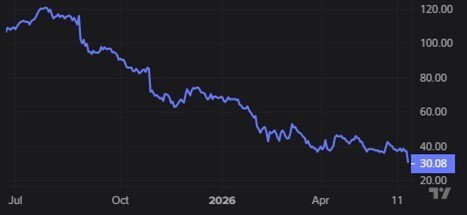
Shares in WiseTech plunged on Monday, down 18% to its lowest level in more than five years.
The stock is now down 56% since January 1.
Here’s how it’s tracked over the past 12 months:
WiseTech said it would keep the market updated in accordance with its continuous disclosure obligations.
Tue 23 Jun 2026 at 8:38am
Payday super kicks in from July 1, 2026
Payday superannuation changes take effect from July 1, 2026, when employers must start to pay super contributions at the same time as staff wages.
Adelaide Miller has done a great report about what it might mean.
Analysis from the Super Members Council shows a typical worker could be $9,400 better off in retirement if their super is paid with their wages because the returns accrue and compound sooner. Super Members Council uses age cohort median wages for workers in employment for 40 years and includes breaks.
The tax office is also cracking down on unpaid or late super contributions. The deputy commissioner of the ATO’s payday super program, Emma Rosenzweig, says every year, about $6.2 billion goes unpaid in superannuation.
Tax expert Rick Kimberley, from accounting firm RSM Australia, says the reforms will reduce the amount of unpaid super each year, but there will still be challenges. While most businesses support the introduction of payday super, 87% say it will put pressure on cash flow, with more than half citing customer payments as the biggest challenge, according to a survey from accounting platform Xero.
The general manager at software company MYOB, Kim Owen-Jones, says about 60 per cent of small businesses pay their staff weekly, adding further pressure to cash flow. She says about 15 per cent of small businesses, about 400,000 companies across the country, are still unaware of the change taking place from July 1.
Loading…