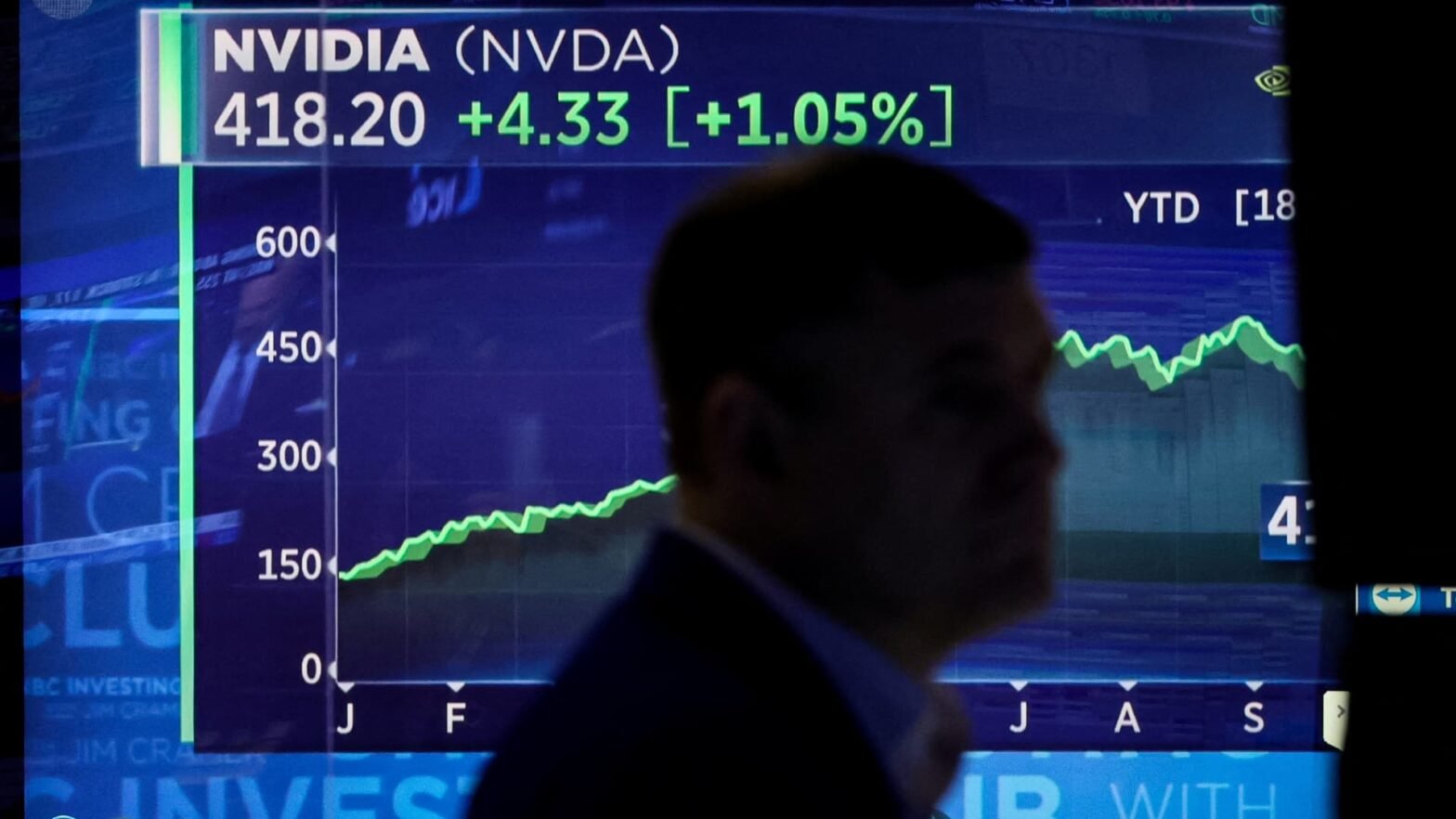
After months of record-breaking growth, the market has wobbled recently. The S&P 500 (SNPINDEX: ^GSPC) dropped by around 2% over the past five days, as of this writing, while the tech-heavy Nasdaq Composite (NASDAQINDEX: ^IXIC) dipped by nearly 3.5% in that time.
To be clear, short-term fluctuations like this are normal and don’t necessarily mean the market is on the verge of a recession or crash. But with growing concerns around a tech bubble, many investors are on high alert for volatility.
Missed Nvidia in 2009? This Rare Signal Is Flashing Again. In 2009, a “Double Down” signal flashed for a little-known chipmaker called Nvidia. For the first time in years, that same “Total Conviction” signal is flashing for a company 1/100th the size of Nvidia. Continue »
No one can say where the market is headed in the coming months, but if a downturn is looming, there’s one tried-and-true investment I’m stocking up on: the Vanguard S&P 500 ETF (NYSEMKT: VOO).

A powerful ETF with an unbeatable track record
Perhaps the biggest advantage of the Vanguard S&P 500 ETF is its history. While this particular ETF was launched in 2010, it tracks the S&P 500, which has a decades-long track record of surviving countless crashes, recessions, corrections, and bear markets.
The past two and a half decades have been particularly brutal for the market. The dot-com bubble in the early 2000s led to one of the longest S&P 500 bear markets in history, the financial crisis in 2008 was the most severe economic downturn since the Great Depression, and the COVID-19 crash was the fastest market decline in history.
Despite all this severe volatility, the S&P 500 has earned total returns of nearly 715% since January 2000.
Past performance can’t predict future returns, so there’s no guarantee that the S&P 500 will continue surging at the same rate that it has over the past 26 years. But if there’s any investment that’s highly likely to thrive over time, it’s the S&P 500 ETF.
In fact, since the S&P 500’s inception, it’s ended every 20-year period with positive total returns, according to analysis by Crestmont Research. In other words, if you’d invested in an S&P 500 fund at any point in history and held it for 20 years, regardless of how volatile the market was in that time, you’d have made money.
One significant risk factor to consider
While the S&P 500 offers a powerful track record of long-term success, the index has also changed over the past decade or so. Tech stocks are growing at an unprecedented rate, and megacap tech giants make up an increasingly large portion of the index.