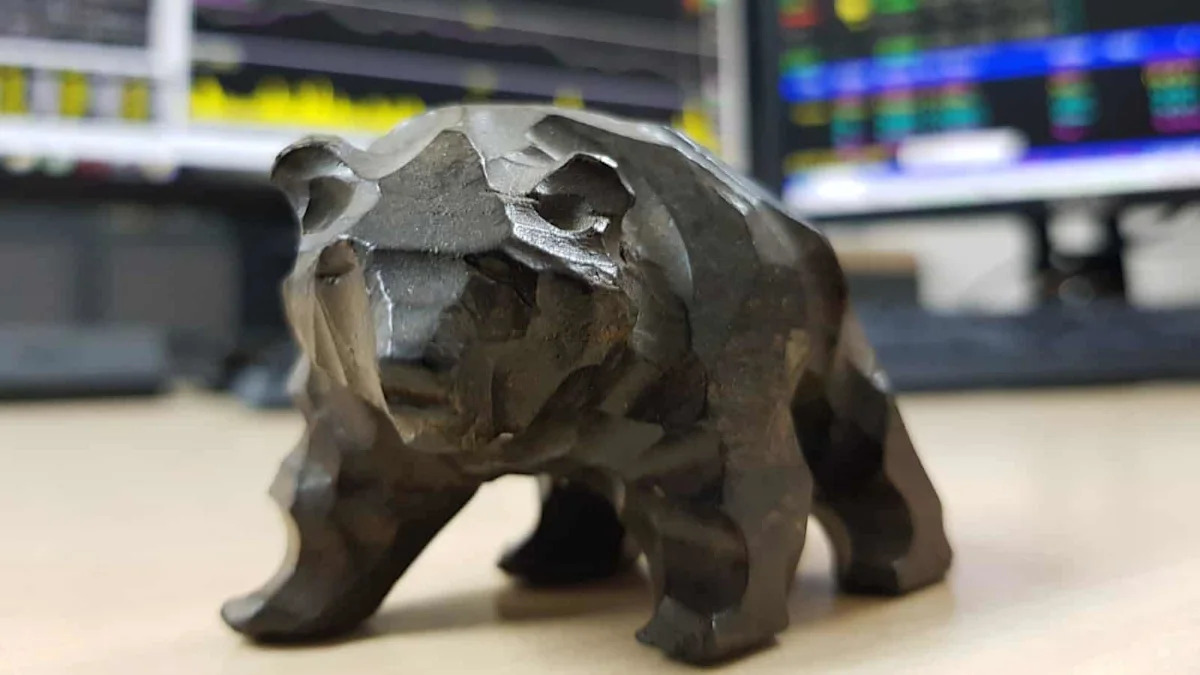
The S&P 500 just notched close to yet another all-time high. Yet beneath that impressive performance, warning signs are quietly multiplying. So could the world’s most followed stock index be heading for a painful bear market before the year’s out? Let’s explore.
What could go wrong?
The bull case for the S&P 500 is real. Corporate earnings have broadly been strong, US unemployment remains low, and AI-driven productivity gains are beginning to show up in company results.
But the bear case is building too. Analysts at Bank of America have reaffirmed a year-end price target of just 7,100, suggesting the index could fall by roughly 7% from here.
Specifically, it flagged that “speculation is hitting extreme levels” and that high-multiple stocks have gapped up in a pattern that has historically preceded a sharp valuation correction. And if AI spending fails to translate into real profits, or if geopolitical shocks dampen growth, there’s a very real risk the index could fall significantly… and quickly.
Why a bear market’s far from guaranteed
Luckily, the doom and gloom isn’t the full picture. While Bank of America‘s being conservative, the team of experts at JP Morgan have actually raised their year-end S&P 500 target to 7,800, citing strong earnings estimates.
Similarly, Yardeni Research has gone even further with a target of 8,250. And considering that recent earnings from outside the AI sector have been quietly excellent, the broader economy’s potentially more robust than the pessimists imply.
Of course, that doesn’t mean investors should be complacent. The smartest move right now isn’t to predict the market’s direction. Instead, it’s to make sure your portfolio contains companies that can thrive regardless of which way the economy decides to go. And that’s where one particular S&P 500 stock has an edge…
A business that wins whatever happens
Waste Management‘s (NYSE:WM) about as recession-proof as it gets. People and businesses produce waste in good times and bad. Landfill contracts are long-term and locked in, and this business is leveraging this structure to its advantage.
Looking at its first quarter results for 2026, revenue rose 3.5% to $6.23bn while net income jumped 13.5% to $723m and free cash flow nearly doubled year-on-year to $920m.
The company’s also quietly evolving beyond basic rubbish collection. Seven new renewable natural gas facilities came online earlier this year, helping the Recycling division deliver 18% EBITDA growth even as recycled commodity prices fell 27%.