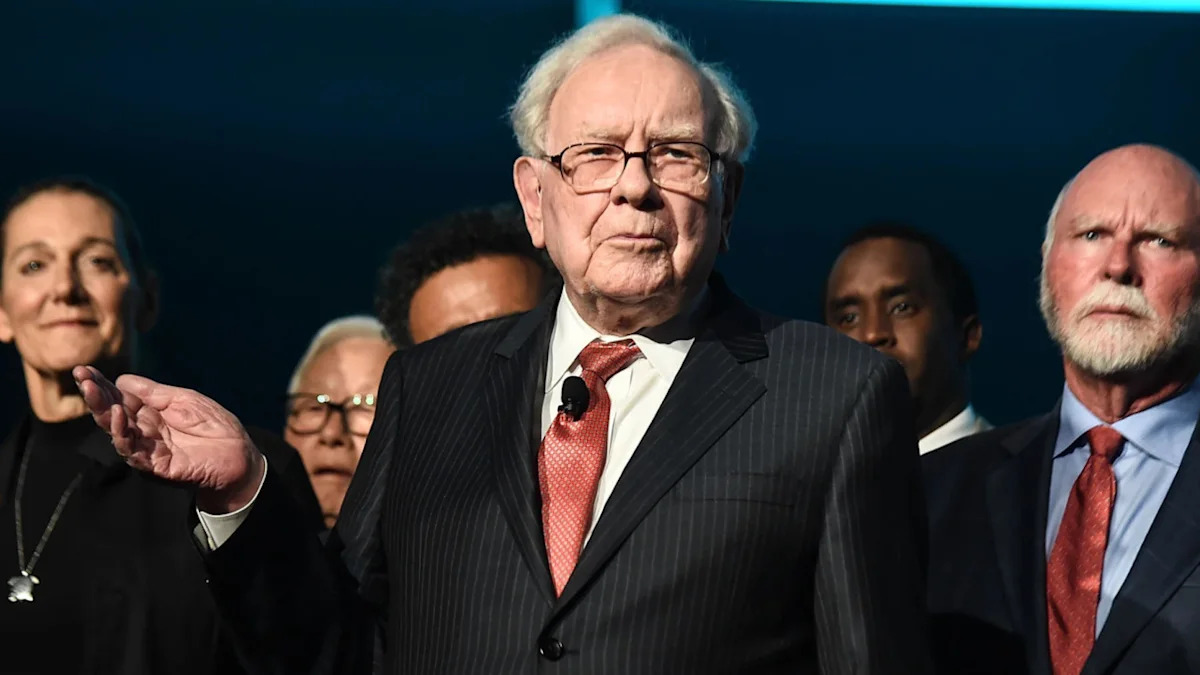

Warren Buffett has spent nearly seven decades picking stocks, but he says the game itself is changing. Instead of hunting for undervalued companies, more investors are chasing quick, speculative wins — and Buffett has a blunt explanation for why: people love to gamble.
It’s a dilemma that shows up just as easily in a TFSA or RRSP as it does on Wall Street. An account built for slow, patient growth can just as easily become a vehicle for chasing whatever ticker is trending that week.
In a wide-ranging interview with CNBC, the 95-year-old Berkshire Hathaway chair took aim at retail investors piling into the hottest stock of the moment and into same-day options contracts, comparing the behaviour to gambling rather than investing. Despite major indices hitting record highs, Buffett said meaningful buying opportunities have become harder to find precisely because so much of the market is now driven by speculation rather than business fundamentals.
“There are times when opportunities are just thrown at you so fast you … it’s unbelievable,” Buffett said. “And then there’s other times when you’re very, very lucky if you find one thing in a couple of years. And it should always be that the latter is what prevails. But since humans love to gamble so much, there’s more money in actually cultivating gamblers than there are cultivating investors.”
Don’t Miss
-
Warren Buffett used these 4 solid, repeatable money rules to turn $9,800 into a $150B fortune. Here’s how to apply them to your own life
-
Here are 4 ‘must-haves’ that Canadians constantly overpay for. How many of these are sabotaging your budget every single month?
-
‘Gold still crashing!’: Robert Kiyosaki admits he was wrong — but doubles down on his $35K prediction
Quick trades versus long-term value
Buffett has built his fortune on a simple, patient rule: find a company with strong fundamentals trading below its worth, buy in, then wait — sometimes for decades — for the market to catch up. He and his longtime partner Charlie Munger preferred paying a fair price for a wonderful company over a bargain price for a mediocre one. That discipline helped grow Berkshire Hathaway into a business worth roughly US$1 trillion (~C$1.4 trillion).
That buy-and-hold approach carries a tax advantage in Canada, too, though it works differently than it does in the U.S. Gains earned inside a Tax-Free Savings Account (TFSA) are never taxed, and gains inside a Registered Retirement Savings Plan (RRSP) are deferred until money is withdrawn. Outside those registered accounts, only 50% of a capital gain gets added to taxable income — so frequent trading in a non-registered account can trigger more tax events than simply holding on would.