The world might be dividing into rival camps and competing trade blocs, but international capital flows remain footloose and fancy free. In so doing, they pose a threat to what remains of stability in the real economy.
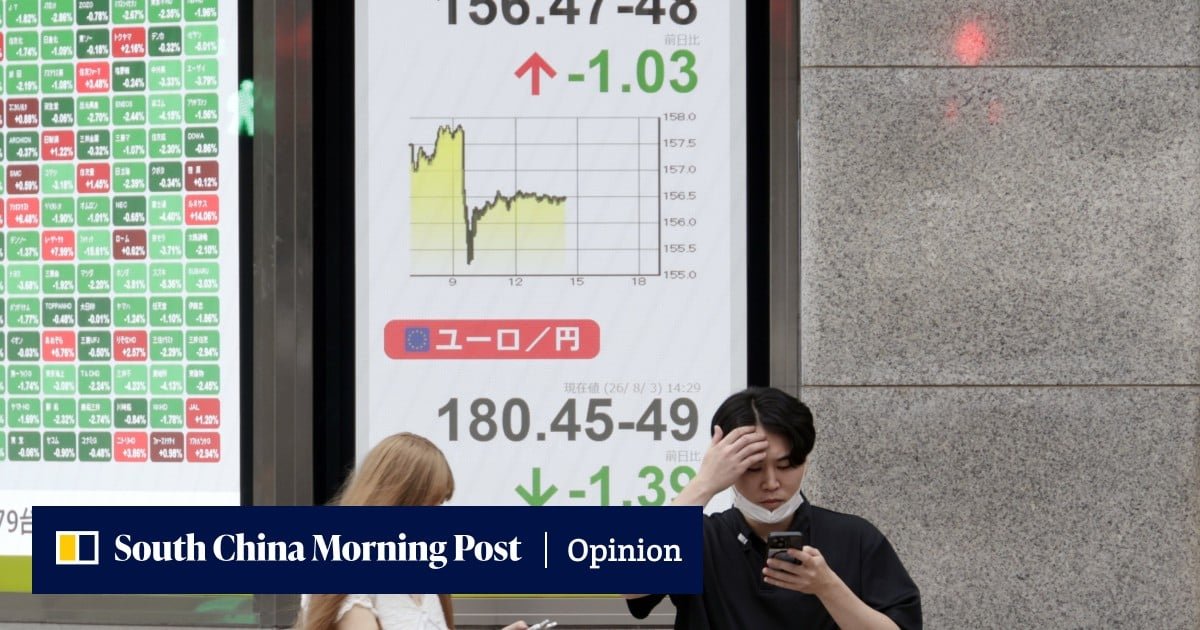
A good example of this growing potential for international contagion is the influence of the weak yen on global stock prices. The Japanese currency is expected to remain weak for the foreseeable future – despite
recent official intervention in foreign exchange markets by Japan and the United States – so the risk of a bursting of the “bubble economy” is likely to intensify.
The role of the weak yen in enabling key stock markets to ride so high for so long is generally unappreciated. The boom in artificial intelligence (AI) stocks is certainly one factor, but leveraged, yen-financed speculation in stocks is another important but hidden one.
As Naomi Fink, chief global strategist at Amova Asset Management in Tokyo, put it in a recent analysis, the yen is “carrying the weight of the world’s risk tolerance”. The yen-funded carry trade – where investors borrow cheaply in yen to invest in higher-yielding assets – is supporting long-duration risk assets, Fink observed, suggesting that “the currency may remain undervalued until risk appetite, global liquidity conditions or Japanese capital flows begin to shift”.
The significance of this statement is not so much that Japan and the world are going to have to live with a weak yen for longer than expected. Rather, it is that financial markets in general are heavily reliant on the weak yen-induced boom.
This boom is being funded to a large extent by massive borrowing by individuals to finance investment in stocks and bonds. If interest rates continue to rise, the vulnerability to severe correction of such borrowing will only increase.
Japanese monetary authorities mull intervention options after yen drops to 34-year low