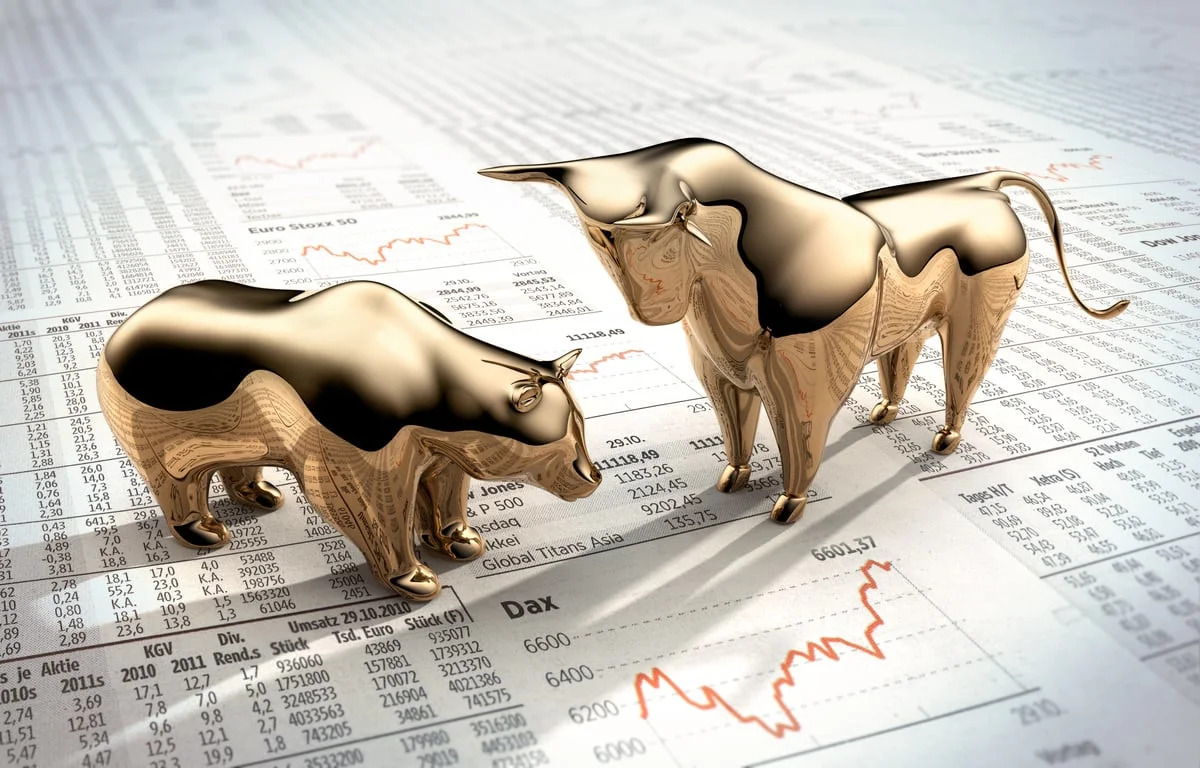
Bear markets: Investors don’t like them, but understandably so. Not only do they last roughly a (miserable) year, on average, but numbers from Stifel suggest that since 1932, the average bear market has dragged the S&P 500 (SNPINDEX: ^GSPC) down 35% from peak to trough. Yikes.
Yet experienced investors know they’re going to happen sooner or later — once about every five years (again, on average), though certainly not with anywhere near that predictable a cadence. Regardless, it’s tempting to try to simply sidestep bear markets by being out of the market altogether when they happen.
Missed Nvidia in 2009? This Rare Signal Is Flashing Again. In 2009, a “Double Down” signal flashed for a little-known chipmaker called Nvidia. For the first time in years, that same “Total Conviction” signal is flashing for a company 1/100th the size of Nvidia. Continue »
For the vast majority of investors, though, such a strategy may end up doing more harm than good. Here’s why.
A long-term struggle is won with just a few major victories … which you’ll never actually see coming
From a distance, it often looks like the stock market makes enough sense to actively navigate it. As veteran investors can attest, however, that’s not the case once you’re in it. It’s unpredictable from one day to the next. The only way to win is by not trying to predict the near-term ebb and flow. You have to think long-term, when stocks’ values become much clearer.
But ironically, most investors’ total long-term gains ultimately stem from a relatively small number of single-day gains.
Data from mutual fund company Hartford puts things in perspective: The growth of a $10,000 investment made in an S&P 500 index fund in 1996 would be worth more than $192,000 by 2025, if you had simply left it alone that whole time. Not bad. However, even if you’d just stayed out of the market for its best 10 days during this period, your investment would have only grown to a little over $85,000. That’s less than half of what you’d have by just doing nothing.
Here’s the rub: Since 1996, nearly half of the market’s very best one-day gains happened during a bear market, when few people would have been willing to even entertain the idea of jumping back in for a big one-day score. Never mind the unlikelihood of knowing when those single-day surges might materialize.

But will avoiding the really bad days that tend to take shape during bear markets offset the downside of missing out on the dramatically bullish ones? Even if you could successfully predict them ahead of time — which you can’t — there may be little benefit in doing so. Based on data from Morningstar, wealth management firm Smith+Howard reports that between 1950 and 2020, most of the S&P 500’s 15 worst daily losses were more than undone a year later. Specifically, the average daily loss for these 15 days was a stunning 8.8%. However, in all but one case (in 2008), the index was up by double digits within 12 months of that awful day’s close.