Korea’s youngest and oldest investors borrowed heavily to chase a stock rally, leaving them exposed to steep losses and rising delinquencies after the market turned.
Korea’s youngest and oldest investors aggressively borrowed to ride the stock-market rally despite having less financial room to absorb losses. The market’s sharp reversal has left them especially vulnerable to mounting losses and loan delinquencies.
A 28-year-old office worker surnamed Moon borrowed 15 million won ($10,700) through an overdraft account early this year and put the money into Korean stocks. As stock prices have plunged recently, Moon’s investment losses have mounted, while the debt on their overdraft account remains.
“When stocks were rising, I thought I could pay it back quickly,” Moon said. “Now I’m sitting on losses too big to sell, while the interest keeps piling up. Whenever my paycheck comes in, paying down the overdraft comes first, so I’ve cut back on meeting friends and eating out.”
Among younger and older investors who borrowed heavily to bet on a rising stock market, warning signs are mounting. Borrowers in their 20s and younger and those 60 and older have higher delinquency rates on credit loans than other age groups. In the securities market, margin borrowing has risen rapidly among older investors, who also account for the bulk of loans backed by stocks.
The recent market plunge is raising concerns about younger and older investors, who tend to have less income and fewer resources to repay their loans. Falling stock prices could leave them with bigger investment losses and a greater risk of falling behind on their debt.
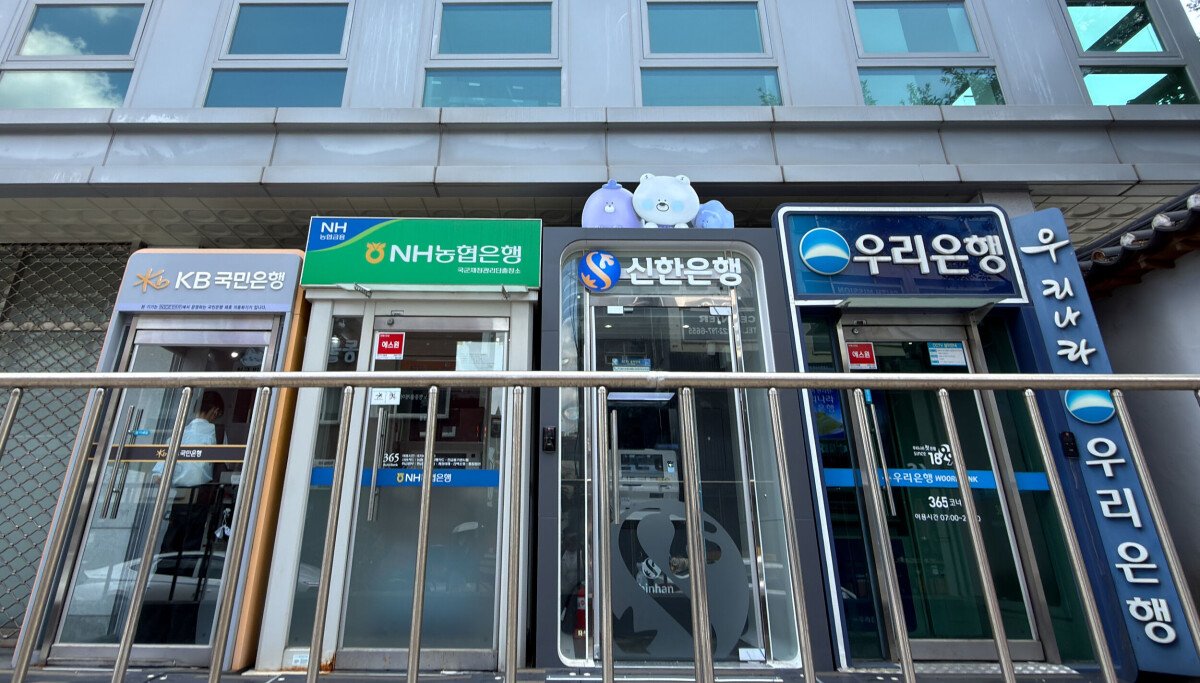
The delinquency rate on credit loans at Korea’s five major banks — KB Kookmin Bank, Shinhan Bank, Hana Bank, Woori Bank, NongHyup Bank — stood at 0.67 percent for borrowers in their 20s and younger at the end of June, according to data the Financial Supervisory Service submitted to the office of People Power Party lawmaker Lee Jong-wook on Sunday. For those 60 and older, it was 0.59 percent. The figures from the two age groups were well above the overall rate of 0.35 percent.

Despite having borrowed far less than middle-aged borrowers, the youngest and oldest borrowers had higher delinquency rates. Borrowers in their 20s and younger had 3.6 trillion won in outstanding credit loans, and those in their 60s and older had 10.6 trillion won, compared with 20 trillion won to 30 trillion won among the age groups in their 30s through 50s.
A similar pattern emerged in overdraft accounts. The delinquency rate was 0.37 percent among borrowers 60 and older and 0.33 percent among those in their 20s and younger, both above the overall rate of 0.22 percent.

“More borrowers took on debt to invest in anticipation of a stock-market rally in the first half of this year,” Yang Jun-sok, an economics professor at the Catholic University of Korea, said.
“But many people in their 20s and younger are just starting their careers, while many of those 60 and older are retirees. Both groups may therefore have less income and a weaker ability to repay their loans. The recent sharp drop in stock prices could deepen their investment losses and make it even harder for them to repay their debt.”

Debt-fueled investing has also surged among older investors in the securities market.
Loans on margin accounts, a widely watched measure of leveraged stock investing, allow investors to borrow money from brokerages to buy shares.
Among 10 major securities firms, outstanding margin loans held by investors 60 and older jumped 45.7 percent to 960.8 billion won at the end of June from 659.2 billion won at the end of last year. That outpaced the overall increase of 36.3 percent.
Borrowing rose even faster among investors 70 and older, up 56.8 percent.
Investors aged 60 and older accounted for 301.6 billion won, or 35.8 percent, of the 841.9 billion won increase in total margin loans over the same period.

Securities-backed loans, which allow investors to borrow against stocks they already own, were also heavily concentrated among older investors. Outstanding loans issued by the 10 securities firms against the five largest stocks by market capitalization reached 2.9 trillion won at the end of May, up 24.3 percent from the end of last year. Investors aged 60 and older accounted for 1.83 trillion won, or 63.0 percent of the total.
The sharp decline in major stocks used as collateral has raised the risk of forced selling. The Kospi tumbled 43.9 percent from its intraday high in June to its intraday low at the end of July.
“If older investors borrowed against stocks they owned and then used the money to invest, a combination of falling share prices and loan delinquencies could force the sale of their collateral and magnify their losses,” Yang said.

The boom in debt-fueled trading among retail investors has also pushed securities firms to expand short-term financing.
Securities firms issued a cumulative 723.9 trillion won in commercial paper and electronic short-term bonds through Friday, up 170.4 percent from the same period a year earlier, according to financial technology firm Koscom.
In particular, issuance of electronic short-term bonds, most of which mature within five days, jumped 172.6 percent to 666.8 trillion won from 244.6 trillion won — accounting for most of the overall increase.
Short-term financing surged in May and June as stock-market trading picked up, then fell sharply in July. The rise and fall closely tracked changes in margin lending and stock-market activity.
BY PARK HYUN-JU [lee.soojung1@joongang.co.kr]