Year to date, the broad-based S&P 500 (^GSPC -0.69%) has advanced 13%, while the growth-focused Nasdaq Composite (^IXIC -1.33%) has added 15%. The driving force behind those double-digit gains has been strong corporate earnings results.
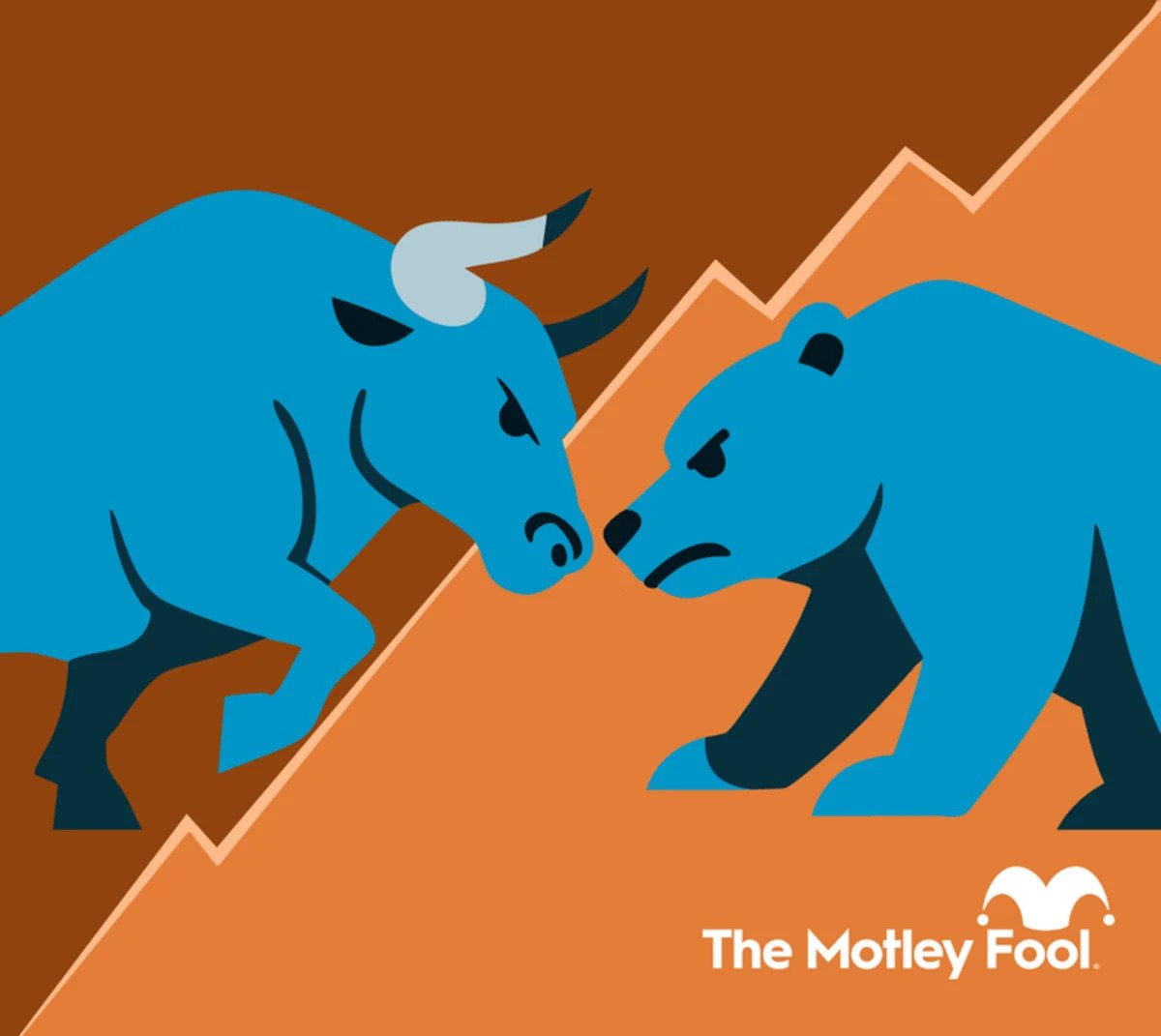
However, stock market corrections (and even crashes) are inevitable. Near term, the market faces headwinds related to elevated energy prices and potential interest rate increases. And long term, the S&P 500 and Nasdaq Composite could decline for any number of reasons.
Fortunately, history provides a clear blueprint regarding how investors should navigate the next stock market correction. Here are the important details.

Image source: Getty Images.
Stock market corrections are inevitable, but the S&P 500 and Nasdaq Composite have always recovered
The S&P 500 is widely regarded as the best benchmark for the overall U.S. stock market because it includes about 80% of domestic equities by market value. Since 2010, the index has suffered 10 market corrections, two of which eventually became bear markets.
The Nasdaq Composite is regarded as the best gauge for growth stocks because the Nasdaq Exchange has more flexible listing rules and lower fees than the New York Stock Exchange, which makes it a more attractive destination for innovative technology companies. Since 2010, the index has suffered 14 market corrections, four of which became bear markets.
In short, stock market corrections were relatively common during the past 15 years. In all cases, the smartest move investors could have made would have been buying the dip. The S&P 500 and Nasdaq Composite have never failed to recoup their losses, meaning investors who put money into funds tracking those indexes during past corrections would be sitting on profit today.
Warren Buffett, whose value-oriented investment strategy helped build Berkshire Hathaway into one of the largest companies in the world, has often advocated for buying the dip. “The best chance to deploy capital is when things are going down,” he said during a CNBC interview in 2018. “Be greedy when others are fearful,” he wrote during the financial crisis in 2008.
The S&P 500 and Nasdaq Composite tend to deliver robust returns after entering correction territory
Since 2010, the S&P 500 has dropped into market correction territory about once every 18 months, while the Nasdaq Composite has dropped into correction territory about once every 13 months. Any attempt to avoid those periodic dips is likely to backfire because investors must be correct twice: They must know when to sell and when to buy again.
One reason market timing strategies tend to fail is they increase the odds that investors will miss out on the market’s best days. Historically, about 50% of the S&P 500’s best days have taken place during bear markets and another 25% of its best days have occurred during the first two months of new bull markets.
Investors who sell stocks simply because the market is falling are likely to miss at least some of the best days, and missing even a few of them can have a devastating impact on long-term returns. “If you missed the market’s 10 best days over the past 30 years, your returns would have been cut in half,” according to Hartford Funds.
Instead, investors should focus on buying the dip, particularly once the major stock market indexes have closed in correction territory (i.e., 10% below their record high). Here’s why:
- Since 2010, following the S&P 500’s first close in correction territory, the index has returned an average of 18% during the next year and 38% during the next two years.
- Since 2010, following the Nasdaq’s first close in correction territory, the index has returned an average of 23% during the next year and 41% during the next two years.
Here’s the big picture: Stock market drawdowns are inevitable, and the next major crash will happen sooner or later. But the S&P 500 and Nasdaq Composite have always recovered, and there is no reason to think next time will be different. That means investors who buy an S&P 500 index fund or Nasdaq index fund during the next drawdown will almost certainly turn a profit eventually.