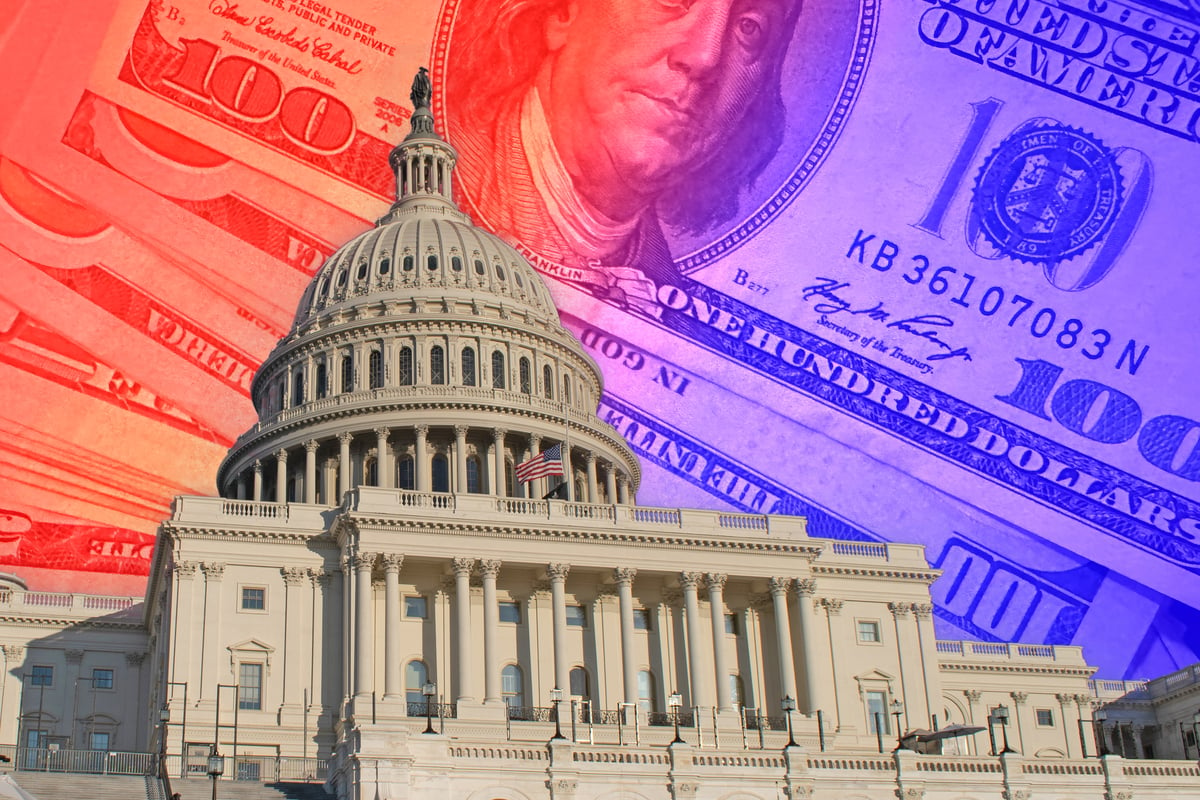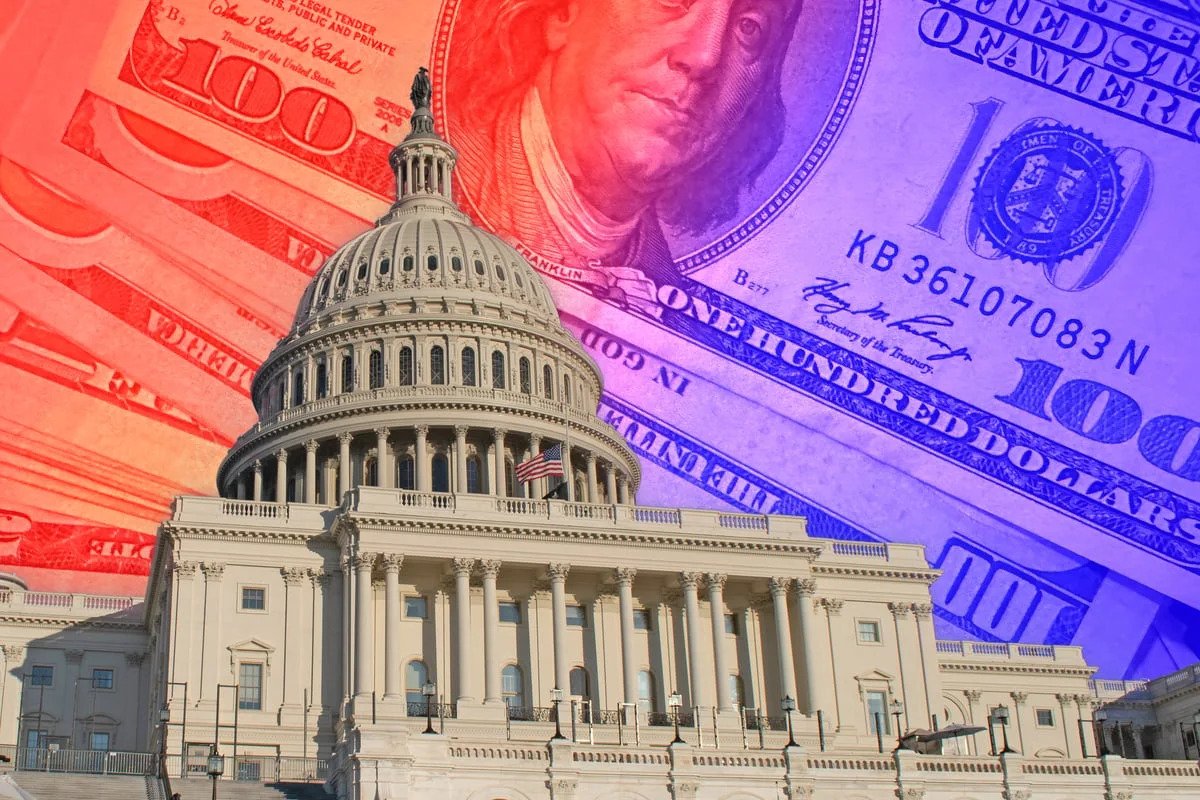
Milestones are usually meant to be celebrated, but this achievement isn’t necessarily a positive development. The U.S. government’s debt balance has officially exceeded $40 trillion. This massive sum is equal to 124% of the country’s gross domestic product (GDP), up from a 62% share in 2006.
What’s more, the federal debt burden has more than doubled in a decade. Compared to 20 years ago, it has exploded 376% higher. Within the U.S. budget, more money goes to interest payments now than it does to anything else, except Social Security and Medicare.
Missed Nvidia in 2009? This Rare Signal Is Flashing Again. In 2009, a “Double Down” signal flashed for a little-known chipmaker called Nvidia. For the first time in years, that same “Total Conviction” signal is flashing for a company 1/100th the size of Nvidia. Continue »
Here’s what history says all of this borrowing means for the stock market. Investors will want to pay attention.
The U.S. has a spending problem
When President Donald Trump began his second term, he immediately set up the Department of Government Efficiency. This agency, headed by Elon Musk, was tasked with cutting spending and reducing the deficit. But by any measure, it was a complete failure. Even the world’s most prominent tech visionary couldn’t make a tiny dent in fixing the country’s finances.
This gets to the heart of the situation. It doesn’t matter what side of the political aisle you stand on. The U.S. has a spending problem, with the national deficit through 10 months of fiscal 2026 totaling $1.8 trillion.
The spending spree totally makes sense in desperate times. During the Great Recession or the COVID-19 pandemic, which brought the global economy to a halt, the government enacted stimulus measures to get things back on track. However, the debt figure keeps climbing even when we’re not in a recessionary period.
There is no end in sight. The Congressional Budget Office expects gross federal debt to reach $64 trillion by 2036. This could end up being a conservative view. The higher the debt becomes, the more interest the country has to pay. Consequently, this unfavorable setup then supports borrowing more money to service existing obligations. It’s like a person signing up for a new credit card to pay the bill on an old one.
That $40 trillion figure reflects the level of trust that holders of U.S. Treasuries have in the economy and financial system. The U.S. has the global reserve currency, the world’s dominant economy, and the most robust capital markets. This means borrowing and spending can continue longer than people expect.