Win McNamee/Getty Images
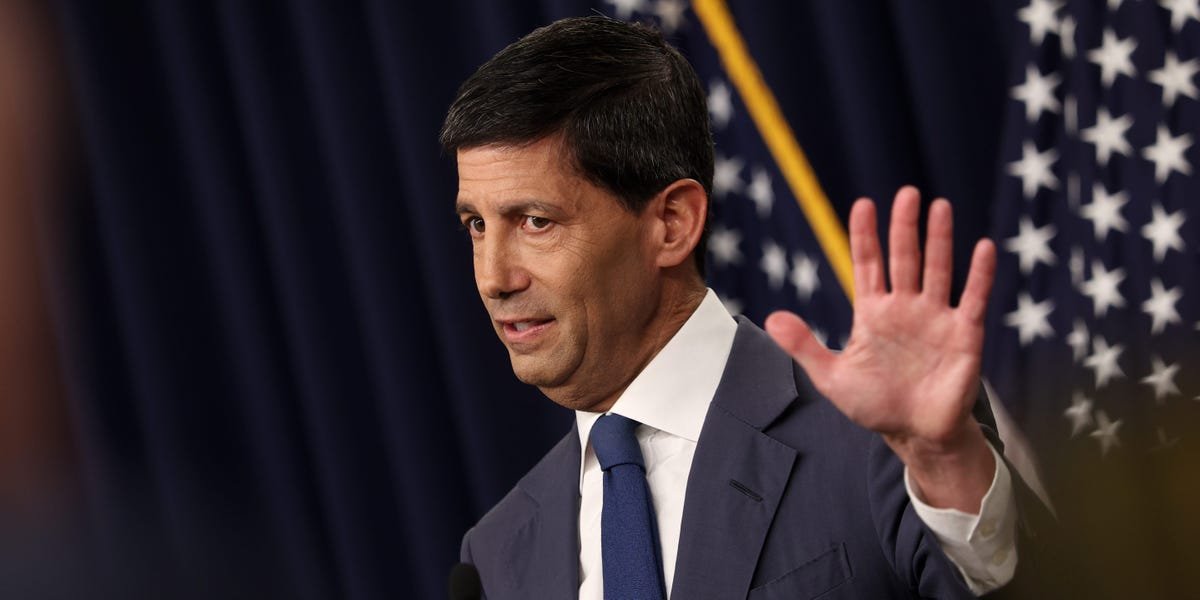
Société Générale sees three Federal Reserve rate hikes on the way after a hawkish Jackson Hole Speech from Federal Reserve chair Kevin Warsh.
Jan Groen, the bank’s chief US economist, said in an August 28 client note that his base-case outcome is for 25 basis-point hikes to come at the Fed’s September and December meetings this year, as well as at the March 2027 meeting.
“Persistent underlying inflation and increasingly explicit Fed concern about elevated inflation suggest the bar for remaining on hold is rising,” Groen wrote in the note.
“I believe the time for a call change in favor of hikes has come,” Groen continued. “Even more so now the Chair also acknowledged an increased worry with persistently elevated inflation in his Jackson Hole remarks.”
Groen cited a combination of structurally higher super-core PCE (essentially services inflation) that has not returned to pre-pandemic lows, and the recent oil and tariffs shocks as teaming up to fuel higher price growth, warranting higher interest rates.
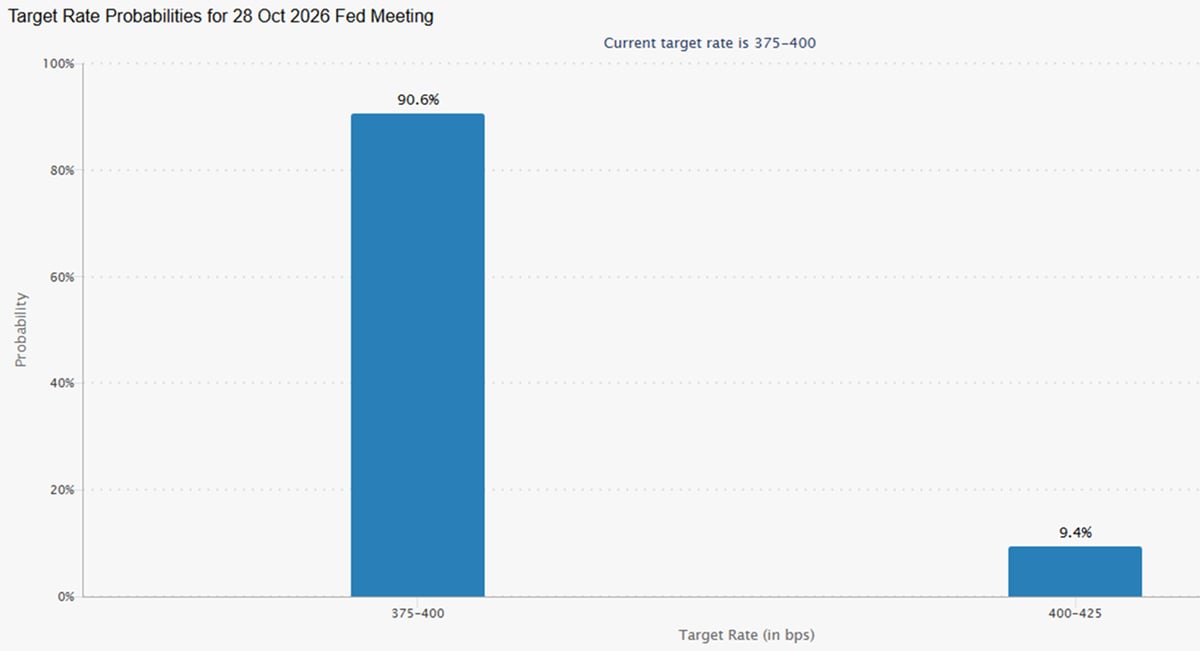
According to the CME FedWatch tool, markets seem to generally agree with Groen’s hawkish tilt. Markets are pricing in a 64% chance of a hike in September, and have two hikes as the most likely outcome by the December meeting. By the March meeting, three hikes is the second most likely outcome at a 27% chance.
However, Groen’s updated outlook is more hawkish than that of some other economists and strategists on Wall Street. Both Morgan Stanley and JPMorgan are skeptical that rate hikes are coming in September.
What hikes would mean for stocks
Markets usually view rate hikes as bad news, as they’re intended to cool down the economy by weighing on borrowing and spending. That, in turn, can dampen earnings growth.
But investors shouldn’t worry too much if the Fed does embark on a hiking cycle, says Manish Kabra, Société Générale‘s chief US equity strategist.
Given Groen’s new forecast, Kabra looked into how stocks have historically performed when the Fed has begun a rate-hike campaign. The data shows that stocks stumble initially, but tend to rebound in short order.
While the S&P 500 has dropped an average of 3% in the month after the first hike in a new tightening cycle, the index has risen an average of 4% six-months after the hike.
One exception would if the Treasury yield curve inverts, which is usually defined as the yield on the 2-year note climbing higher than the 10-year yield, which probably signals the Fed is being aggressively hawkish. These episodes have tended to coincide with 20% declines in stocks, Kabra said.
But as long as that doesn’t happen — Kabra doesn’t see an inversion playing out — he said to buy the market on news of the first rate hike.
Read next
William Edwards is a senior investing reporter at Business Insider primarily covering the US stock market and the broader economy.He’s interviewed some of the most influential voices in the market, including Joseph Stiglitz, Jeremy Grantham, Rick Rieder, Rob Arnott, Savita Subramanian, Nouriel Roubini, Ken Rogoff, Mike Wilson, Claudia Sahm, Albert Edwards, Andrew Ross Sorkin, Ben Snider, and more.William launched BI’s annual Oracles of Wall Street list (2023, 2024, 2025), highlighting top calls from strategists, economists, and analysts. He also writes BI’s Where to Invest $10,000 column, and contributes to the First Trade newsletter.Prior to Business Insider, William covered the US economy for Bloomberg News in Washington, DC and contributed to TV tech coverage for CNBC in San Francisco. He has also spent time studying or reporting in France, Germany, and Tunisia.He is based in New York.