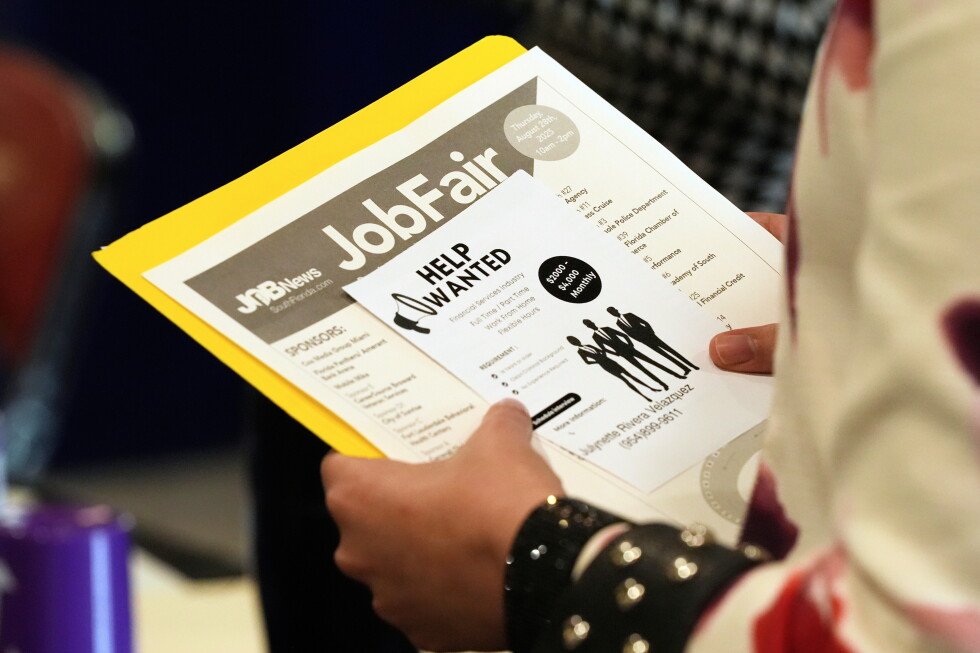
Another month and another jobs report that continues to befuddle economists.
Nonfarm payrolls added a seasonally adjusted 162,000 jobs in August, more than triple economists’ estimates of 53,000 job gains. Additionally, the job numbers for both June and July were revised upward, with July notably revised from a 23,000 job loss to a 21,000 gain.
Missed Nvidia in 2009? This Rare Signal Is Flashing Again. In 2009, a “Double Down” signal flashed for a little-known chipmaker called Nvidia. For the first time in years, that same “Total Conviction” signal is flashing for a company 1/100th the size of Nvidia. Continue »
In an even better sign for the labor market, gains were broad-based and evident in sectors including restaurants, government education, and manufacturing. Meanwhile, information-related industries saw a decline of 23,000, suggesting artificial intelligence could be having an impact.
Average hourly earnings rose 0.3% in August, in line with estimates, and was 3.1% higher year over year, the lowest annual rate in several years.
Here’s why the surprise jobs report is both good and bad news.

Image source: Getty Images.
The bad: Increases the odds of a September rate hike
Since the pandemic, there has been a weird phenomenon among investors where good news in the labor market has been bad news for the stock market.
That’s because inflation has been persistently elevated above the Fed’s 2% target since the pandemic. Because U.S. economic growth is largely driven by consumer spending, a strong labor market can be a source of inflation: if people have more money, they are likely to keep spending it.
Yesterday, the odds of the Federal Open Market Committee hiking interest rates by a quarter point at its September meeting later this month were essentially a 50-50 toss-up, according to the CME Group’s FedWatch tool.
However, following the jobs report and as of this writing, the likelihood of a quarter-point hike rose from just under 50% to 62.4%.
A rate hike is perceived negatively by investors because it raises borrowing costs in an economy already grappling with affordability issues. Furthermore, the longer rates remain elevated, the more pressure the consumer will feel and the more likely the economy is to tip into a recession.

US Nonfarm Payrolls MoM data by YCharts
As of 11:30 a.m. ET, the Dow Jones Industrial Average (DJINDICES:^DJI) had fallen roughly 365 points.
Members of the FOMC, which has 19 total members, 12 of whom vote on monetary policy decisions, have already seen a growing number lean toward an interest rate hike at its next meeting.